While the previous parts of this exhibition have focused on individual languages from Arabic to Hebrew and Syriac, this final section pays homage to Margoliouth the polyglot.
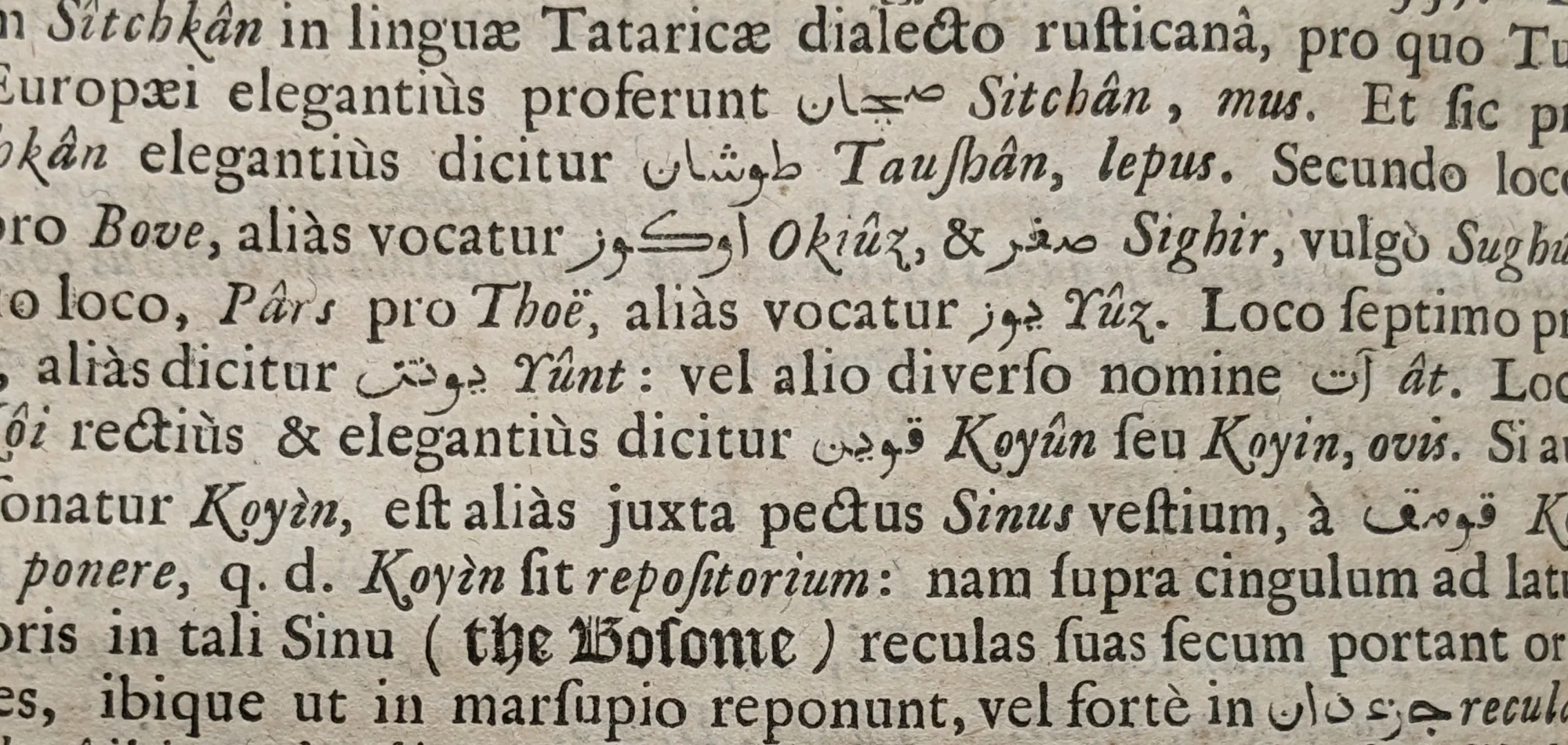
The Levant was the home of a wide range of different nationalities and languages, including not only Arabic, Hebrew, and Syriac, but also Greek, Latin, Turkish, and more. This part of our online exhibition therefore features some of New College Library's oldest Greek manuscripts, with their connections to Cyprus and Antioch, as well as the first ever printed polyglot Psalter and an impressive polyglot Bible. We also highlight some printed books from the late 16th and early 17th centuries, which showcase the multilingualism of Oxford students and scholars, which was widespread even at that early stage of Orientalism as an academic subject.
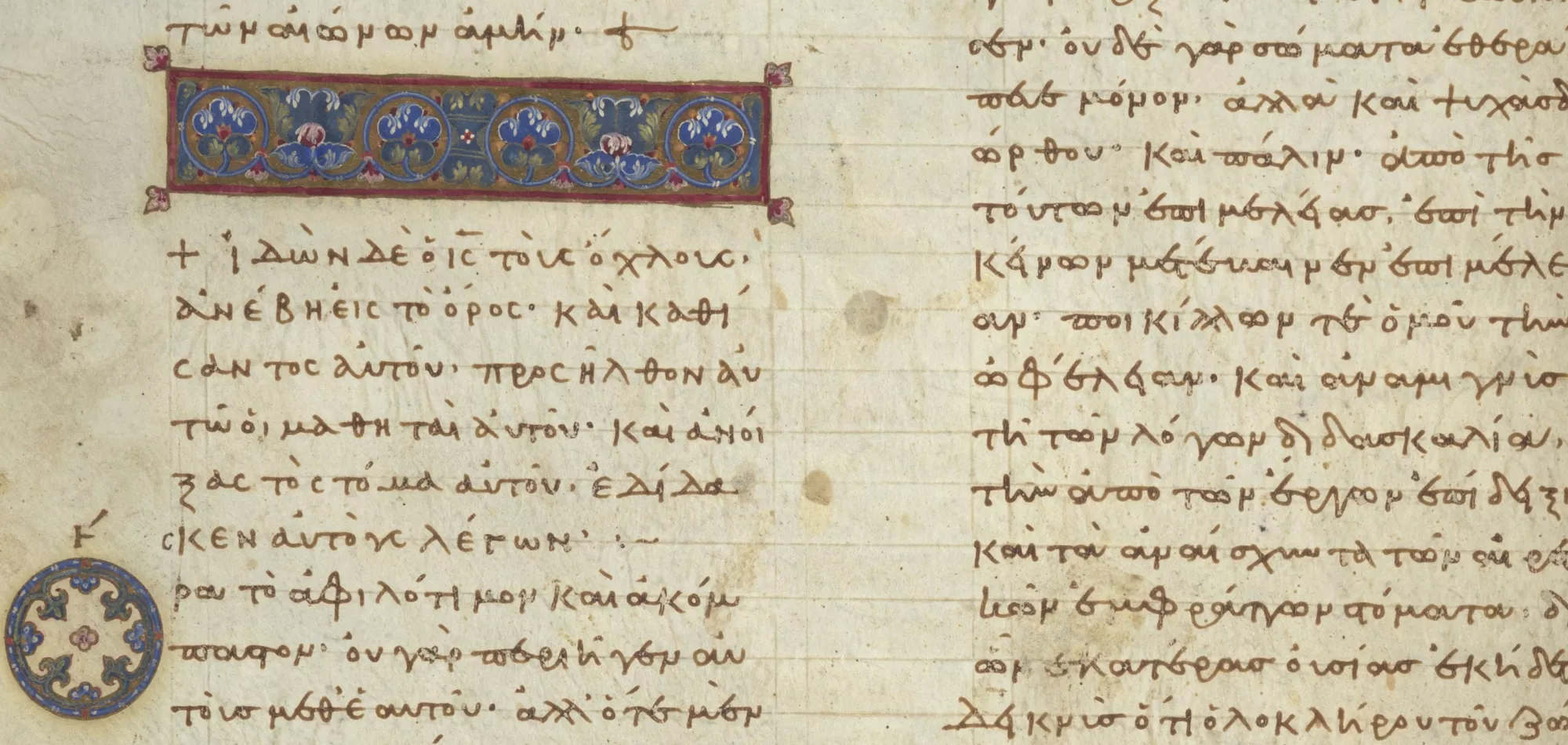
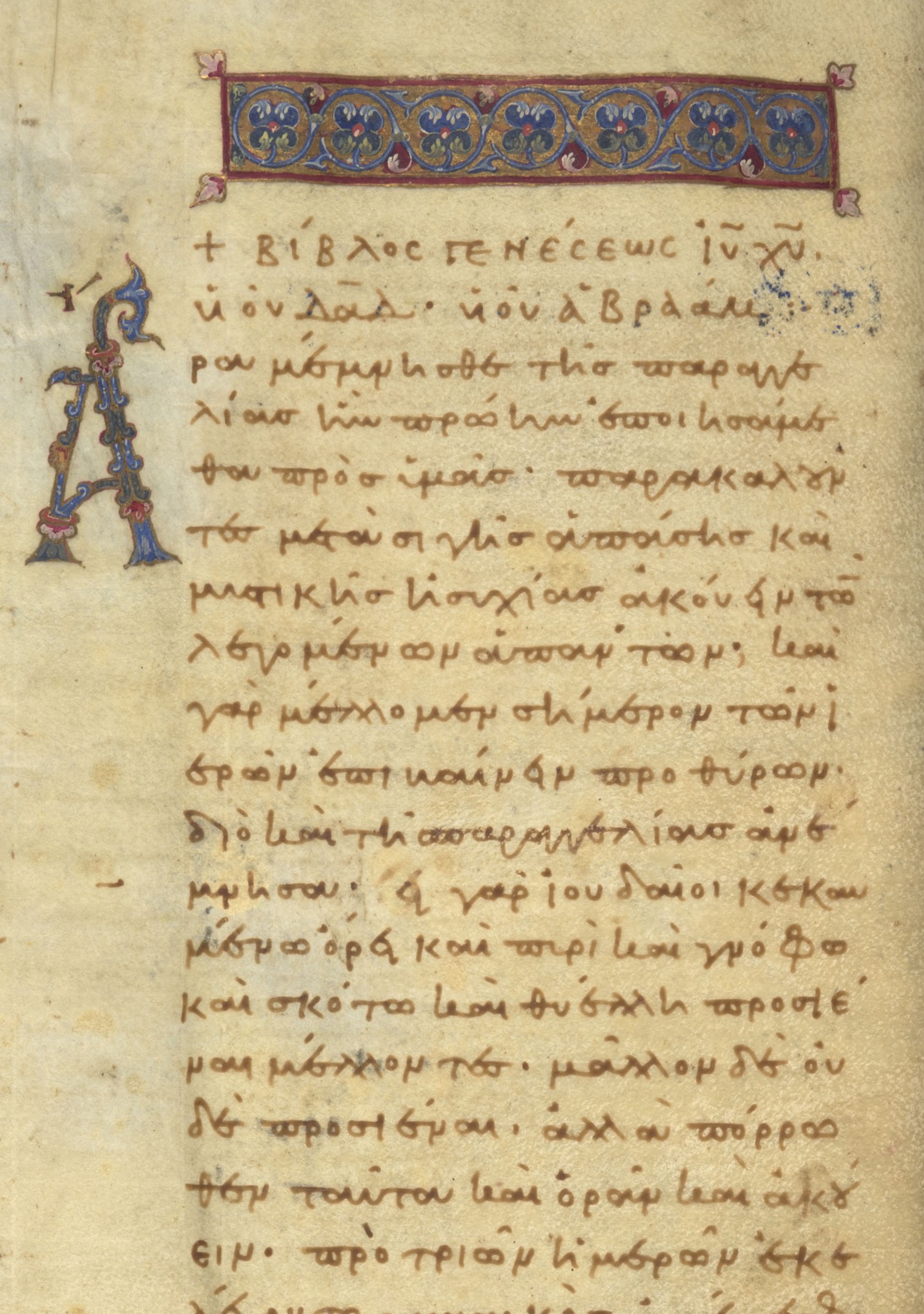 MS 74 is one of the library’s oldest manuscripts, dated to the later 10th century, so well over 1000 years old. It contains the writings of Saint John Chrysostom (347–407), Church Father, Archbishop of Constantinople, and one of the most prolific authors of the early Christian Church. In his hometown of Antioch, Syria (now Turkey), Greek civilization encountered the various cultures of the Near East, and its mainly Greek population mingled with Syrians, Phoenicians, Romans, and Jews. During the crusades of the 12th and 13th centuries it was one of the most fiercely fought-over towns in the Levant. Our MS 74 was produced in Constantinople, modern Istanbul, around 950–975 CE, and contains the first 44 of Chrysostom’s 90 homilies on the Gospel of Matthew.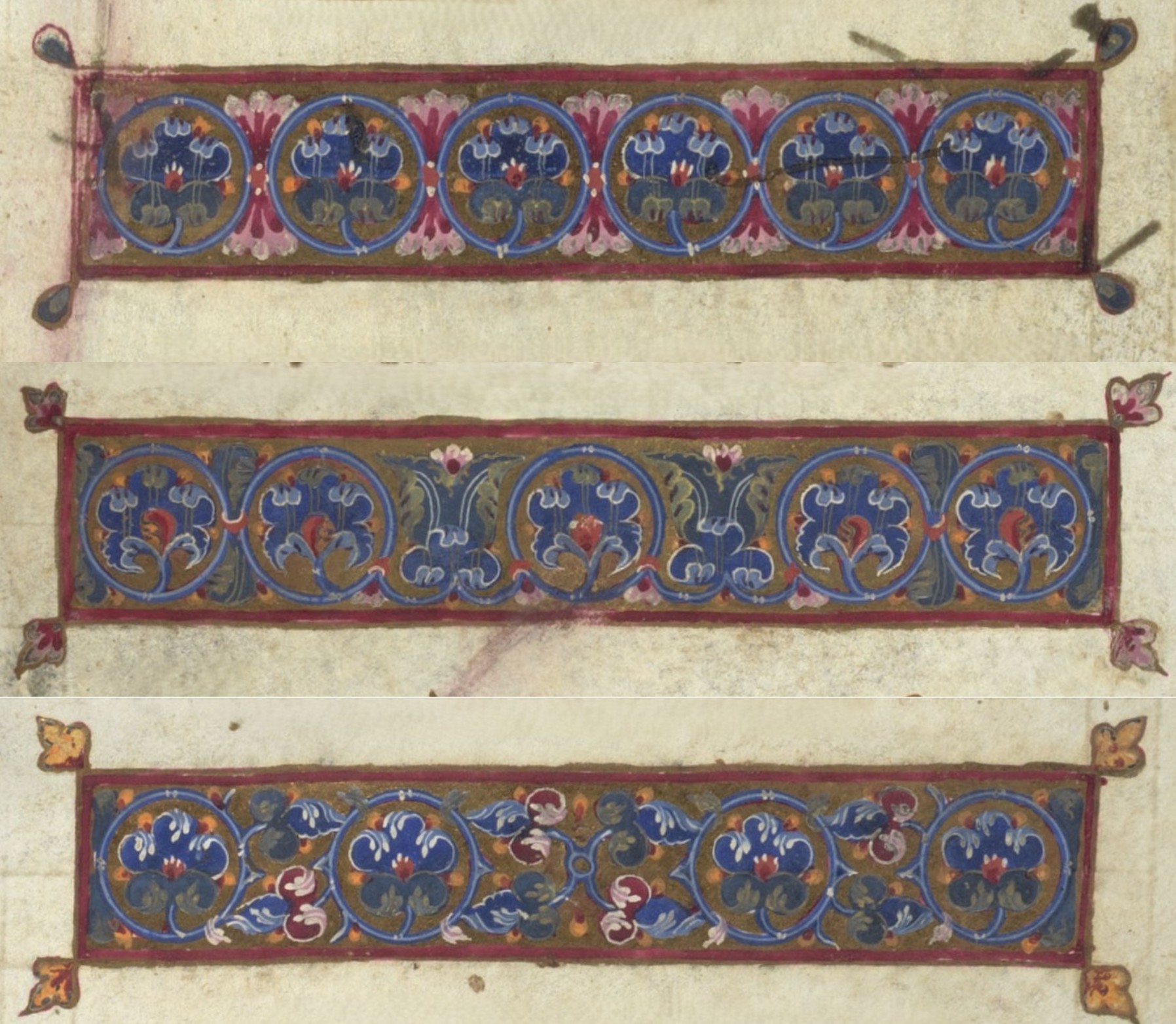
 Both MS 74 and the second Greek manuscript showcased below, MS 44, were among the 38 volumes which came to New College as part of the library of Cardinal Reginald Pole (1500–1558), Archbishop of Canterbury under Queen Mary I. Pole had already donated several books to the College in 1557, but after his death in 1558 his entire library was donated to New College by his friend and executor, Alvus Priuli.
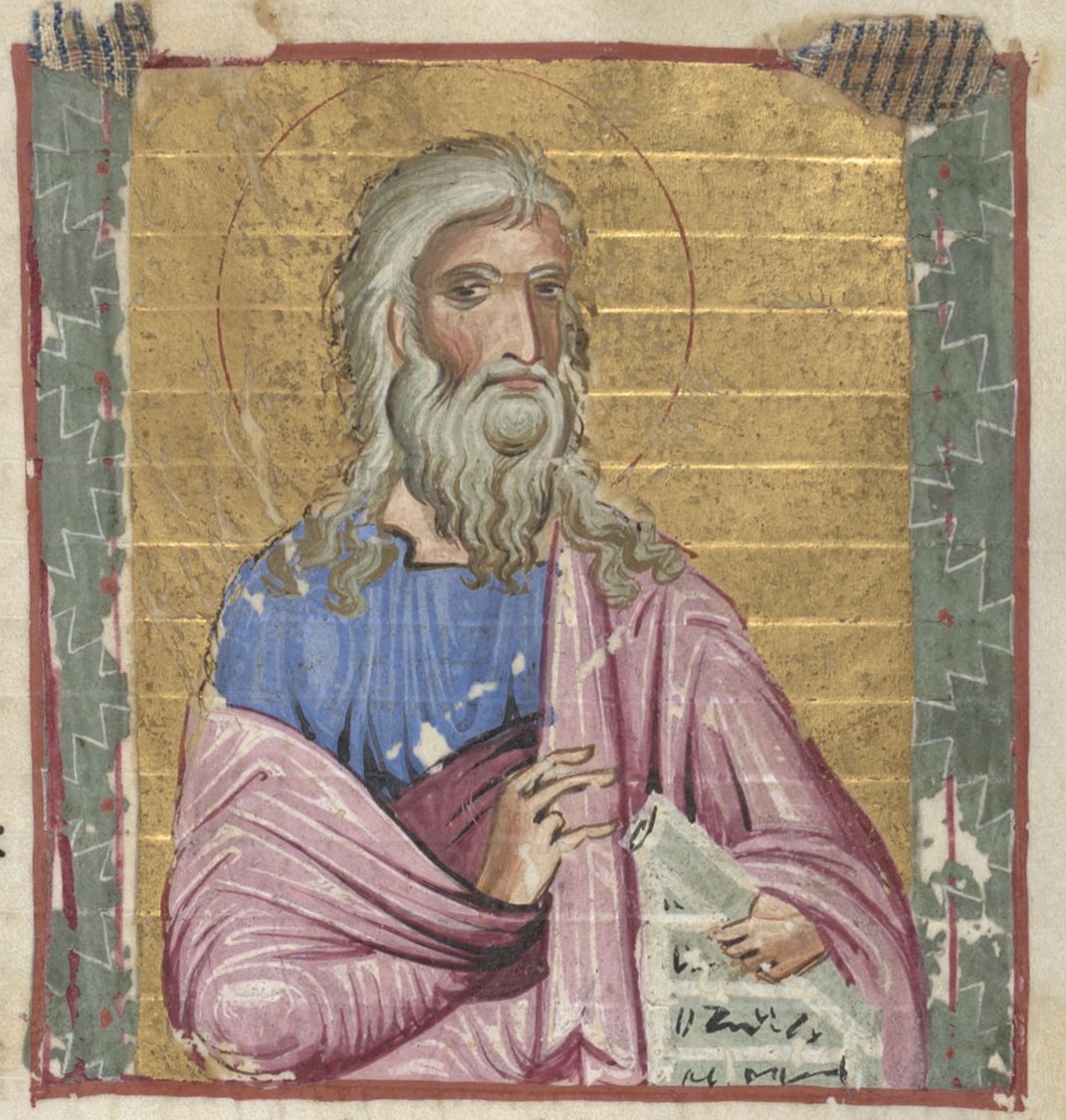 MS 44 cannot quite rival MS 74 in terms of age (it is dated to c. 1200 CE), but certainly surpasses it in its luxurious decoration. It contains the Old Testament books of the Minor Prophets, translated into Greek, and most likely produced in Cyprus or possibly Constantinople. The manuscript also contains selections from the Book of Maccabees, a history of Jewish leaders which, though first written in Hebrew, now only survives in Greek translations such as this one.
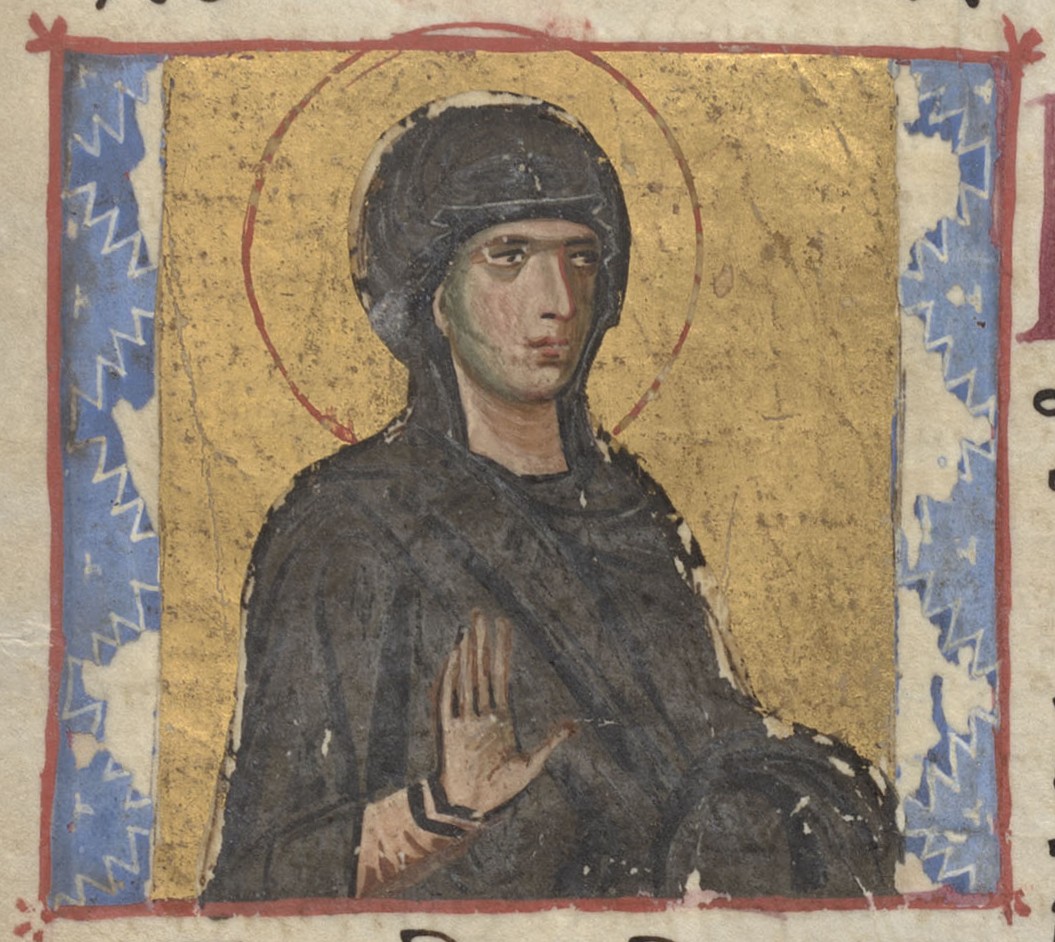 uscript comes from its detailed miniatures, each showing one of the prophets at the beginning of their book —almost miraculously, all 19 original miniatures have survived. They are illuminated with gold in a style typical of late-Byzantine Christian iconography, and the miniatures we have chosen to show here are those of Jeremiah (left) and of Susannah (right), the only woman included. For both the artist has used warm tones to create vivid, lifelike portraits.
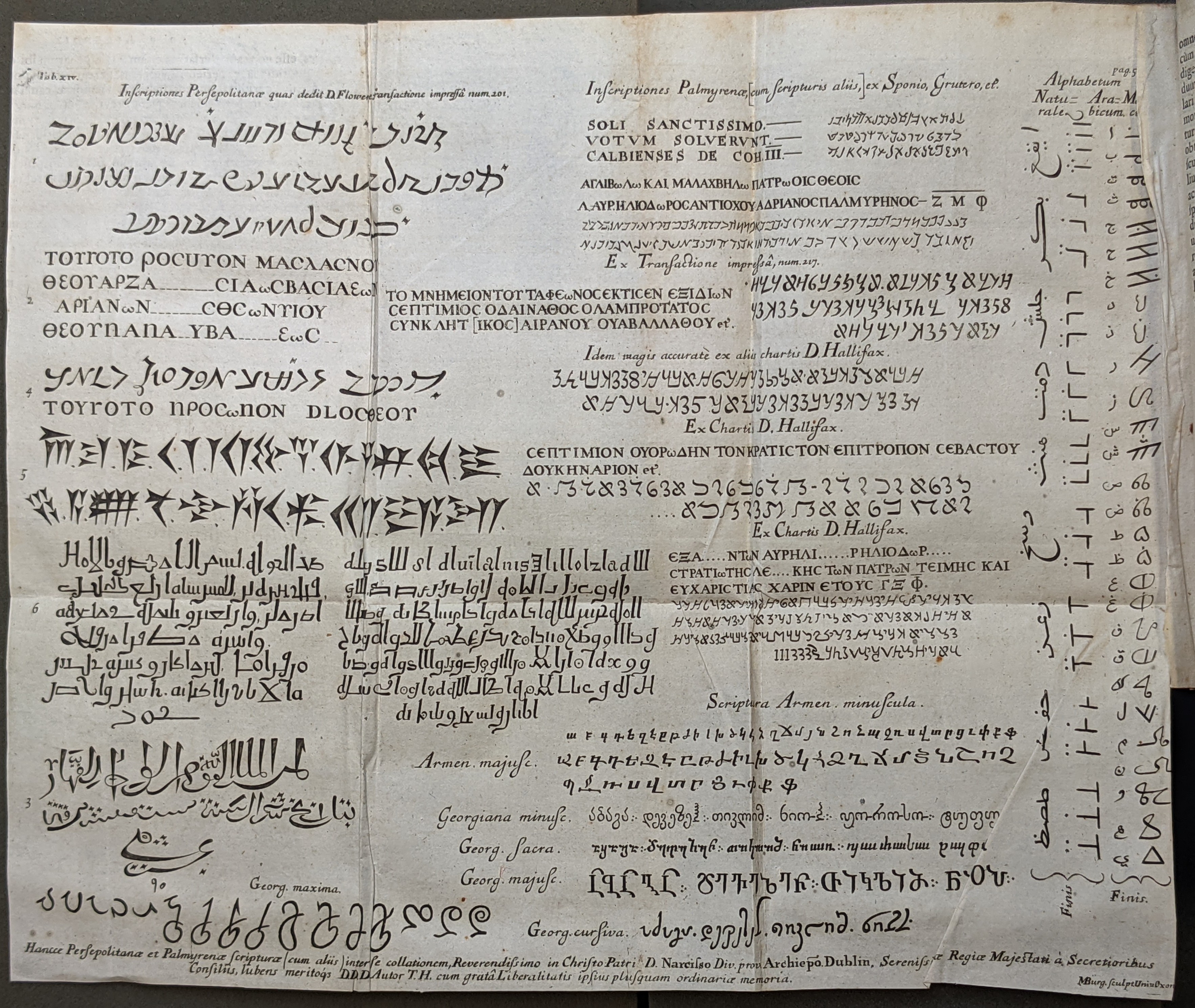
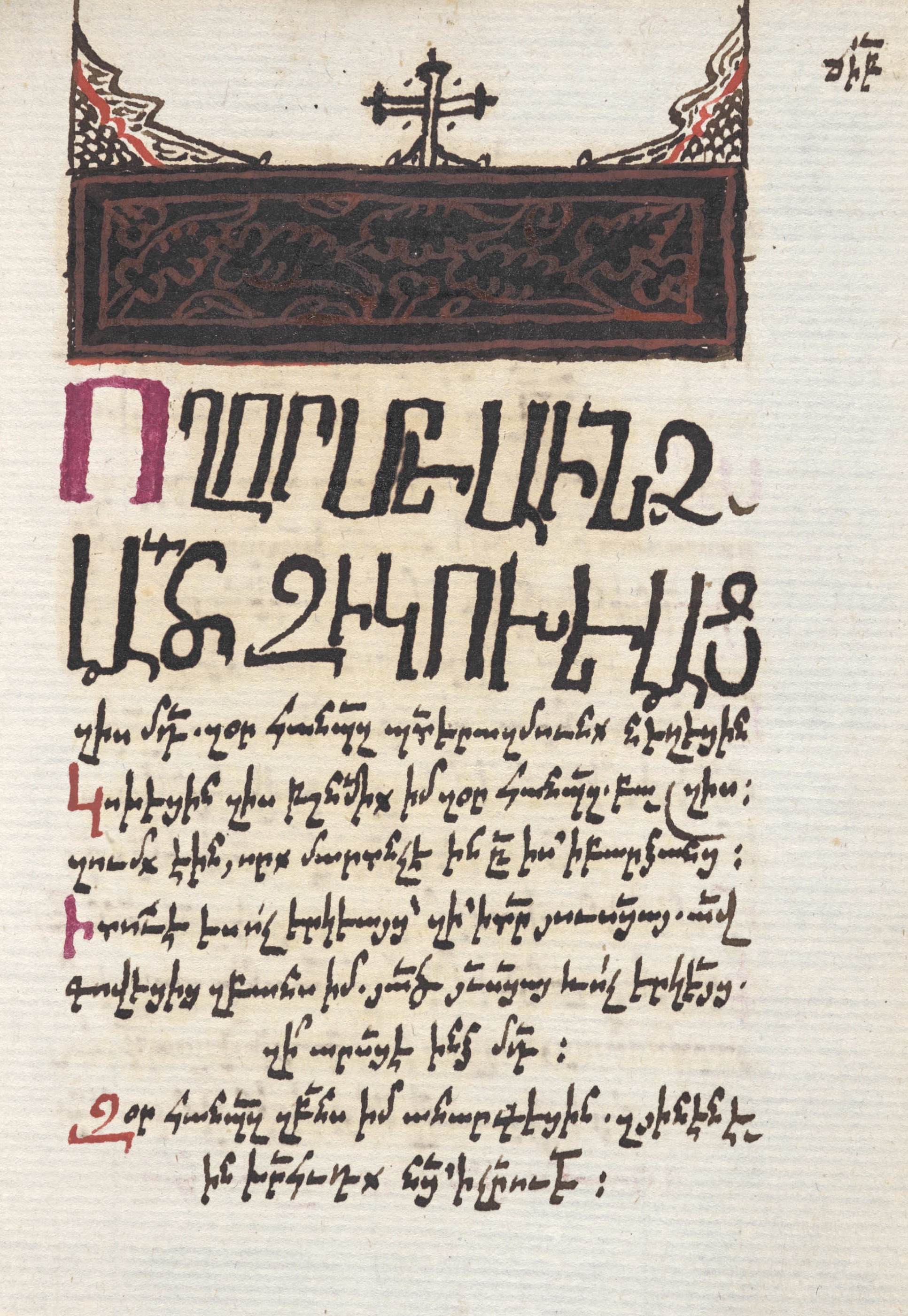 Armenian is one of the rarer languages Margoliouth mastered. While Armenian studies have been pursued at Oxford for a long time, the currently existing professorship of Armenian was established only in 1965, 25 years after Margoliouth’s death. Currently, Oxford is the only university in the UK where Armenian can be studied.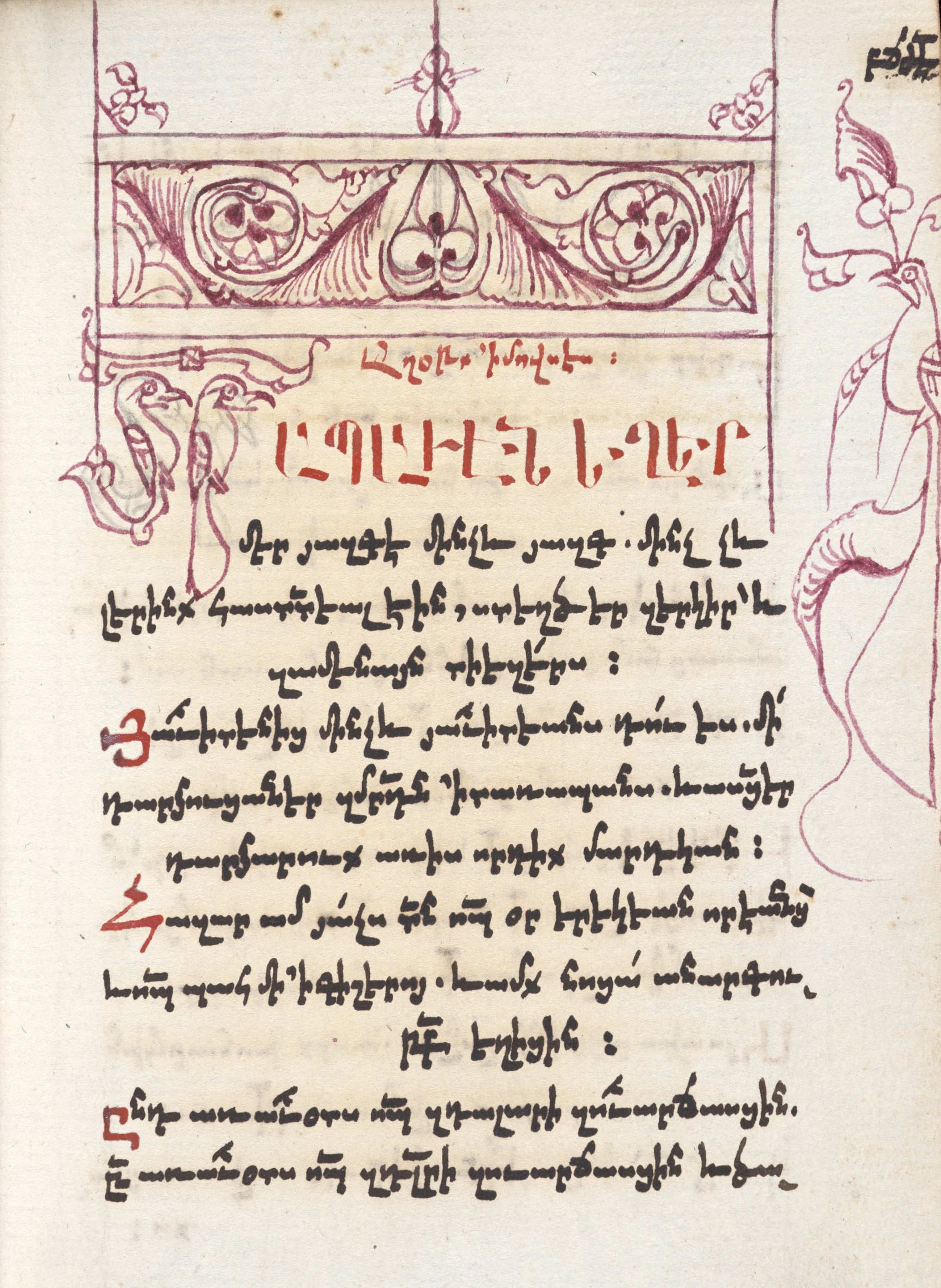
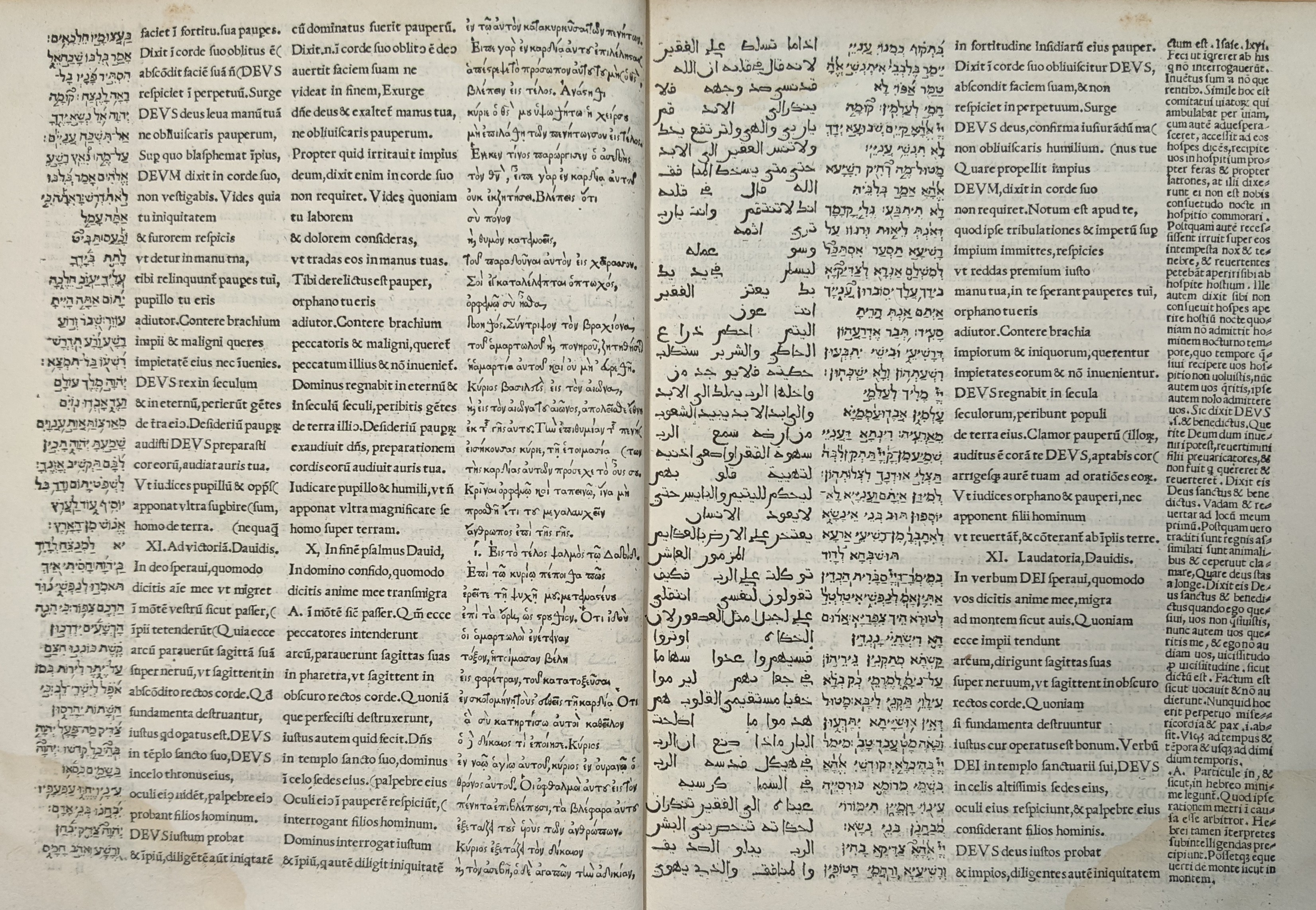
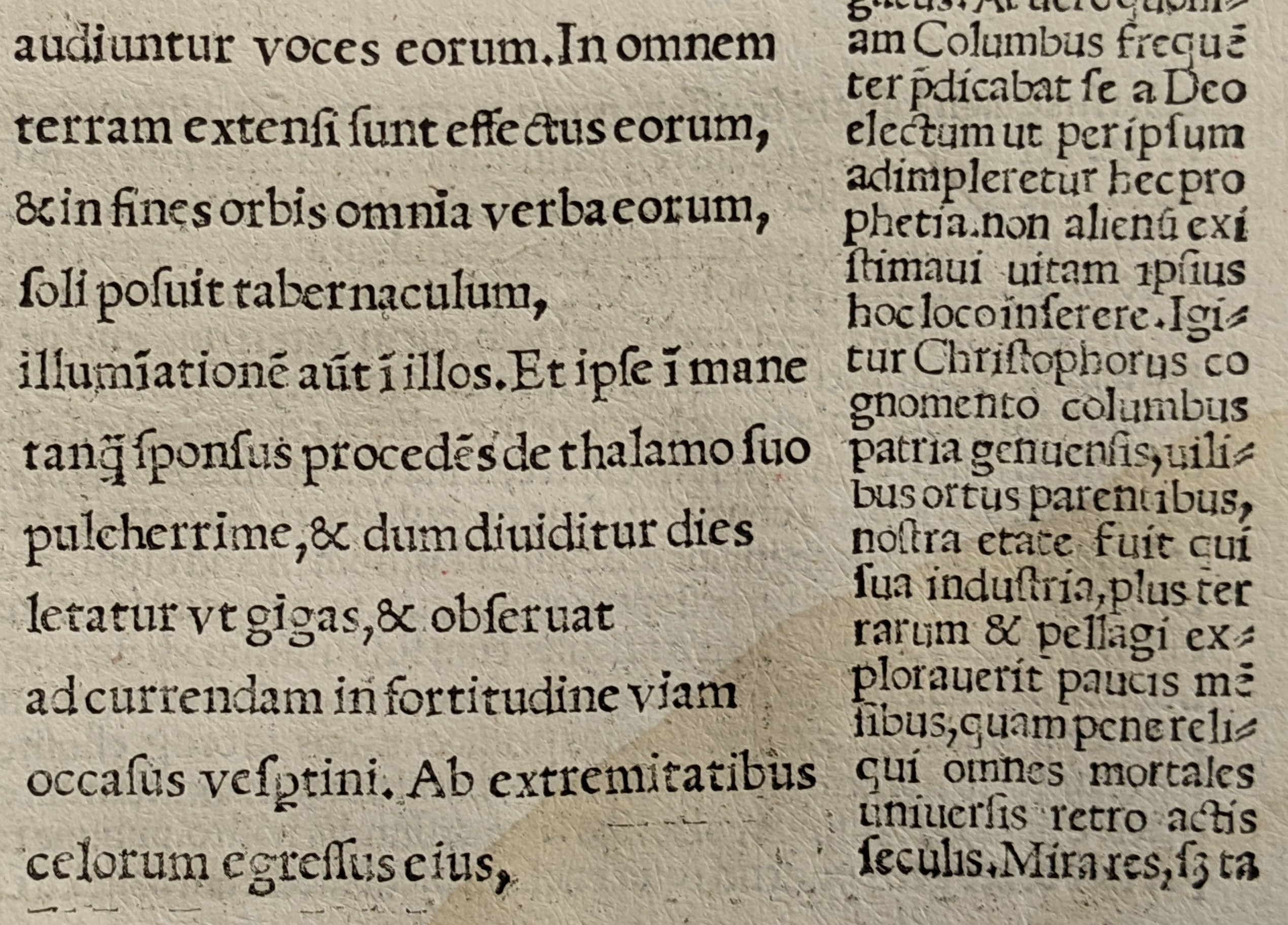 Excitingly, the psalter contains possibly the first printed reference to the most famous son of its place of origin, the Republic of Genoa: Christopher Columbus and his exploits merit a lengthy footnote to Psalm 19. The statement in the psalm that word of the glory of God has gone in fines orbis terrae, ‘to the ends of the world’, seems to have been the occasion for this, with Columbus’s voyages considered an embodiment of the idea of going to the ends of the known world. Of this psalter only 2,000 copies of it were printed for its editor, the Italian Catholic bishop, linguist, and geographer Agostino Giustiniani (1470–1536). Disappointed by the sales, he never published the polyglot version of the New Testament which he had planned and started to work on. This had to wait another 50 years until the publication of the Antwerp Bible.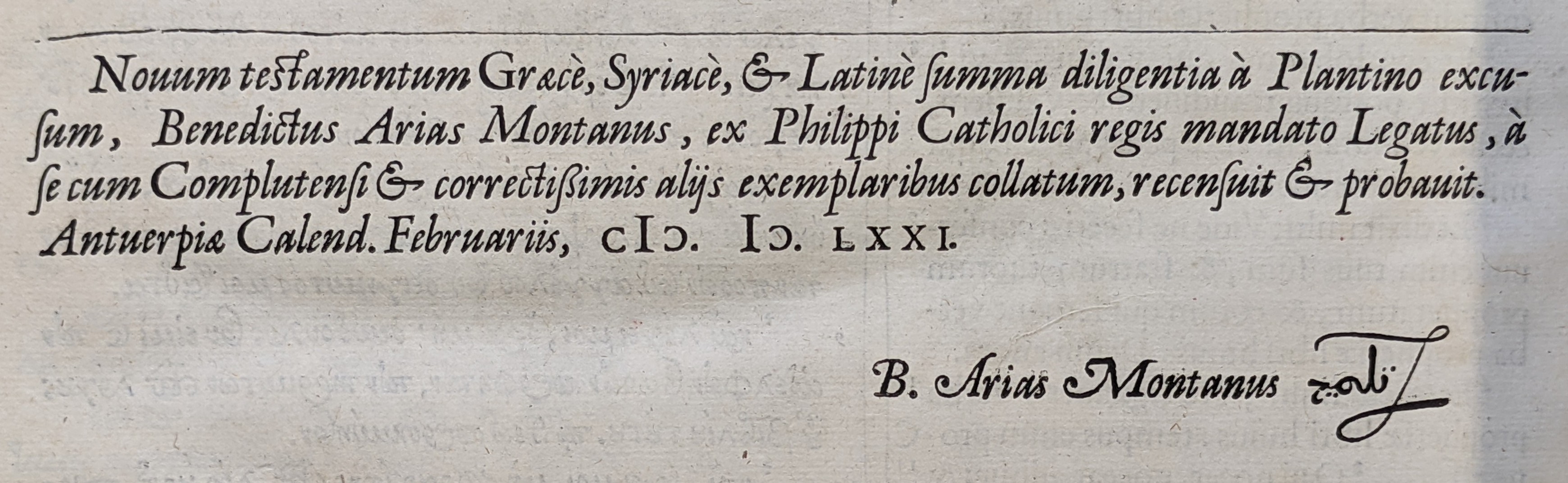
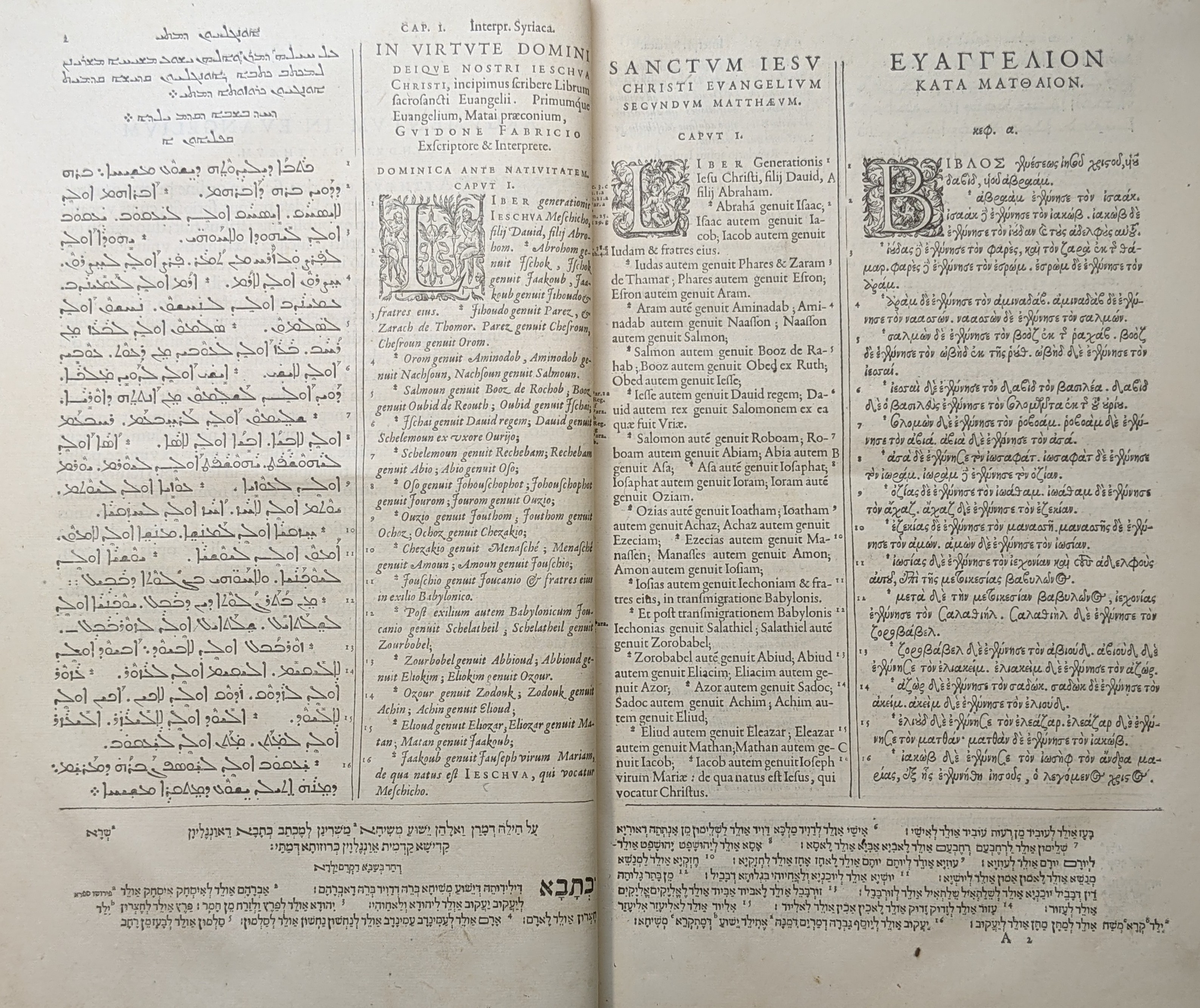
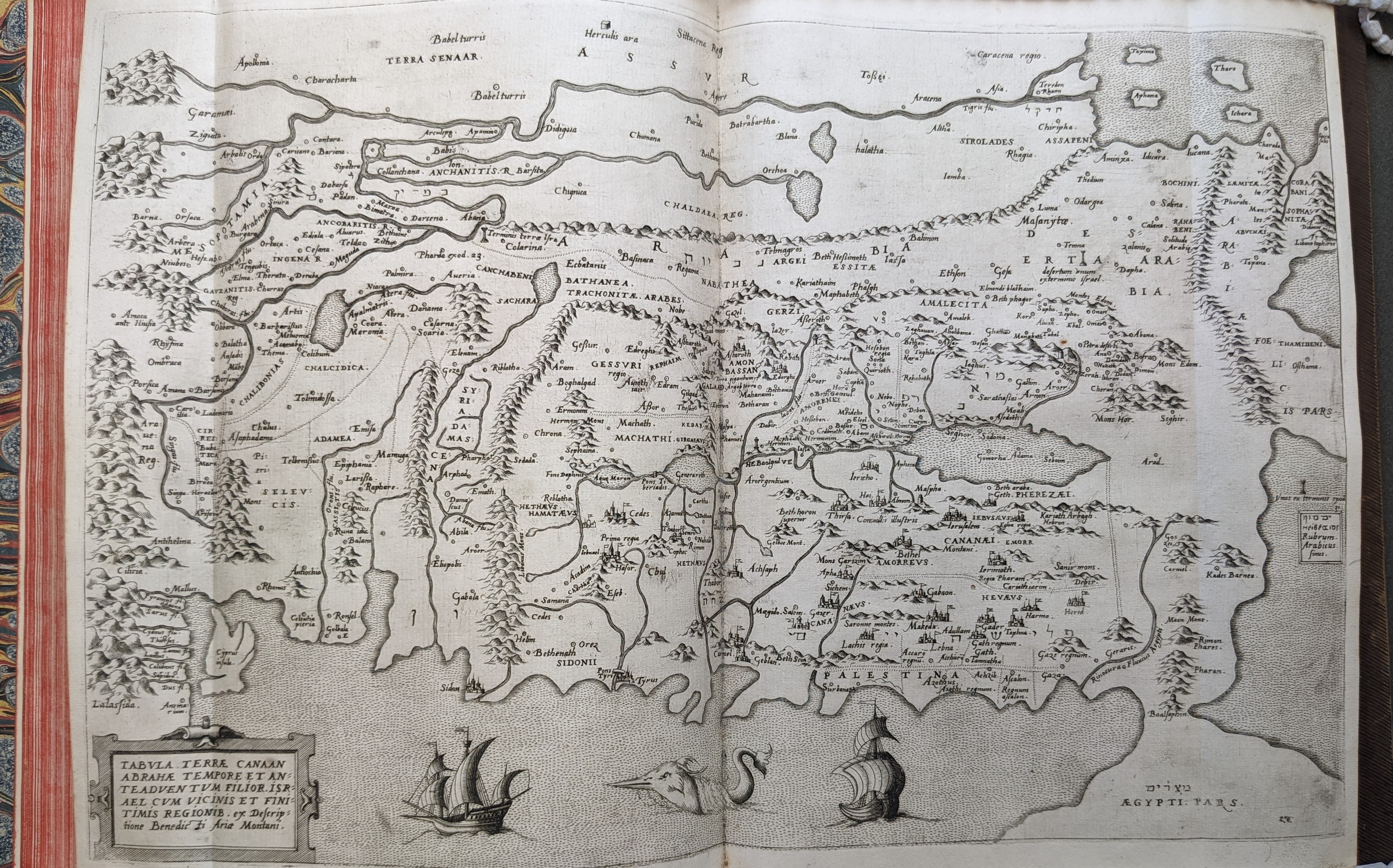
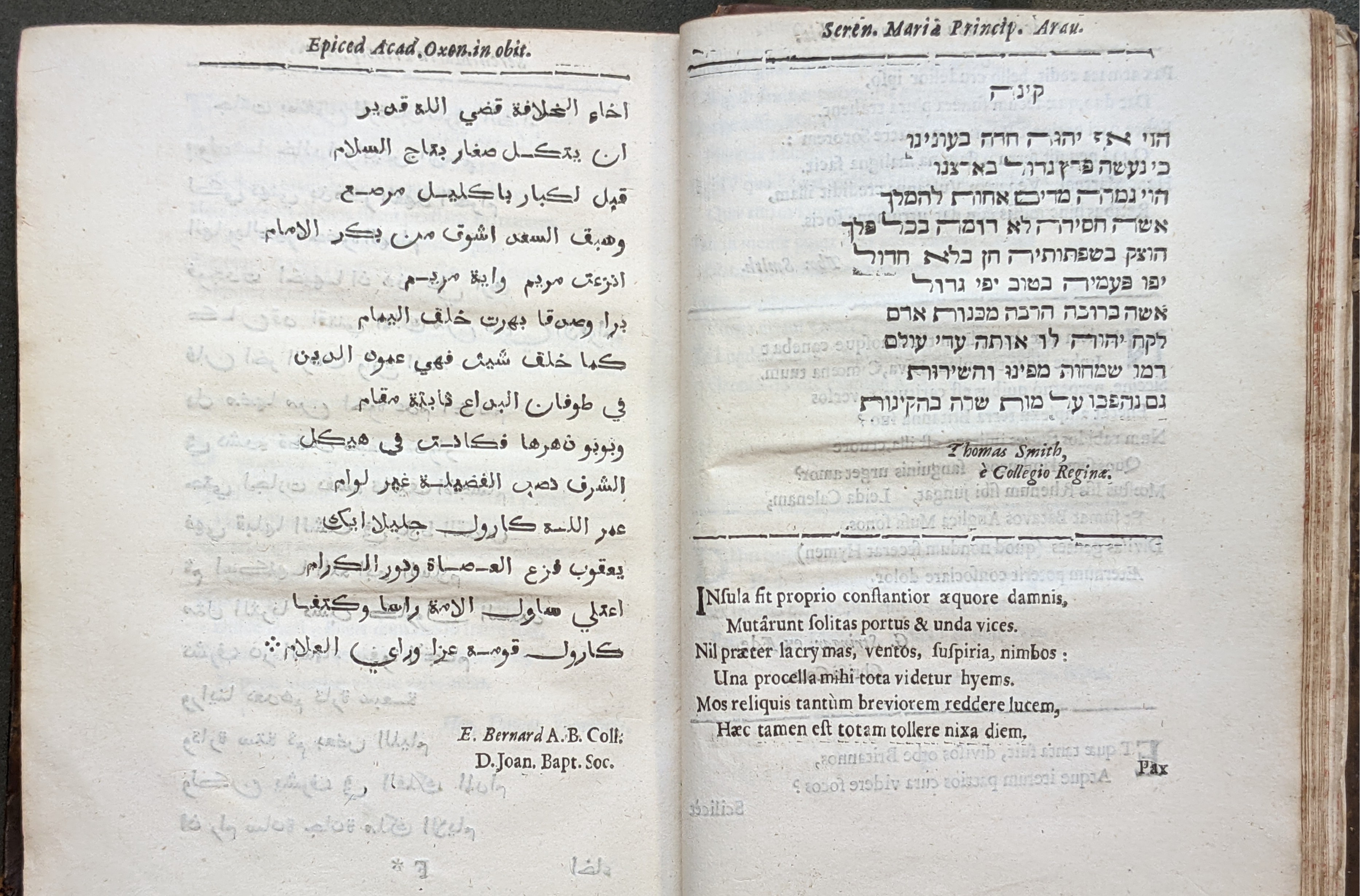
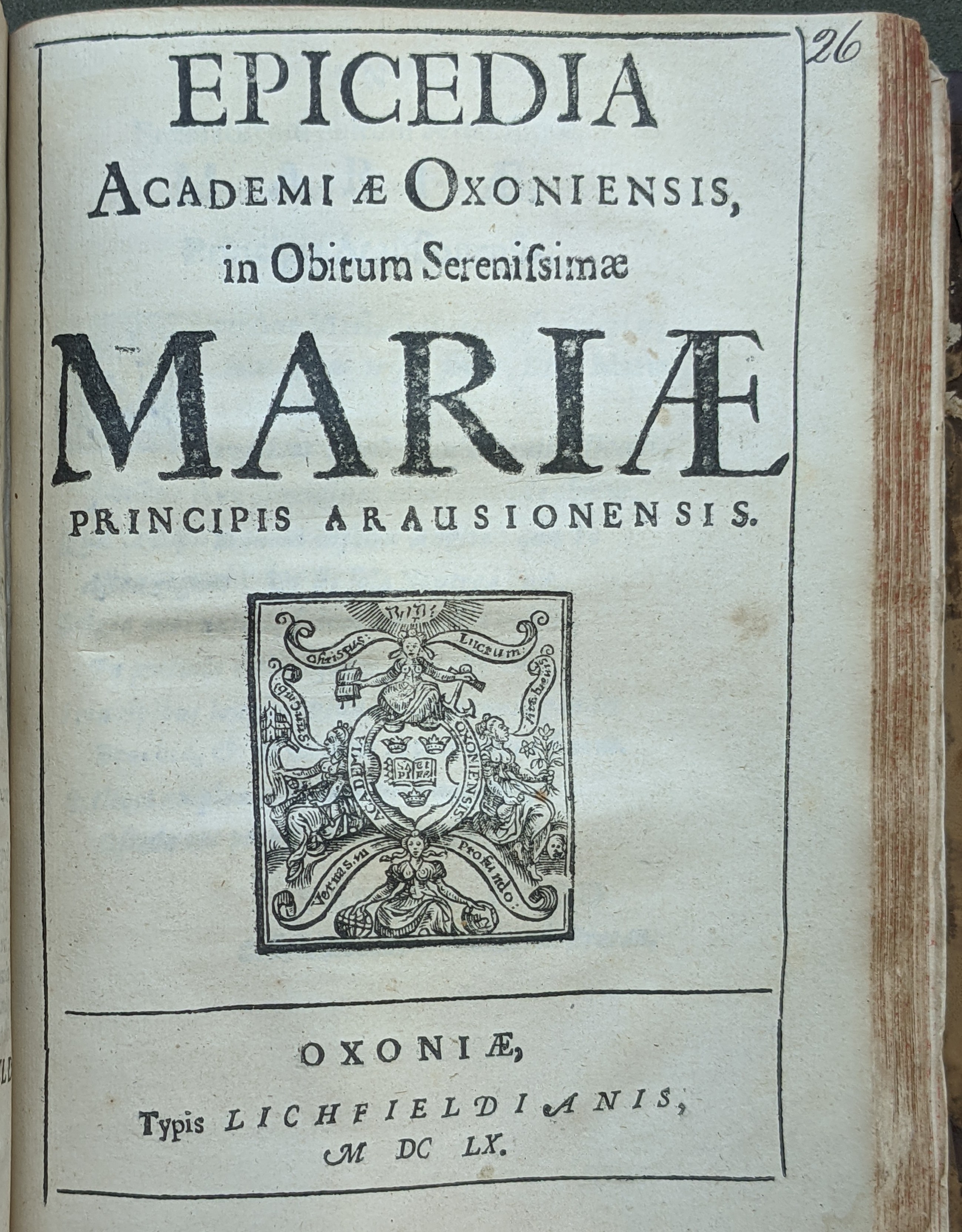 At 18cm and only 84 pages this next item is rather smaller in scope than either of these two large-scale polyglot prints, but possibly makes up for this with in the length of its title: Epicedia Academiæ Oxoniensis in obitum serenissimæ Mariæ principis arausionensis (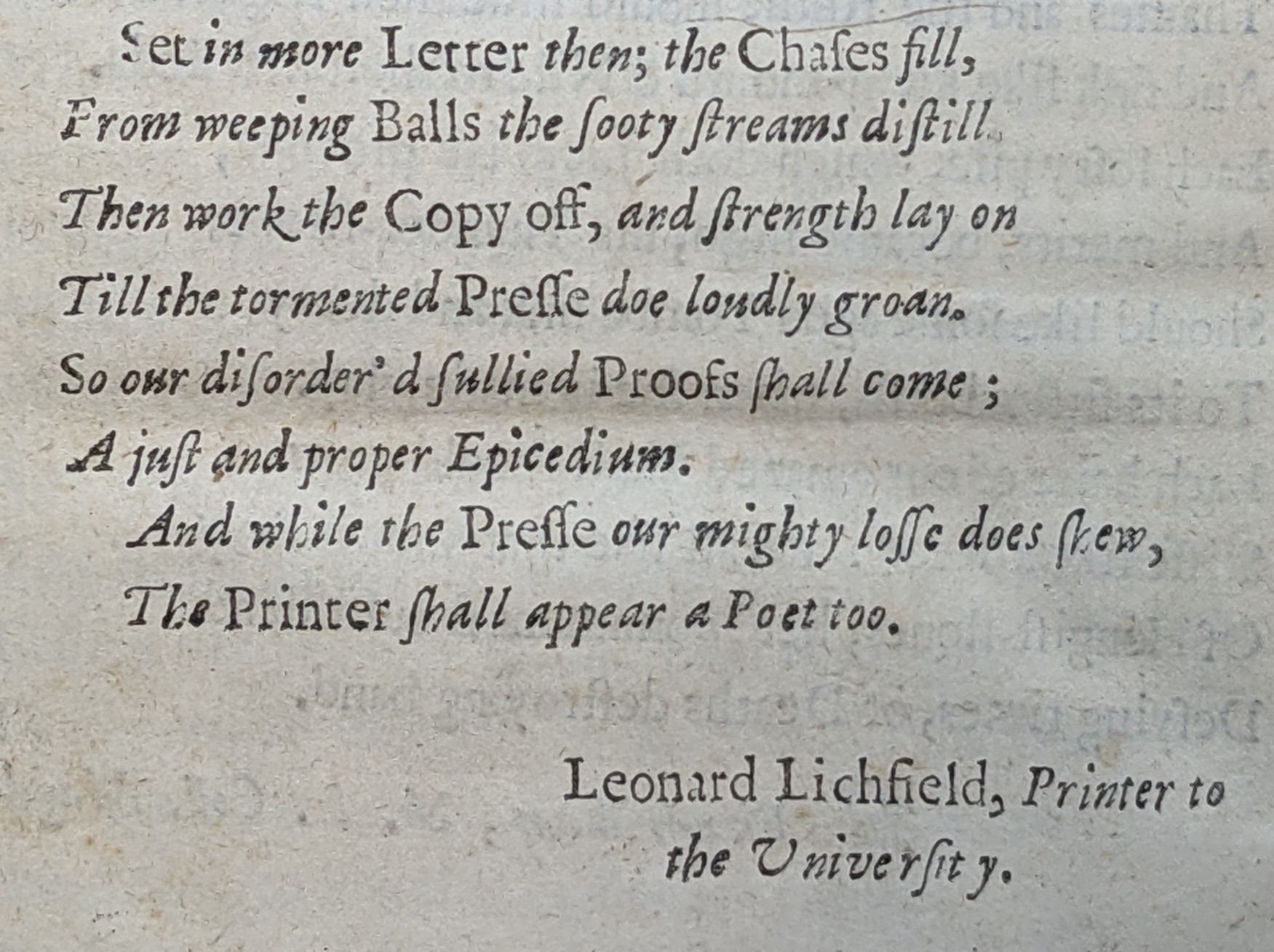
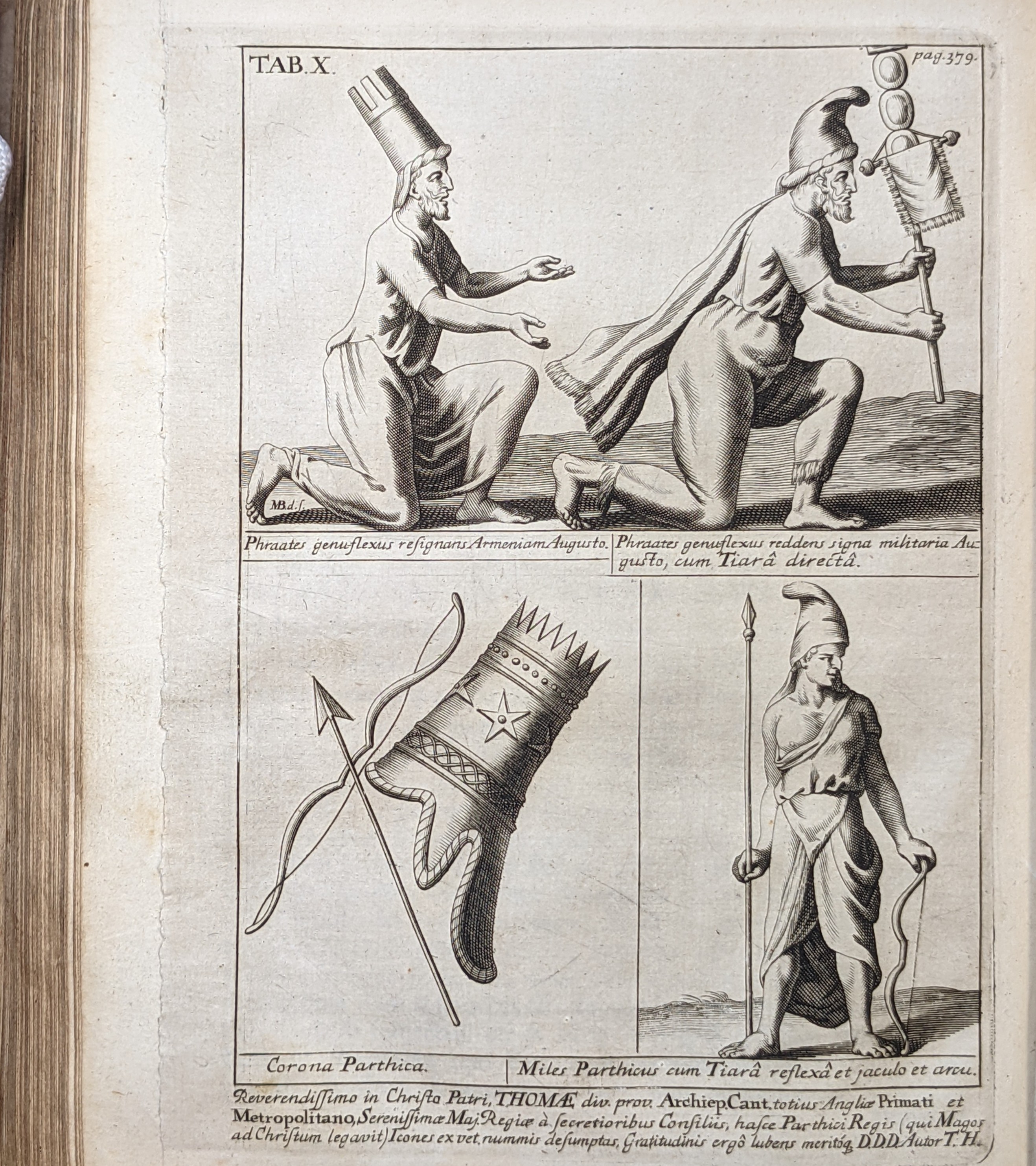 The Historia religionis veterum Persarum eorumque magorum, the ‘religious history of the ancient Persians and their magicians’, is the major published work of Thomas Hyde (1636–1703), a gifted orientalist (