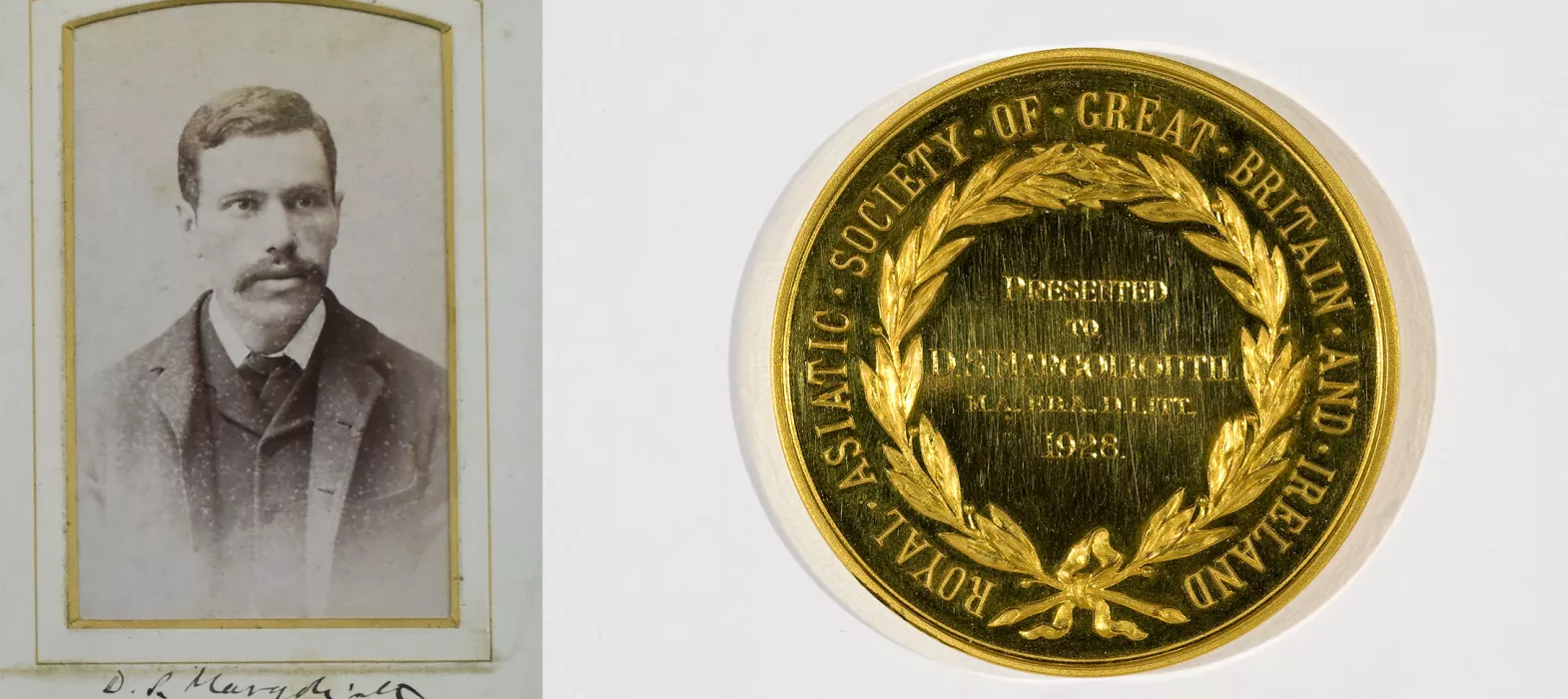
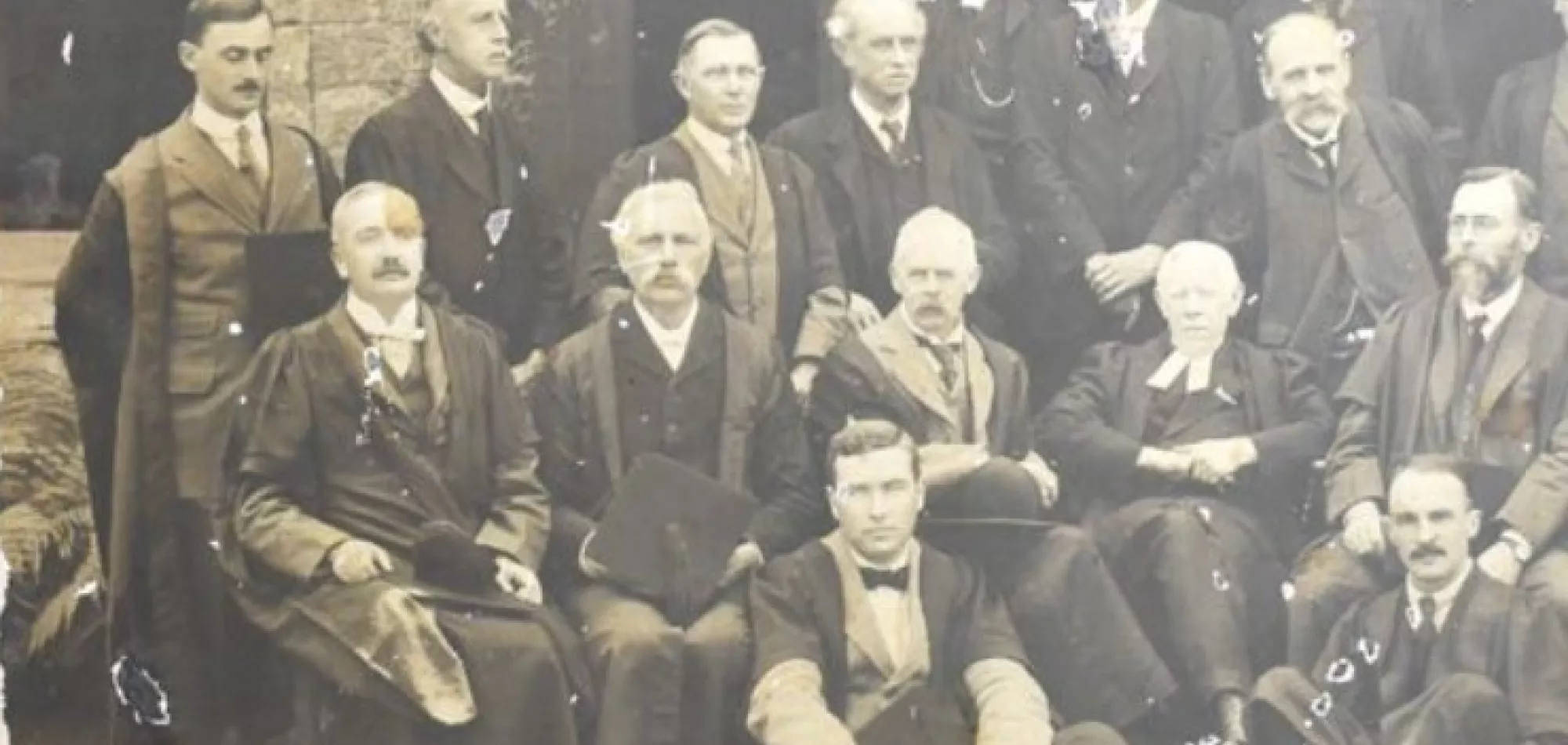
Margoliouth was educated from 1827 at Winchester College, until coming up to New College in 1877 with a scholarship. Elected a New College fellow in 1881, he gave classics tutorials. Somewhat surprisingly in 1889, he was appointed—by a panel including Oxford’s Regius professor of Hebrew, Wykehamist and New College man, Samuel Rolles Driver—to the Laudian professorship of Arabic, a university chair he held until 1937. In the banner image above, you can see a contemporary picture of Margoliouth from his teaching days. Dating from 1921—and now held in New College Archives—this photograph depicts all the fellows in the Cloisters. Margoliouth is sat in the centre (second from the left), with a mortarboard in his lap (NCA SCR/A3/1).
Sceptical approaches and an ironic tone characterised some of Margoliouth’s writings. Notably, his 1925 article on ‘The Origins of Arabic Poetry’ for the Journal of the Royal Asiatic Society, alleging pre-Islamic Arabic poetry was inauthentic (i.e. fabricated or forged) marred his scholarship to a degree, causing contention and scandal especially in the Muslim world. He was, however, lionised by the Royal Asiatic society (RAS), serving as director and later president. Indeed, in 1928 the society awarded him its triennial gold medal, which he later donated to the college. It is still held in the college’s chattels today and is pictured below (NCO403547 and NCO403548).
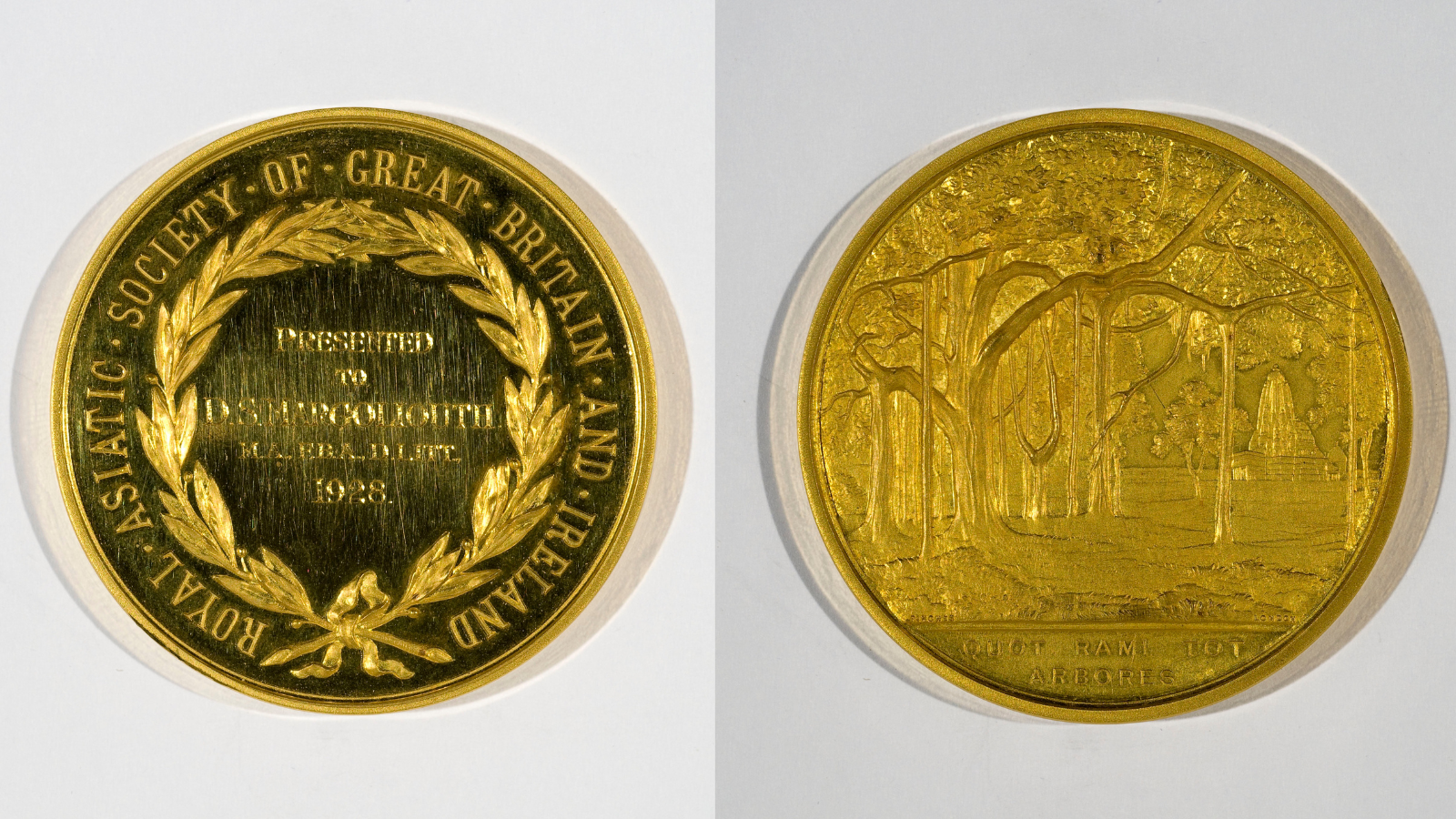
The Royal Asiatic Society presented the triennial gold medal to individuals who dedicated their lives to Asian studies. The obverse of the medal bears a Latin motto ‘Quot Rami Tot Abores’, meaning ‘as many branches as there are trees’, this accompanies an intricate depiction of a banyan tree which is native to the Indian subcontinent and symbolises longevity. The triennial gold medal was awarded between 1897 and 1990—it has now been replaced by the The Royal Asiatic Society Award—and was produced by John Pinches Medallists (founded in London c. 1840). The medal awarded to Margoliouth was made when Pinches’s son, John Harvey Pinches (1852–1941), was running the firm.
Margoliouth had first won a clutch of school prizes at Winchester College—Divinity, English, Greek, Latin, Modern Languages—and accolades continued at Oxford: Hertford and Ireland scholarships for Classics, and prizes in Hebrew, Syriac, and Sanskrit. During his lifetime, the American Oriental Society, the Deutsche Morgenländische Gesellschaft, and the Persia and Central Asia Society honoured him, and his RAS obituary rightly went on to call him ‘the leading Arabic scholar in England’, with ‘an almost legendary reputation amongst non-Orientalists and even in the Islamic countries of the East’.

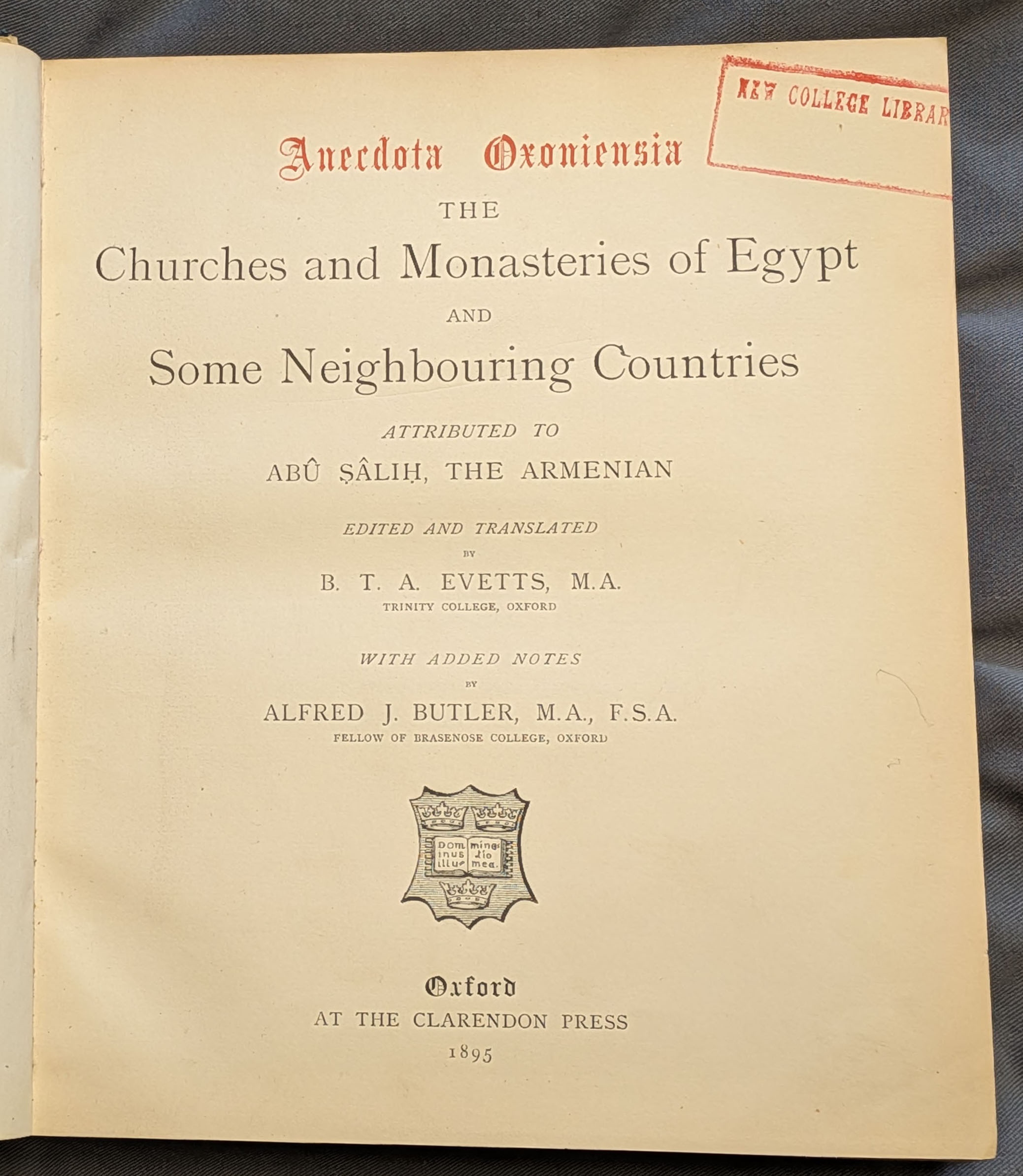 Entitled The Churches and Monasteries of Egypt and Some Neighbouring Countries (