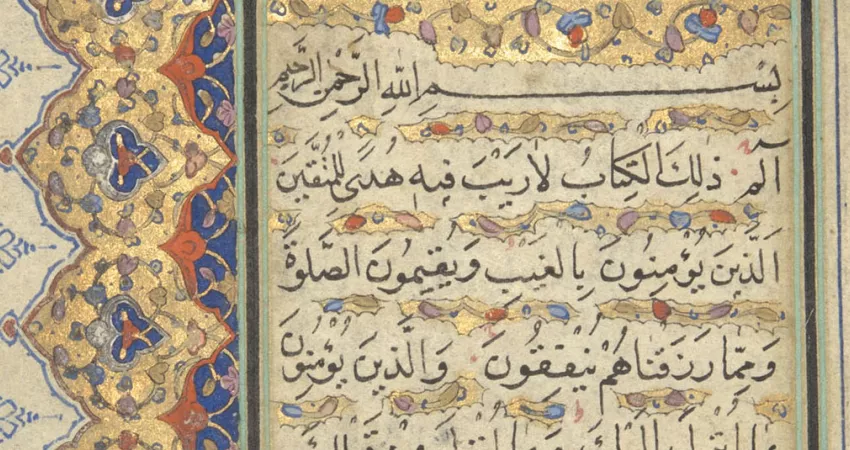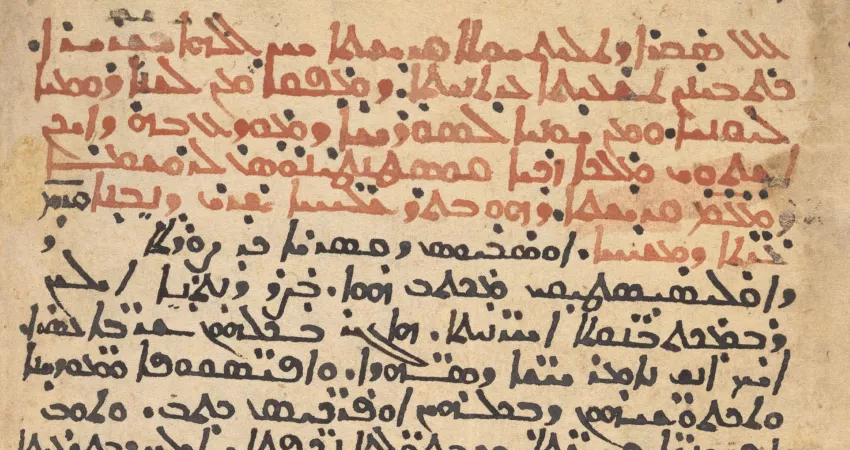
The Hebrew language has existed for more than three millennia, maintaining a remarkable stability from the pre-biblical era to the present day.


Like Arabic, it belongs to the Semitic language family, and was one of the many languages mastered by Margoliouth throughout his life. This next tab of our exhibition showcases some highlights from the extensive collection of books in Hebrew housed at New College Library. Due to its importance as a language of the Old Testament, Hebrew has long been studied at New College—the items highlighted here, therefore, reflect both practical interest in language learning and a desire to better understand the original biblical text.
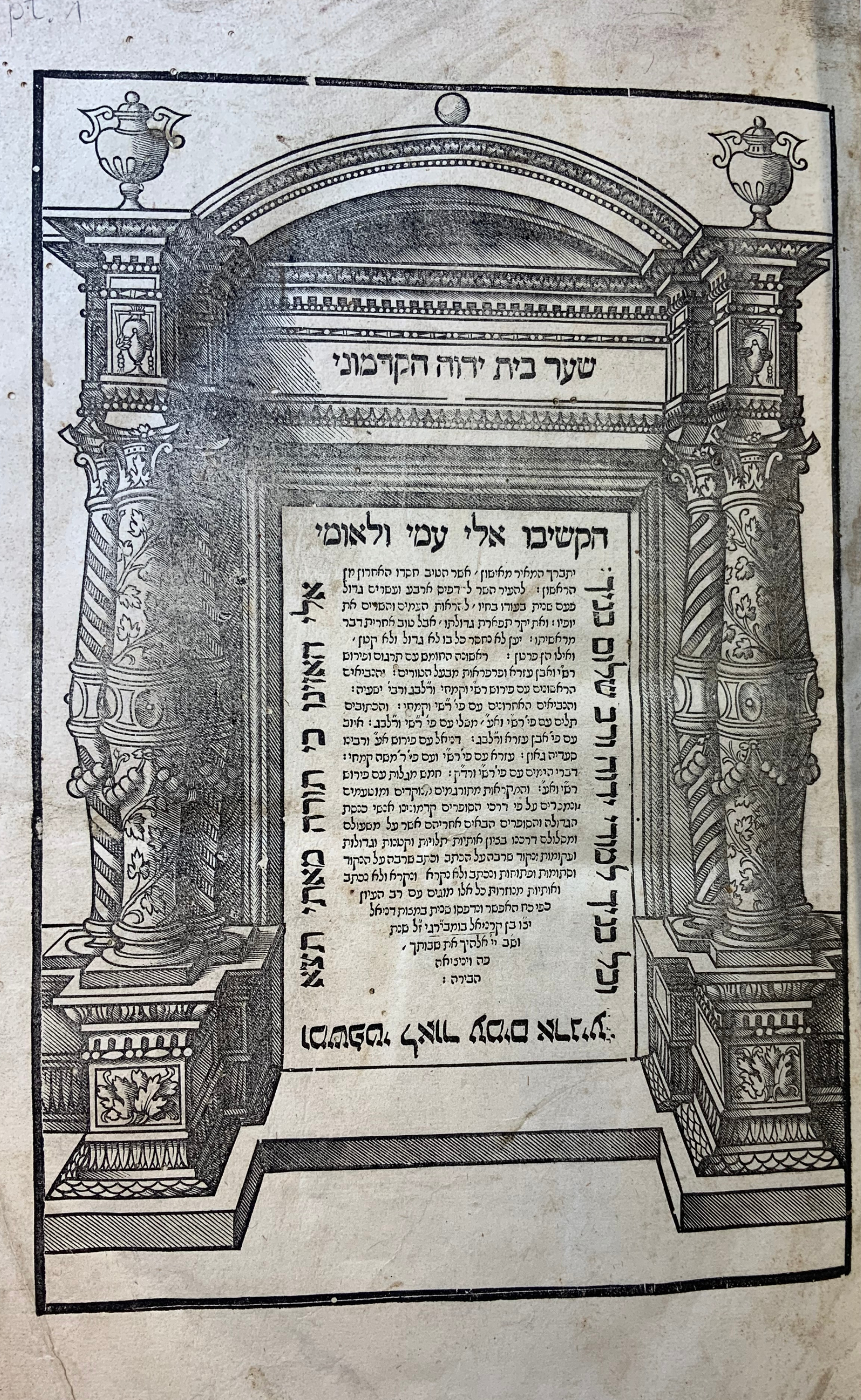
New College Library, Oxford, BT1.68.5, title page

Indeed, over the centuries, New College Library has collected several Hebrew Bibles—here you can see the title-page of one of the oldest and finest (BT1.68.5). Dating from the 16th century, it is a copy of a Bomberg Bible, named after the printer Daniel Bomberg (c. 1483–c. 1549), whose famed workshop was in the city of Venice. This workshop was the first in the world to print Hebrew Bibles, which was an enormous undertaking as a range of new typefaces had to be produced in order to print it.

Note the distinctive arch design of this title-page. The use of an arch is deeply symbolic in Jewish printing tradition—the title-page is a gateway into the book but also a gateway for the reader into the religious text. This concept was so important that the traditional Hebrew word used for a title-page is שַׁעַר (sha’ar) or ‘gate’ in its English translation.

The beautiful decoration in this book only continues as the reader opens it further. Below, you can see the spectacular woodcut illustration present at the start of the book of Genesis.
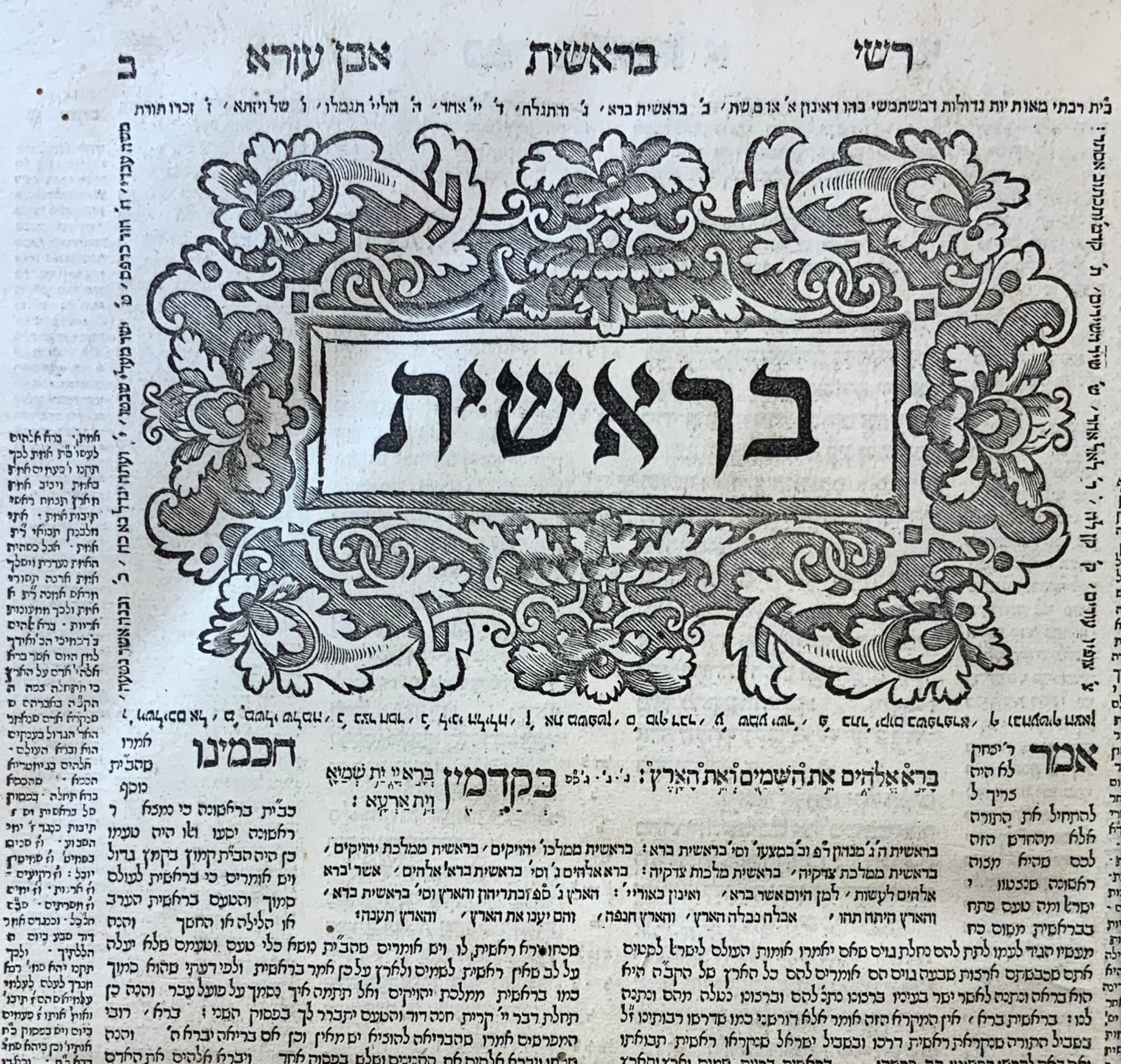
New College Library, Oxford, BT1.68.5, start of Genesis

This edition also includes rabbinic commentaries, which can be seen in the image shown here. The original biblical text is printed in the centre, and the text is surrounded by the corresponding commentary. This was the third complete Hebrew Bible printed by Bomberg. It differs from the 1524–25 edition in terms of additions and corrections to the commentaries. In total, there are four parts divided into two volumes.
Endpapers, BT1.68.5
Image

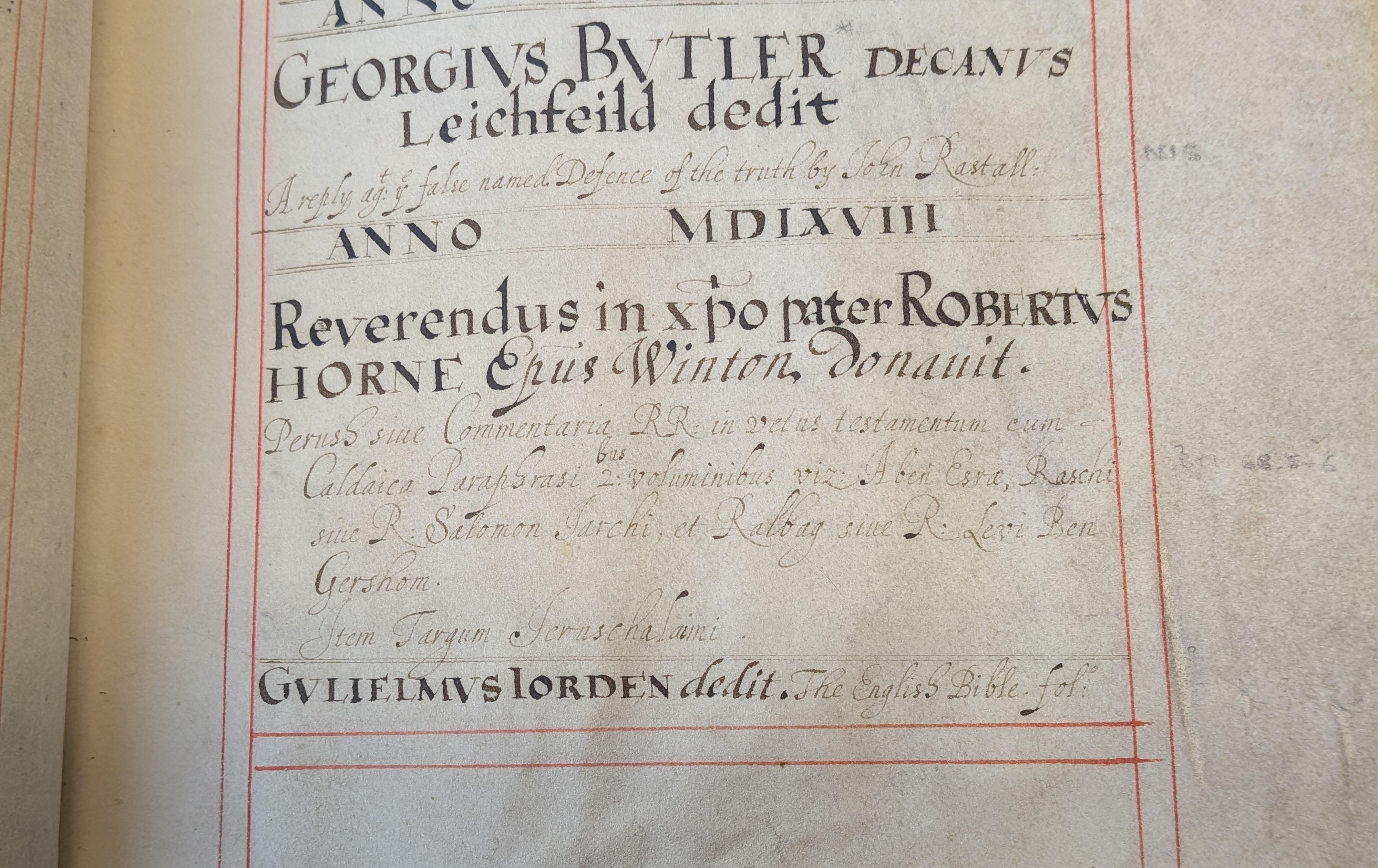
Robert Horne was a fellow at New College—his donation was recorded on page 37 of the Library Benefaction Book (see image above).

×

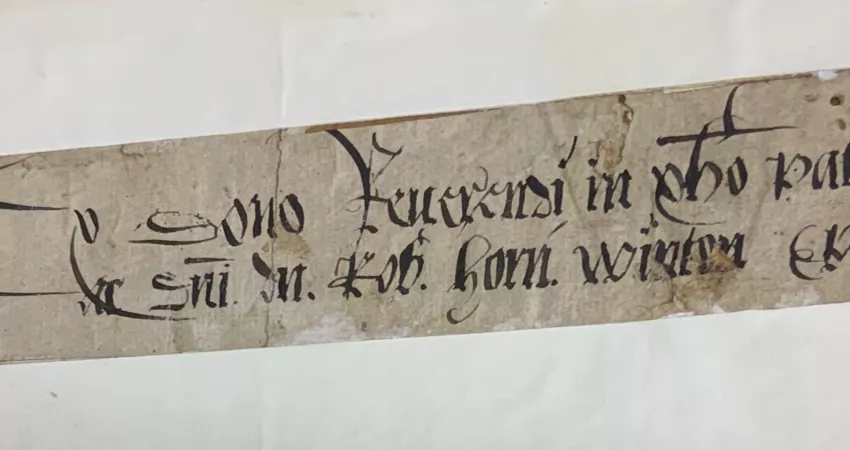
We know that this important work was donated to New College Library by Robert Horne (c. 1513–1579), who was bishop of Winchester. His donation is shown in an ex dono inscription, pictured above. Thanks to some careful book conservation, it is still possible to see this inscription today behind the strengthened endpapers.

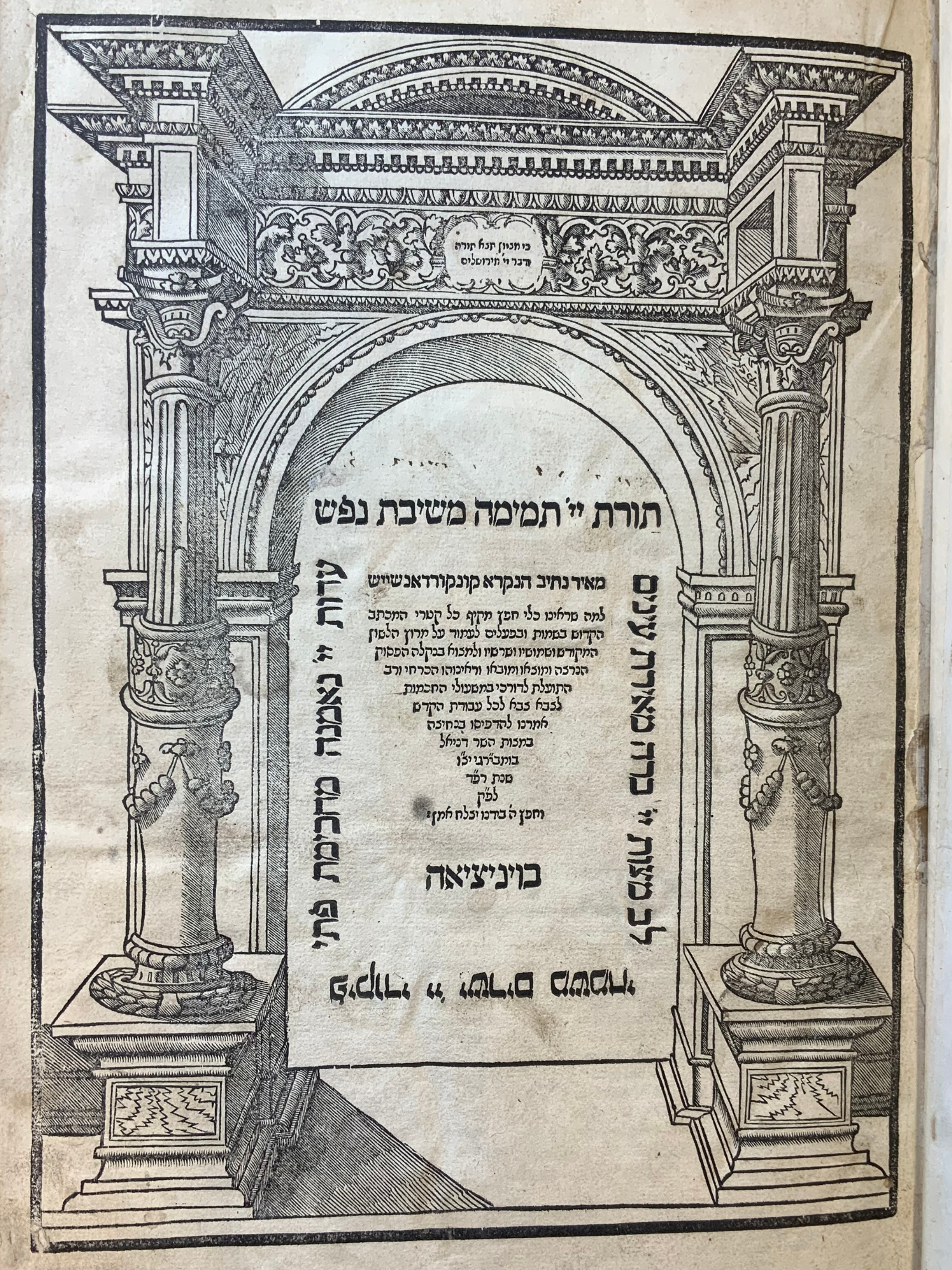
New College Library, Oxford, BT1.72.12, title-pageThe collections at New College Library feature Hebrew not only in the Biblical texts but also used in books that were printed to aid the understanding of the Old Testament. Here, you can see the title-page of the first Hebrew concordance of the Bible (BT1.72.12)—essentially an alphabetical index of all the words in the Bible, with each word linked to every verse in which it appears. Produced in the 15th century and finally published in 1523, it was considered by Jews to be a necessary publication, enabling Jewish theologians and intellectuals to more easily respond to Christian arguments. Although a practical book, it is also very beautiful. Again, the title-page includes an intricate arch. This arch is further embellished with a woodcut border that includes the words of Psalm 19, verses 8–9.
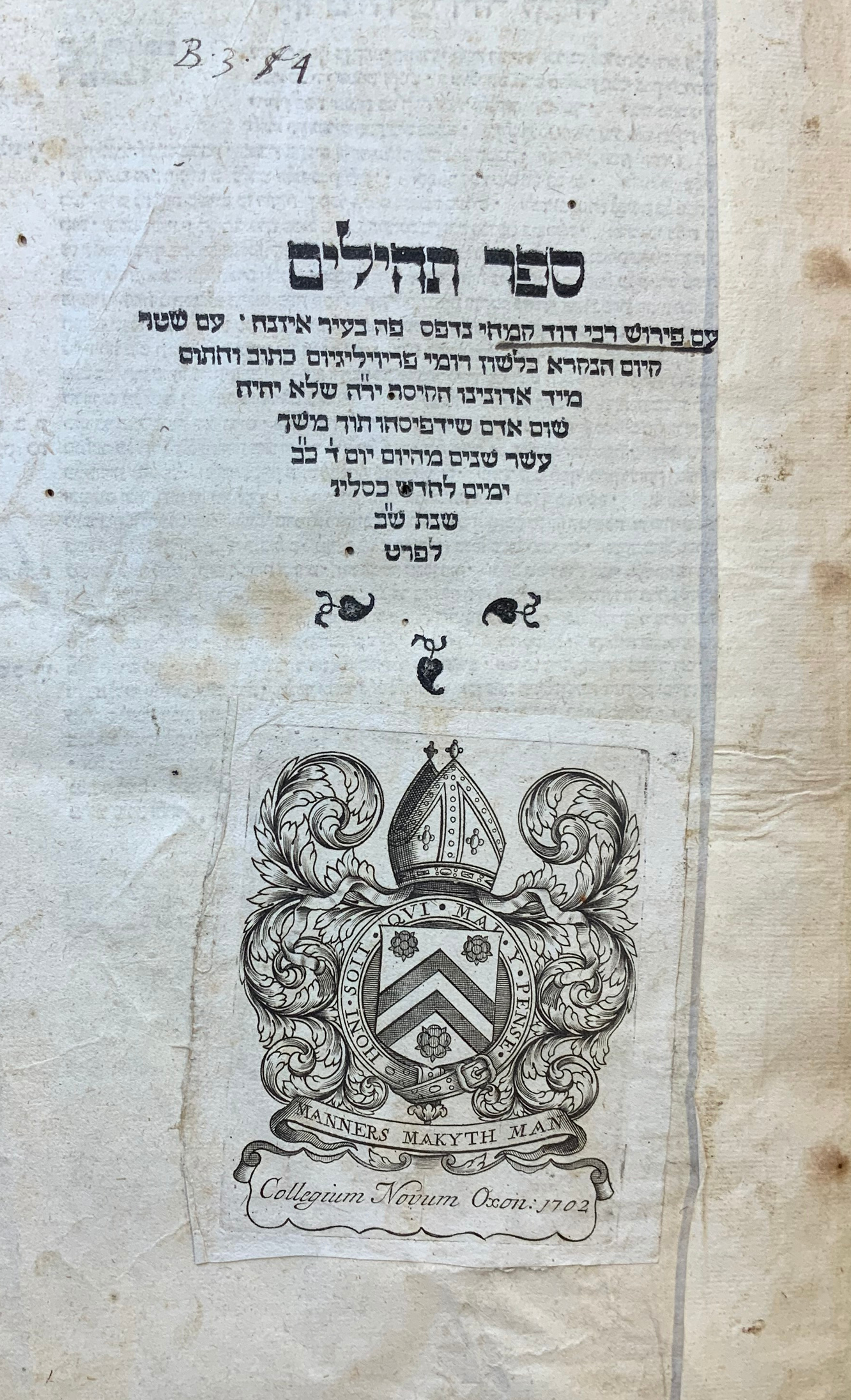
Interestingly, there is some confusion as to the precise authorship of this important text. The most likely candidate is one Nathan Mordecai. A French physician and theologian from Avignon, Mordecai is listed as the author on the inner title page. At the end of the the introduction, though, the French Jewish philosopher Isaac Nathan ben Kalonymus is listed as the author. As he was also resident in southern France (at Arles and at Avignon), these two Jewish intellectuals may have worked together to create the final concordance. Whatever its precise authorship, the book remains an important part of Jewish history in New College’s collections—one of only two surviving copies in the UK. The other copy is, in fact, located only a ten minutes’ walk from New College: at Corpus Christi College Library, Oxford.

Bt1.61.10, title-page

Books do not have to be beautiful to be worthy of study. Although not as intricately decorated as the two books listed above, the Sefer Tehillim (left) is a worthy inclusion in our exhibition as it is a true survivor (BT1.61.10). A copy of the Psalms (Tehillim in the Hebrew language), it contains a rare commentary authored by the renowned medieval philosopher, grammarian, and biblical exegete, Rabbi David Kimhi (d. 1235).

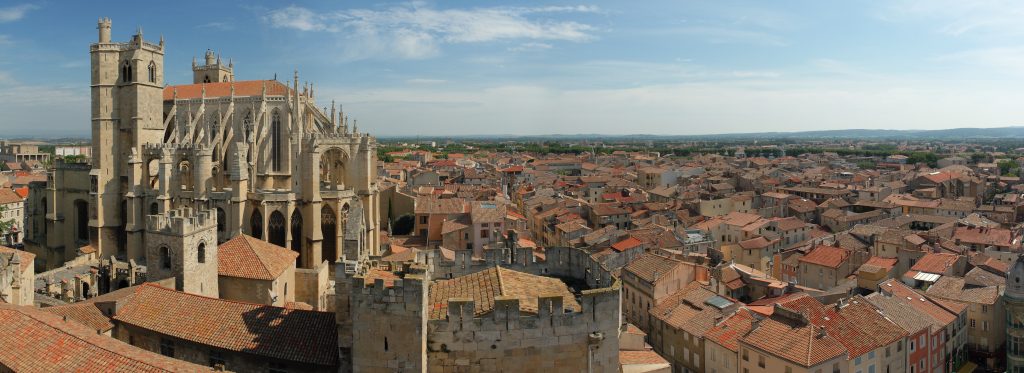
Kimhi, often referred to as RaDaK after the initial letters of his name, was born in Nabonne, France, in the mid-12th century. His family had fled there from al-Andalus—Muslim Spain—due to the Almohad persecutions, and subsequently played a key role in the spread of Judeo-Arabic culture to Languedoc. The city of Nabonne, pictured below, had been home to a substantial Jewish population for many centuries—the first key evidence of a Jewish presence dates back to at least the 5th century CE.

Panoramic image of the city of Nabonne, France

Kimhi’s fame as a scholar of the Hebrew Bible continues to the present day. Utilising the literal-philological method popular with his predecessors and contemporaries, Kimhi incorporated additional rabbinic material into his exegesis, which was more openly critical of Christianity. This criticism was perhaps especially prevalent in his commentary on the Psalms, making the text a particular target for censorship. Many Hebrew books suffered extensive expurgation in the 16th century, beginning during the papacy of Paul IV (1555–59). Thankfully, this New College copy of Kimhi’s Psalm Commentary has escaped any such censorship.

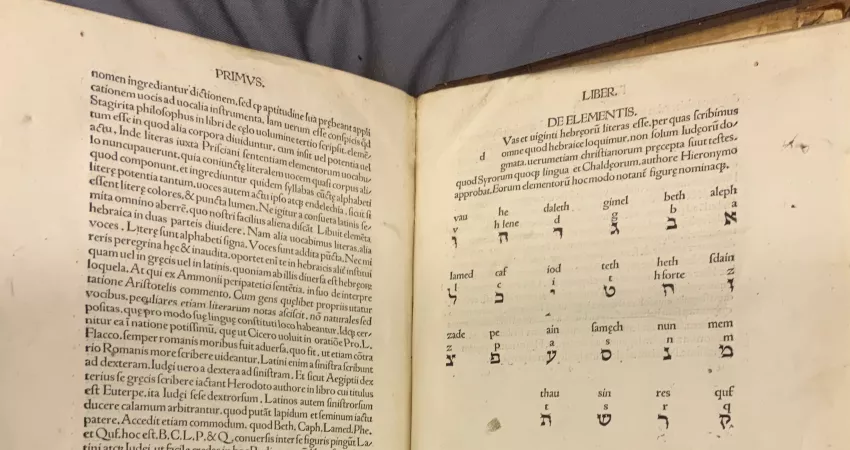
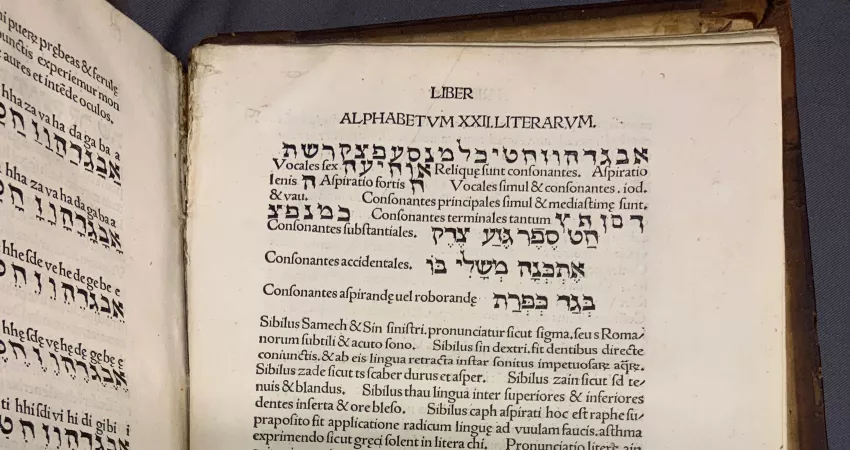
These Hebrew books may be both beautifully printed or important for biblical study, but they are, unfortunately, not easy for most people in England to read. The books at New College Library were also used by the fellows and scholars of New College to learn the Hebrew language, as evidenced by this final book highlighted on our Hebrew tab. Entitled De rudimentis Hebraicis (‘On the Rudiments of Hebrew’), this work provides a comprehensive introduction to Hebrew grammar (BT1.34.1).

Although primarily written in Latin, this book has an interesting page order. In the images in the gallery above—both taken from the start of the book—you can see that the ‘Liber primus’ (first book) actually appears at the back of the bound volume—following the Hebrew practice of reading from right to left instead of the conventional left to right of Latin. In this first chapter, the reader is introduced to the Hebrew alphabet—its distinctive 22 letters are printed at the top of the page.

The work itself was written by the Catholic humanist Johann Reuchlin (1455–1522). A scholar of both Greek and Hebrew, he was committed to advancing the knowledge of the Hebrew language throughout Germany—hence the creation and publication of this book in Reuchlin's hometown of Pforzheim in southwest Germany. 


All the books highlighted in this tab act as testament to many centuries of Hebrew study in New College.


From grammar books to Bibles, Jewish theological works to concordances, they show a commitment to not only collecting, but also to preserving important works in the Hebrew language. Together with the Arabic items discussed on the previous page, they reveal a linguistic diversity present in the collections at New College Library—a diversity that will only grow ever clearer as you read through the remaining tabs of this exhibition.