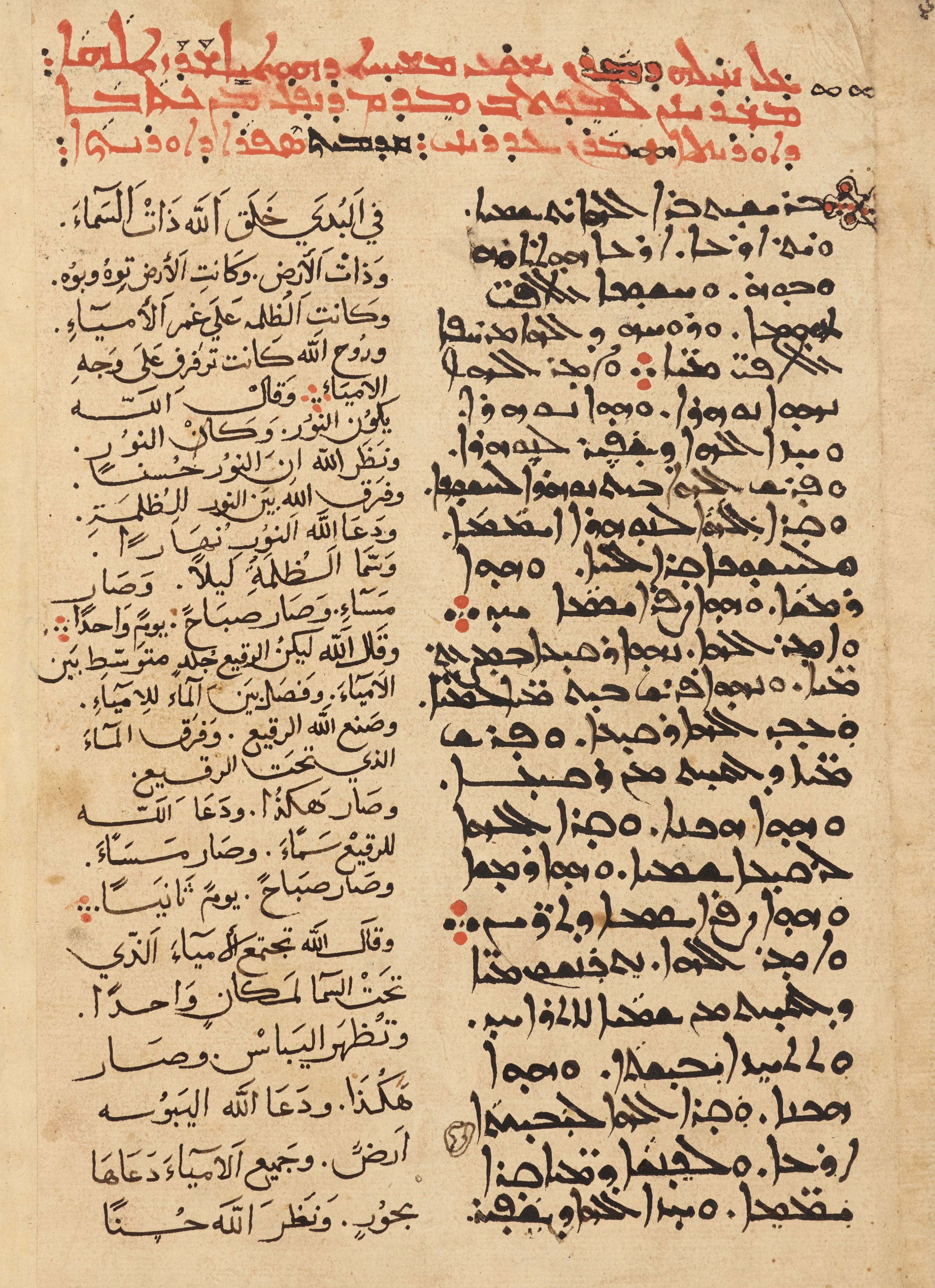
This is the opening page (f. 2r) of MS 335, the oldest Arabic text held at New College Library. Unusually, the book is made from cotton paper, rather than the parchment used almost exclusively for Western manuscripts before the 15th century. It is a religious text, but surprisingly not an Islamic one, but one closely connected with both the Christian and Jewish faiths: it contains the Pentateuch, the first five books of the Old Testament of the Bible: Genesis, Exodus, Leviticus, Numbers, and Deuteronomy.
Here, the original Hebrew of these texts is translated into both Arabic and Syriac, written side by side in two columns on each page—Arabic on the left, Syriac in its own distinctive alphabet on the right. There is a long history of Syriac and Arabic appearing together in religious and liturgical texts during the medieval period, and this manuscript is witness to the appetite for Christian texts in the Levant.
The original scribe is unknown, but in the top margin of one of the final leaves (f. 348r) there is a later inscription in English dating from the 18th century which suggests quite a precise date for the creation of this manuscript.
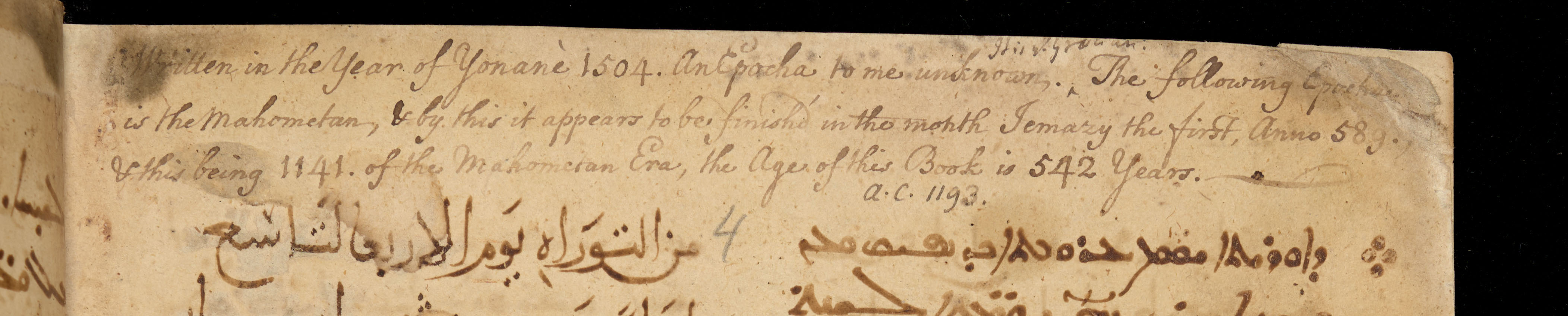
The note by the equally unknown later reader makes reference to several different religious calendars to pinpoint the date of the manuscript, and says:
‘Written in the Year of Yonanè 1504. An Epocha to me unknown. The following Epocha is the Mahometan, & by this it appears to be finish’d in the month Jemazy the first, Anno 589. & this being 1141. of the Mahometan Era, the Age of this Book is 542 Years. A.C. 1193.’
The archaic and now obsolete term ‘Mahometan era’ (referring to Muslims as followers of the Prophet Muhammad) describes a date according to the Islamic calendar, in which the count of years begins with the Hijrah, the establishment of the first Muslim community by the Prophet Muhammad in 622 CE. According to the note, the book was made in the Hijiri or Islamic year 589, which the writer calculates correctly to have been 1193 CE. Moreover, the Hijiri date of 1141 mentioned tells us that the note itself was written in 1728/29 CE. Therefore, this beautiful book passed through many hands and has been in use for many centuries.

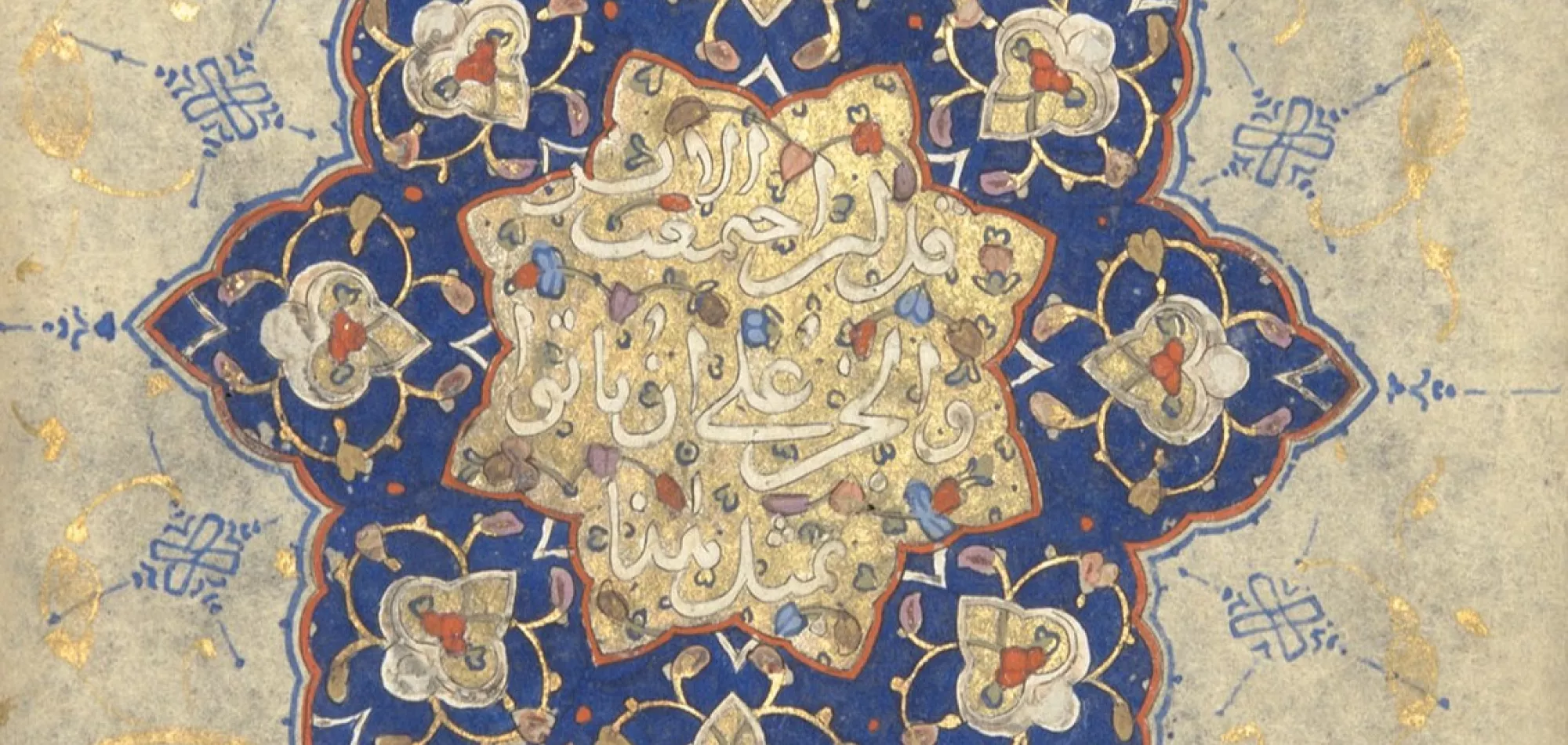
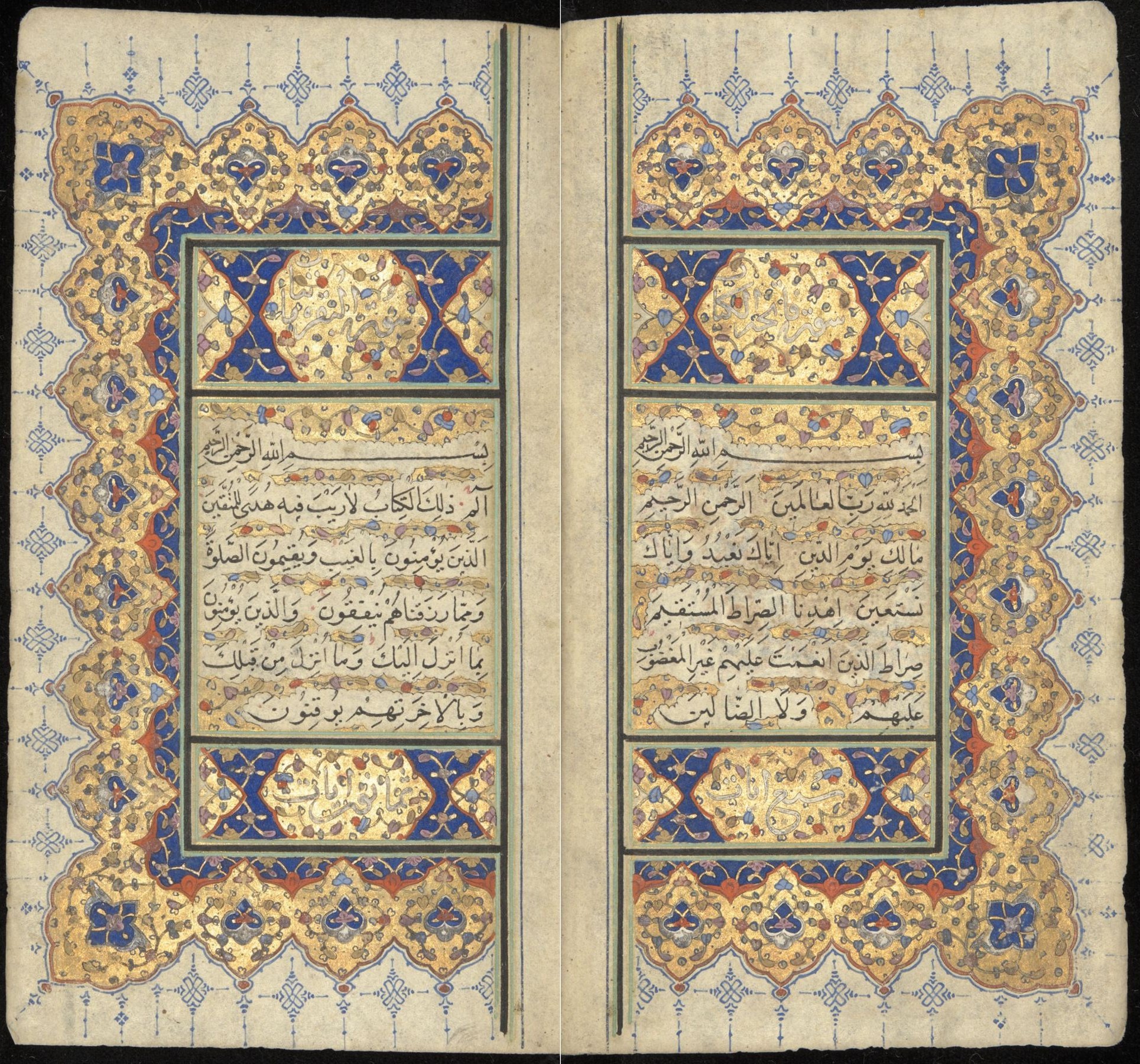
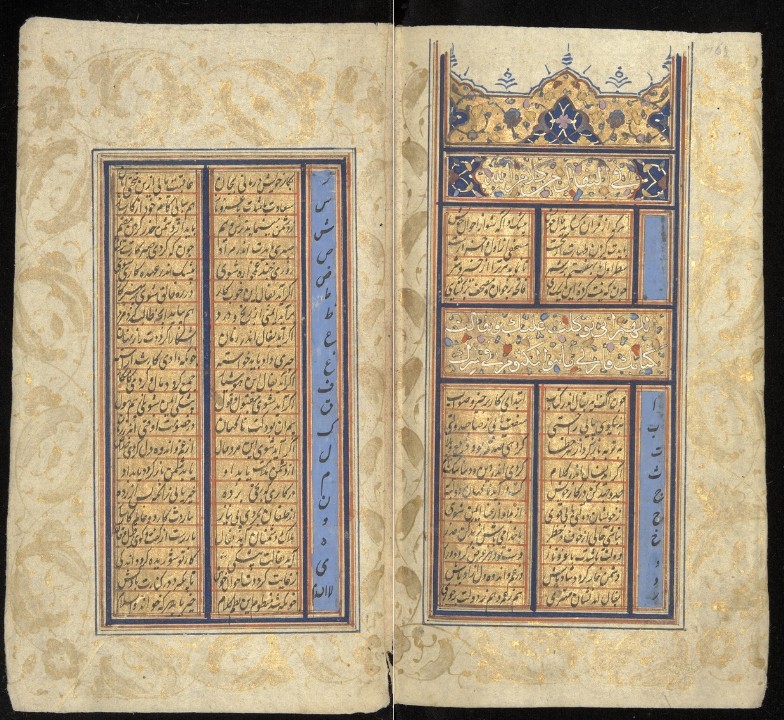
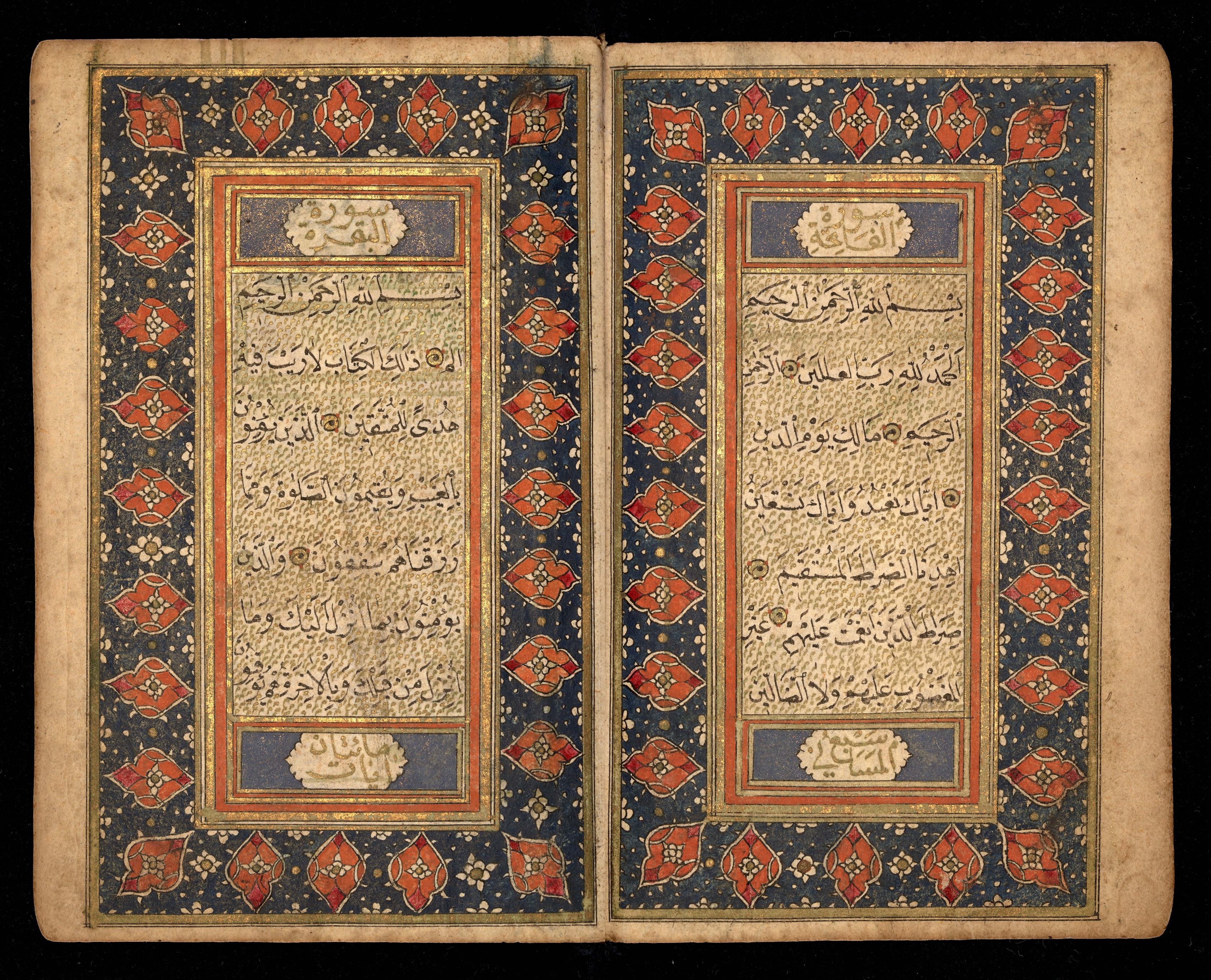
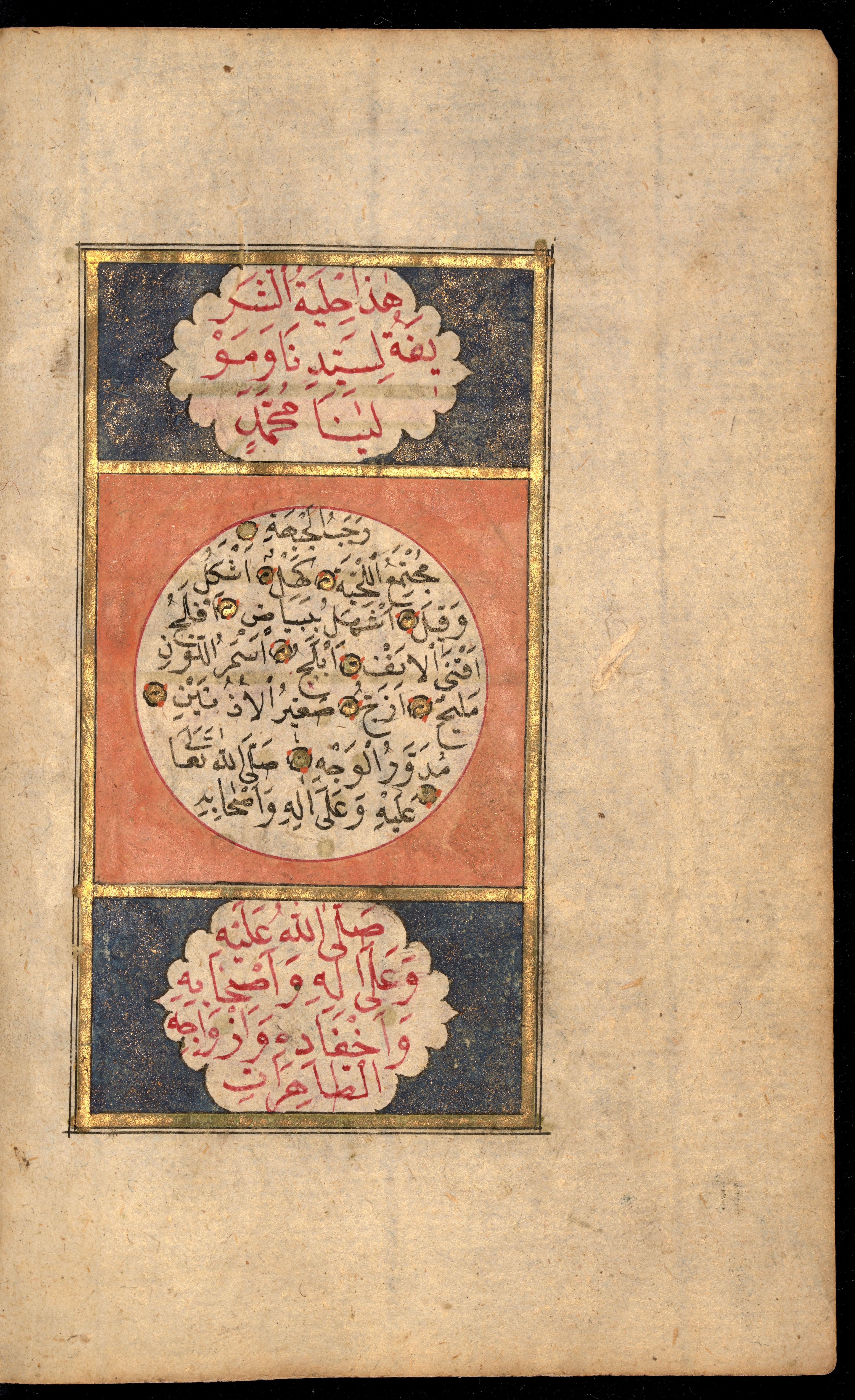 In the later part of the book there are descriptions of the physical and moral attributes of the Prophet Muḥammad known as the ḥilya (or hilye in Ottoman Turkish). These serve as a verbal portrait, allowing the reader to visualise and reflect on the figure of the Prophet. On this stylised page (f. 70v) the upper section introduces a devotion to the Prophet Muhammad: ‘This is the noble hilya of our master and protector Muhammad’. This is followed by descriptions and a supplication to the Prophet, though the calligraphic diagram itself may hold talismanic significance.
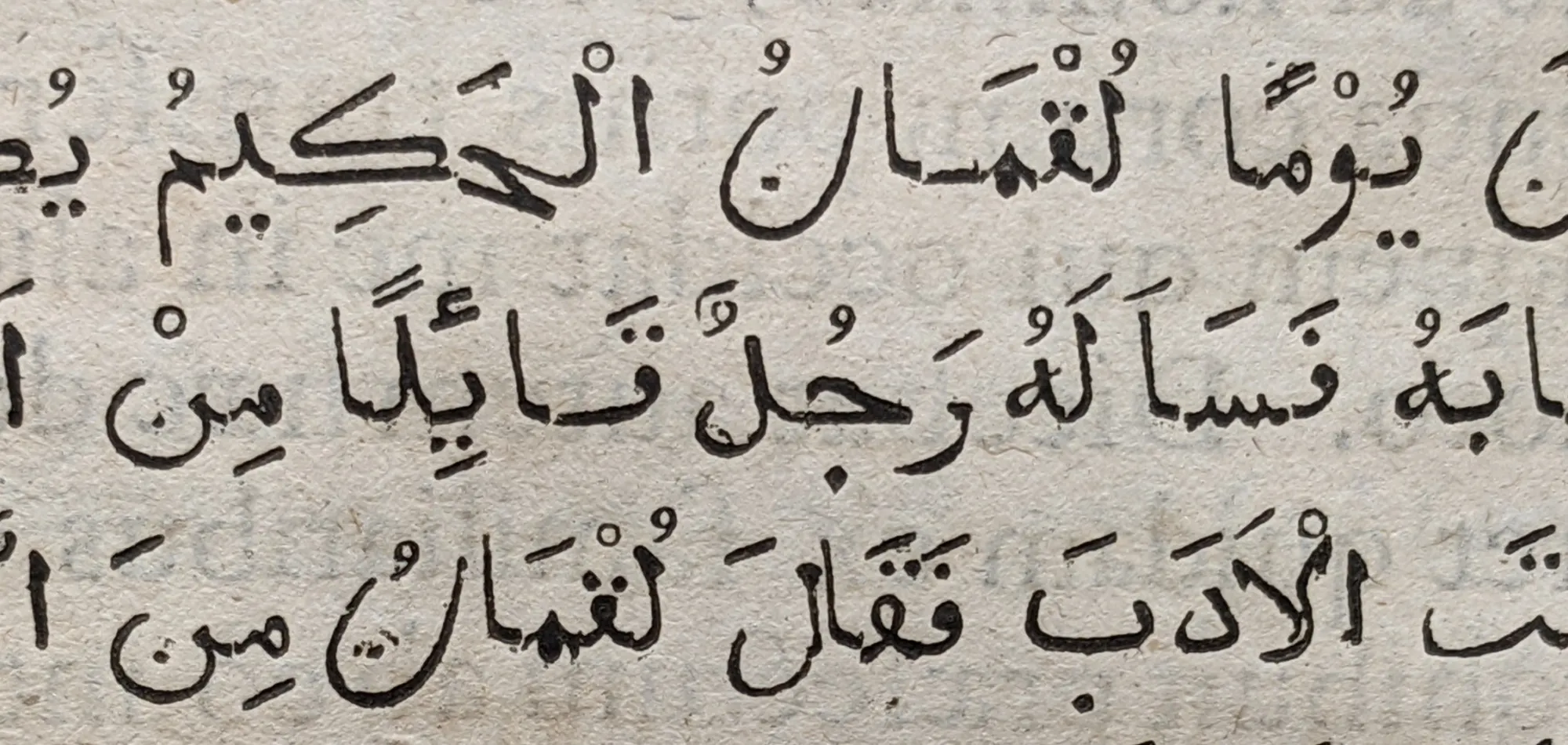
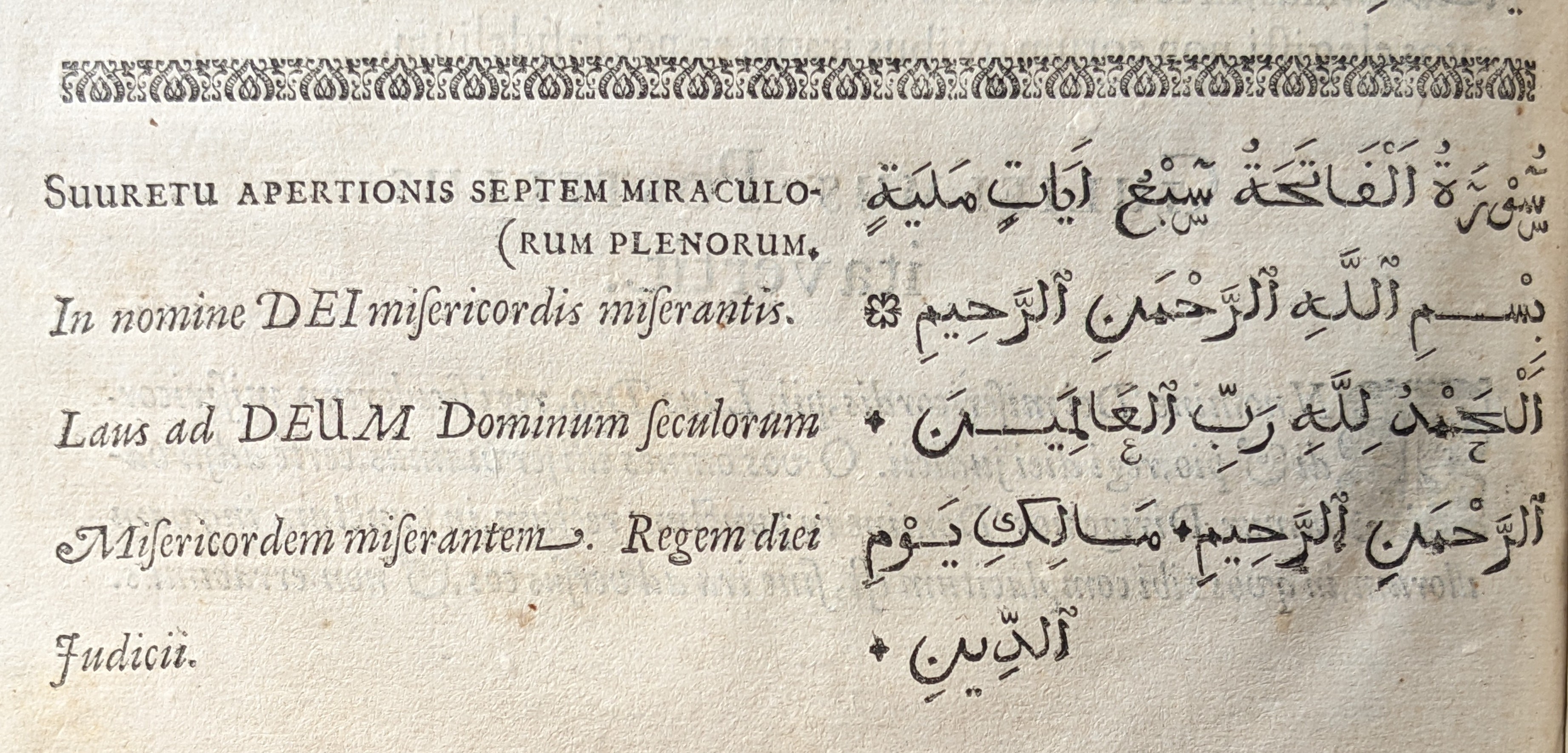
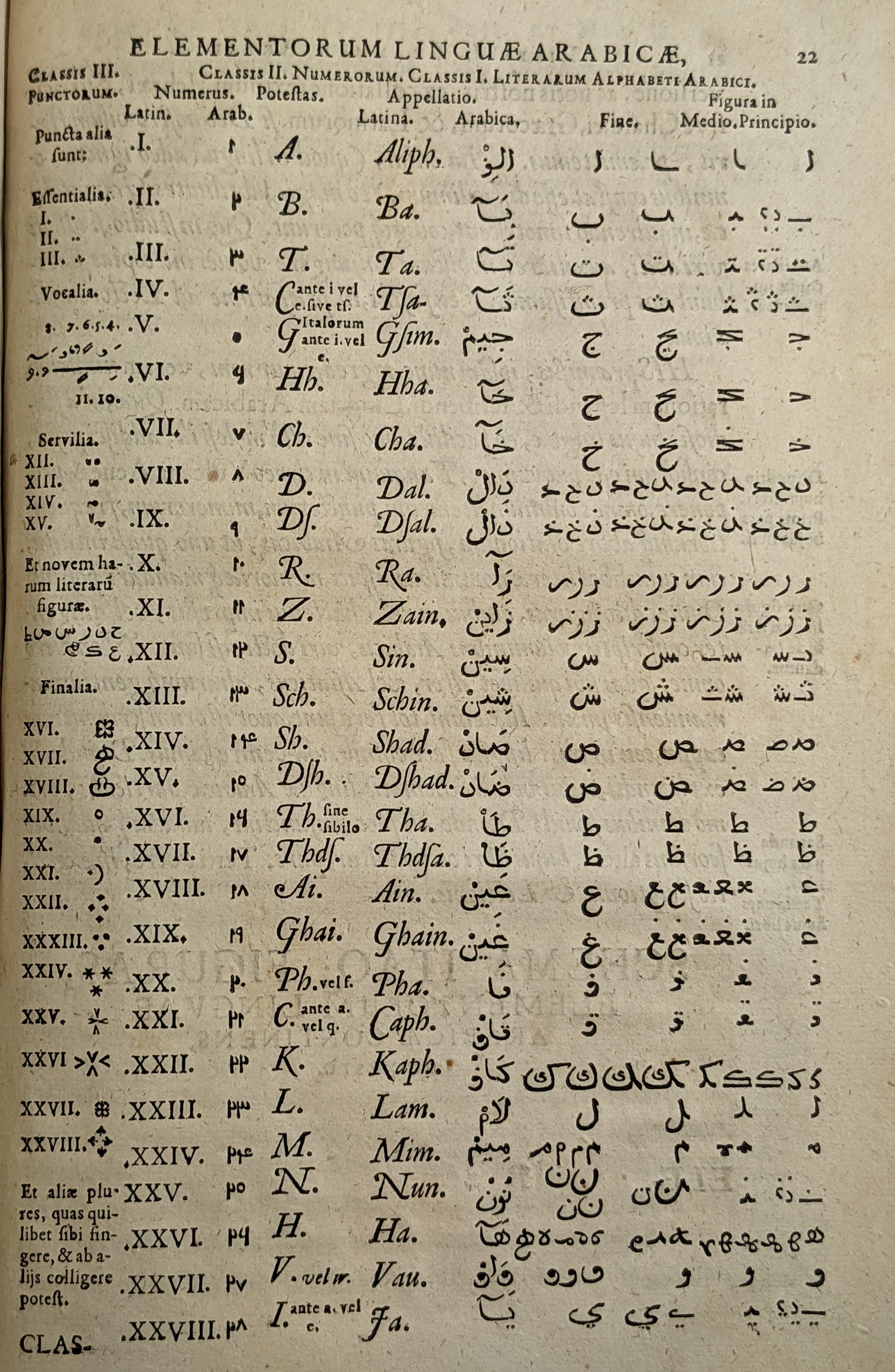 Our copy of the specimen is bound together with one of Kirstein’s later, larger works: his Grammatica Arabica. The Ājurrūmiyyah is the standard Arabic manual on grammar from the 13th century, which was first made accessible to Europeans when it was printed in Italy in 1592. From then on it formed the basis of a number of early treatises on Arabic grammar written by Europeans, among them this one by Kirstein, printed in 1608–1610.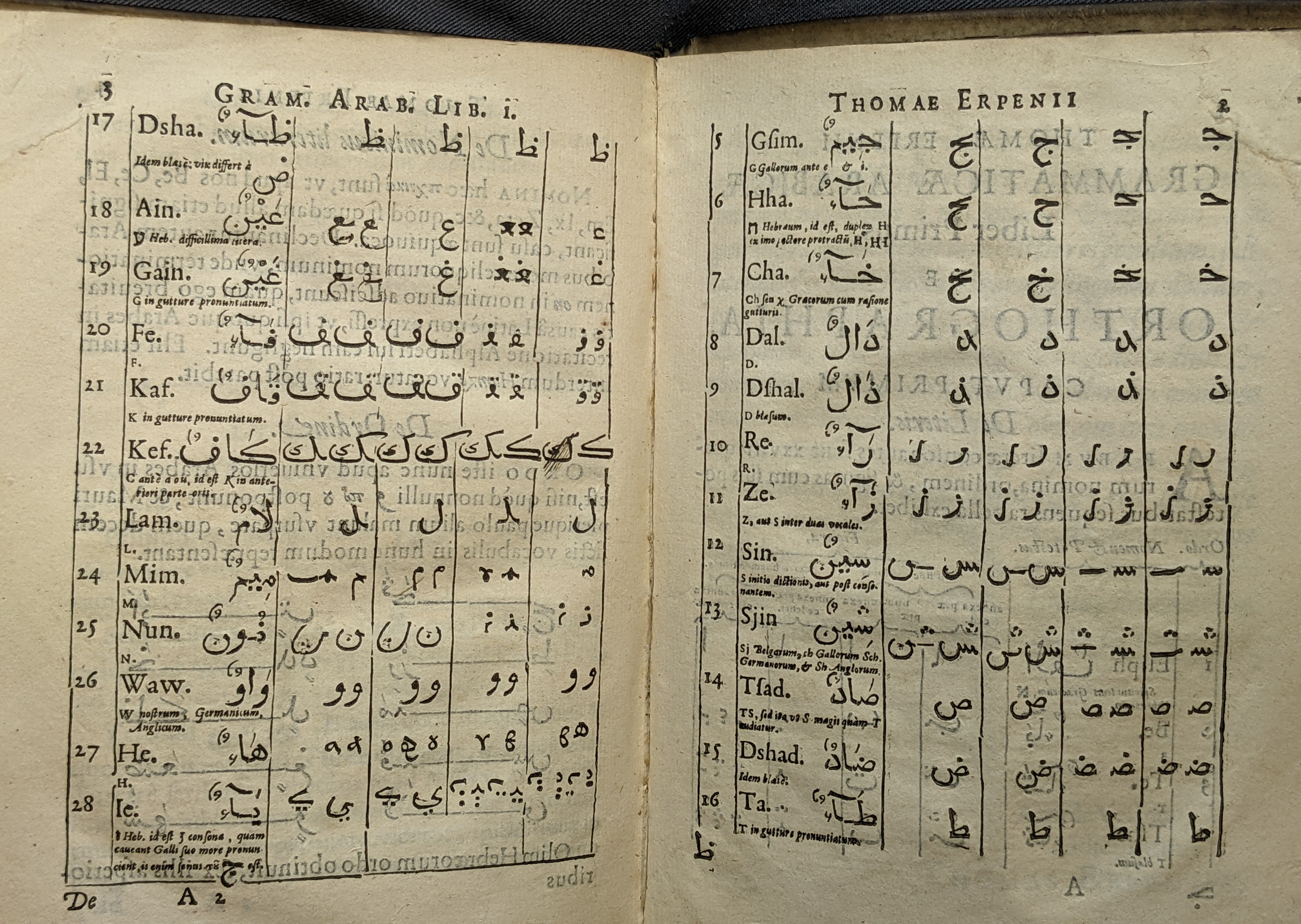
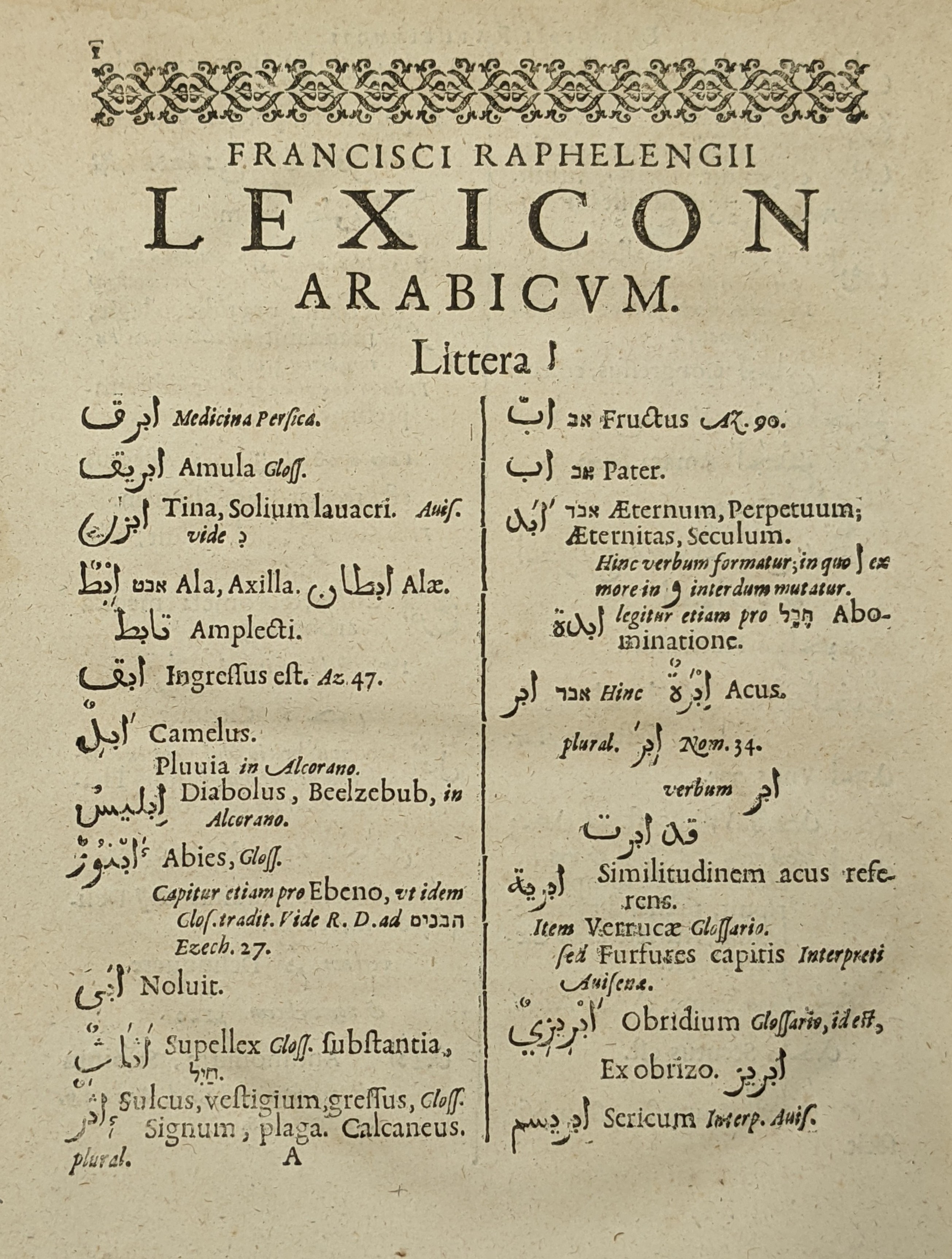 The same year of 1613 also saw the publication of yet another groundbreaking early printed Arabic book, the first Arabic-Latin dictionary. The Lexicon Arabico-Latinum (
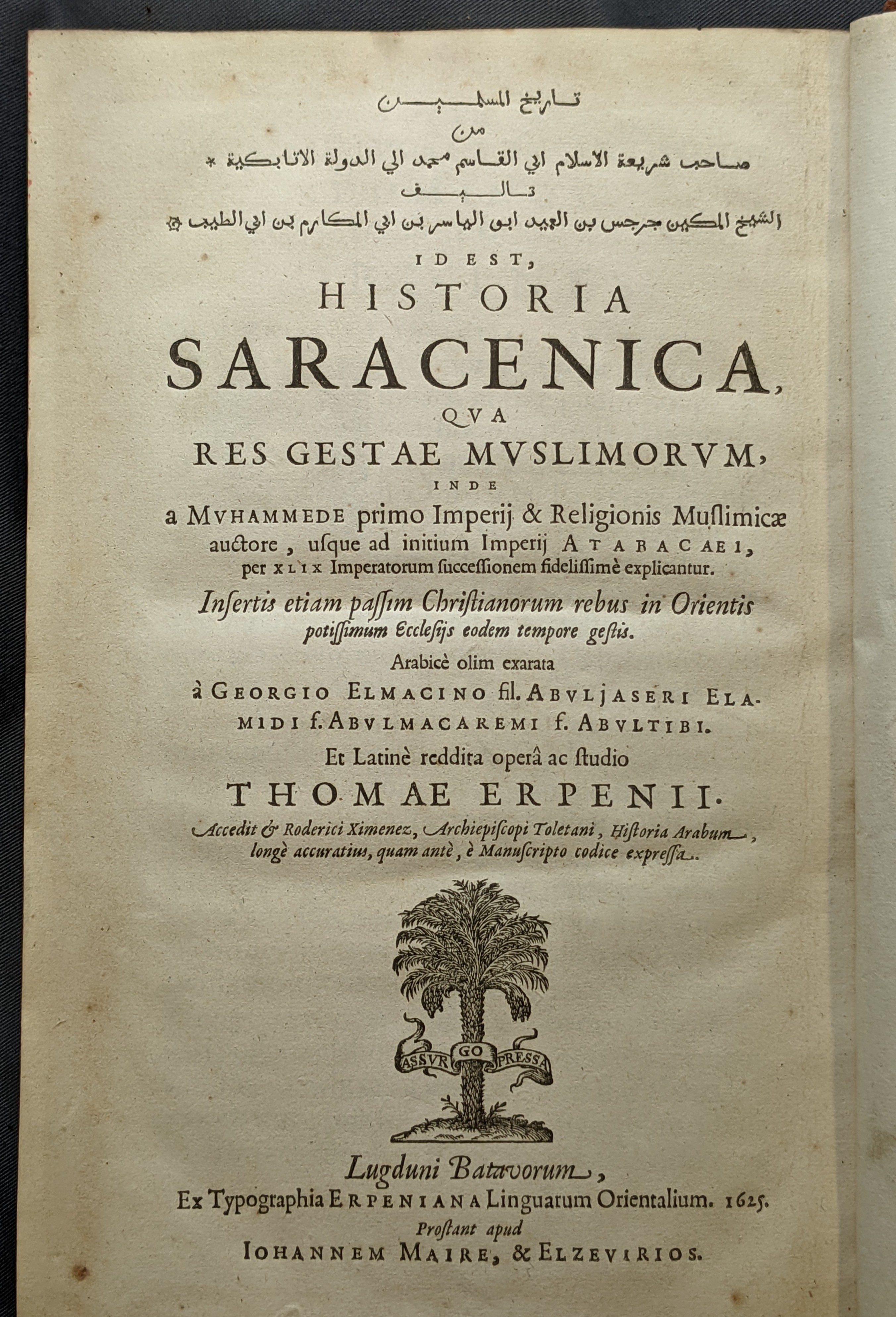
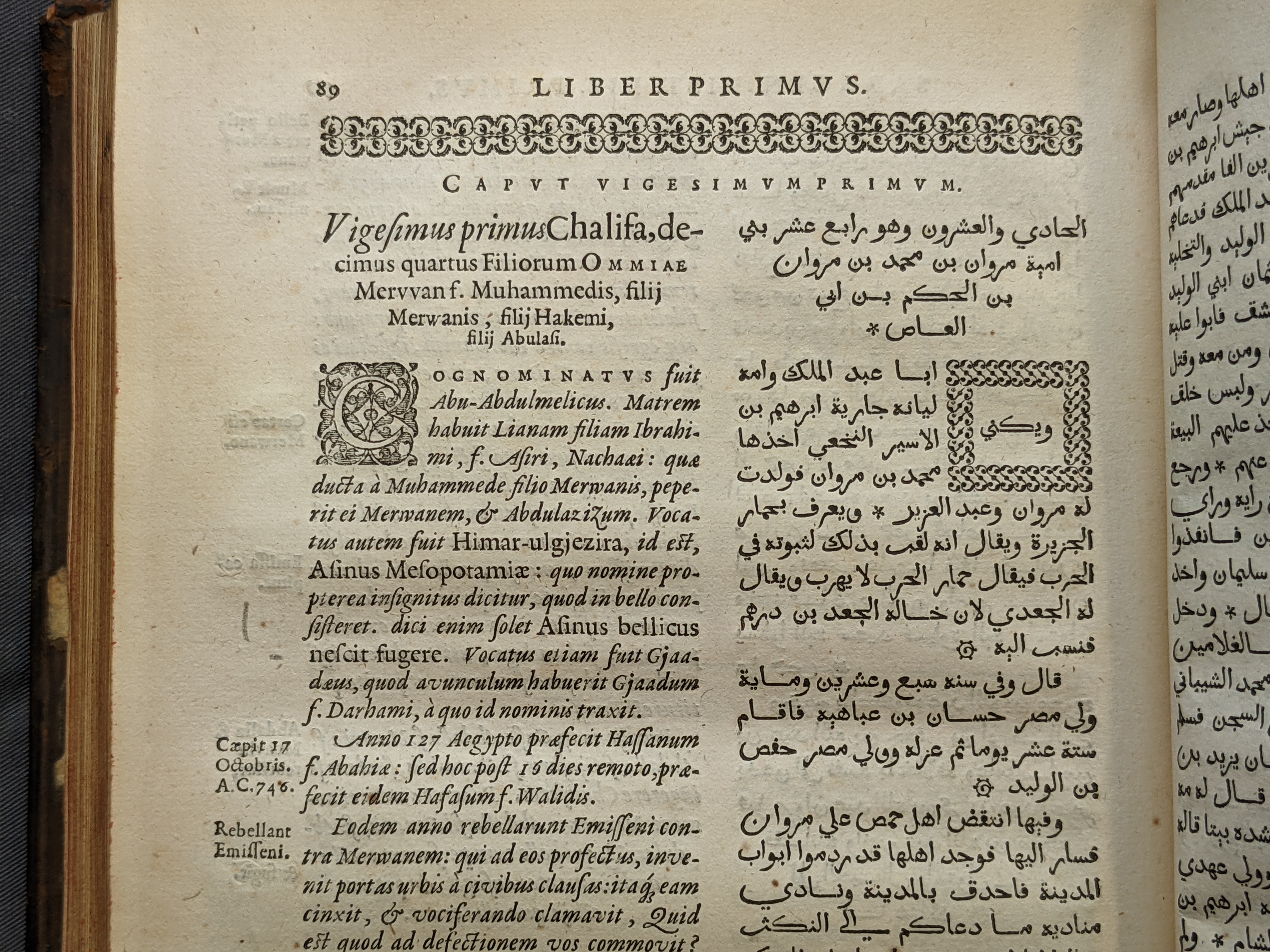 As well as bringing Arabic literature and language closer to his European contemporaries through works such as his printed specimens and Arabic grammar, Thomas van Erpe also increased the knowledge of Middle Eastern history and culture in 17th-century Europe. He was the first European to publish a partial history of the Arabian peoples. His beautifully printed, groundbreaking 1625 Historia Saracenica (