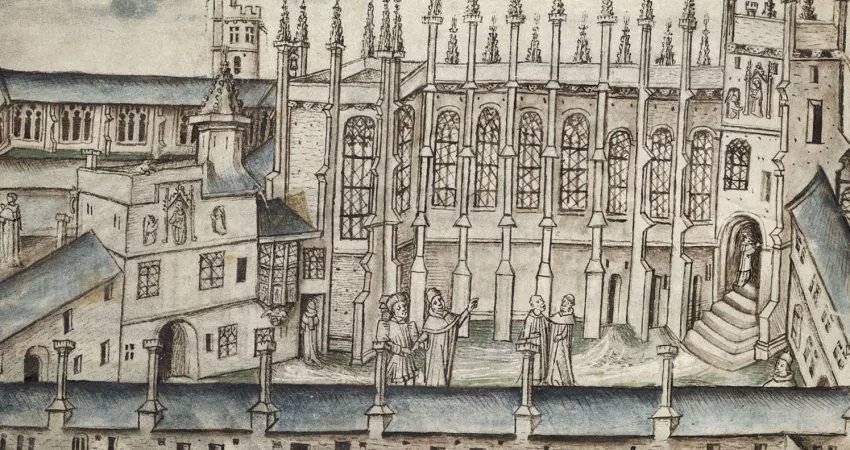
New College felt the impacts of the Reformation and its aftermath deeply. 


The Reformation was a schism in the Catholic Church which led to the creation and spread of Protestant Christianity throughout sixteenth-century Europe. The Reformation was a highly tumultuous period, characterised by deep divisions and intense conflict. It transformed not only Christian beliefs and practices, but forever changed politics, economics, and culture, and left an indelible mark on social, intellectual, and everyday life. 

New College felt the impacts of the Reformation and its aftermath deeply. It fundamentally changed those religious ideas and rituals which had been embedded into the college’s identity and the daily life of its members from the outset by its founder, William of Wykeham. The college’s response to the unrest and upheaval of the sixteenth century was complex and changeable. Different fellows held different religious views at different times. Broadly speaking, however, New College remained pro-Catholic throughout this period.  

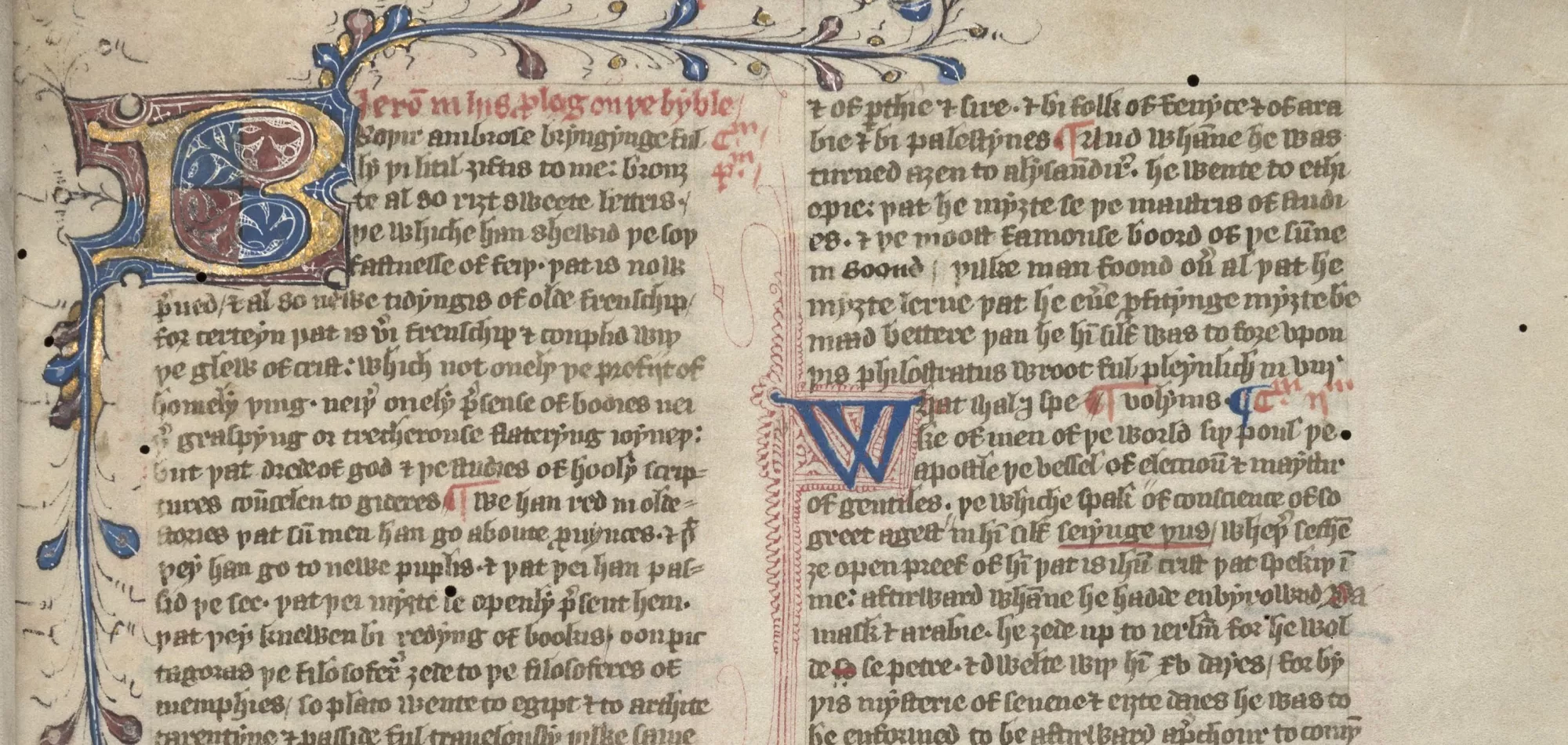
A picture of a medieval manuscripts with an enlarged, decorated initial B at the beginning of the text.

“Morning Star” of the Reformation


Prior to the cataclysmic events of the Protestant Reformation in the sixteenth century, different individuals and religious movements at various points called into question and sought to challenge the authority and teachings of the Catholic Church in Rome. In fourteenth-century England, John Wycliffe (d. 1384) was one such individual. Indeed, some consider Wycliffe, and the religious movement he inspired, to be a precursor—or “Morning Star”—of the Reformation.

Probably born sometime in the 1320s in Yorkshire, Wycliffe lived for most of his life in Oxford, where he was a student and later taught theology. He was also a Catholic priest. Over time, however, Wycliffe became increasingly disillusioned with the Church of his day. 

Wycliffe’s beliefs, which he advanced in his various political and theological writings, were radical for the times in which he lived. He maintained that the teachings of popes and clerics were self-serving, and designed only to help them amass further wealth and power. Wycliffe believed that churchmen should not exercise any worldly authority. He would surely, therefore, have disapproved of the career of his contemporary, William of Wykeham.  

Wycliffe argued that the Bible was the only reliable authority regarding the Word of God and that all Christians should be able to read it in their own language. In 1382, he and his followers published the first complete translation of the Vulgate Latin Bible into English. 
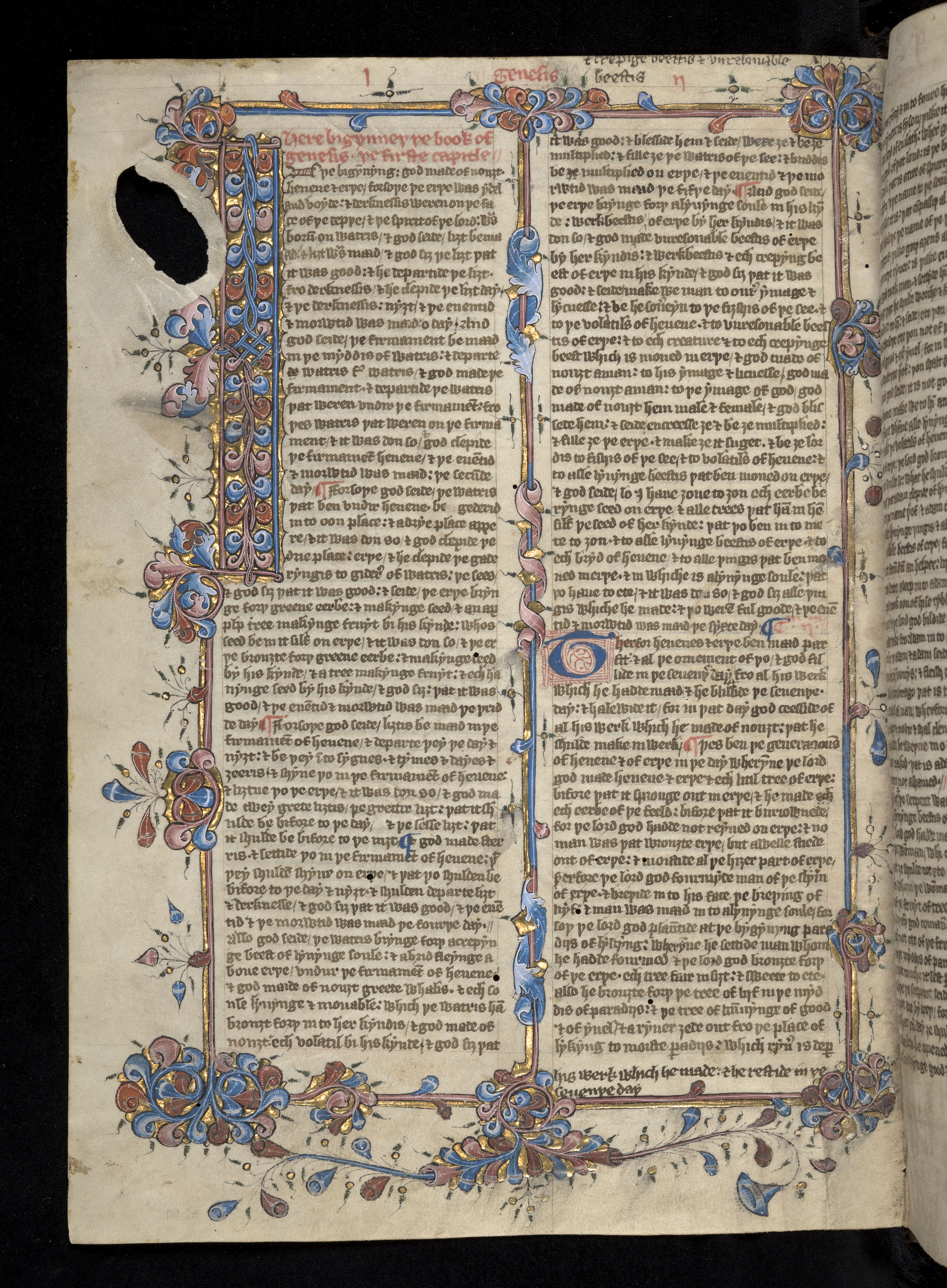
A picture of a manuscript with a large initial I decorated with blue and pink swirls on a background of gold.

New College, Oxford, MS 66 is one such Wycliffite Bible (see image). It contains all of the books of the Old Testament, from Genesis to the Psalms, in the later English translation prepared by Wycliffe’s followers, known as Lollards. Wycliffe’s teachings were condemned by the Church, but they nevertheless spread widely throughout England and into Europe where they continued to attract supporters well after his death on 31 December 1384. Though it was officially banned, the Wycliffite Bible became the most widely disseminated text in English in the medieval period. 

The style of decoration and script used in MS 66 indicate that it was produced sometime between 1415—when Wycliffe’s teachings were formerly declared heretical at the Council of Constance—and 1425. Each of the books of the Old Testament opens with a beautiful initial like the one displayed here. The text, however, is full of mistakes. On the page pictured here (f. 6v) alone, the scribe missed out two sections of text which had to be corrected by other scribes.   

MS 66 is one of four Wycliffite manuscripts housed at New College. The other manuscripts are: a copy of the English translation of the New Testament (MS 67) which was donated to the college in 1558, an English translation of the Psalms (MS 320) which was bequeathed by New College alumnus Thomas Philpot (d. 1671), and a collection of Wycliffite sermons (MS 95). The entry of these manuscripts into New College’s collections reflects the changing religious attitudes of its membership during the reign of Queen Elizabeth I and beyond (see more about this below). 
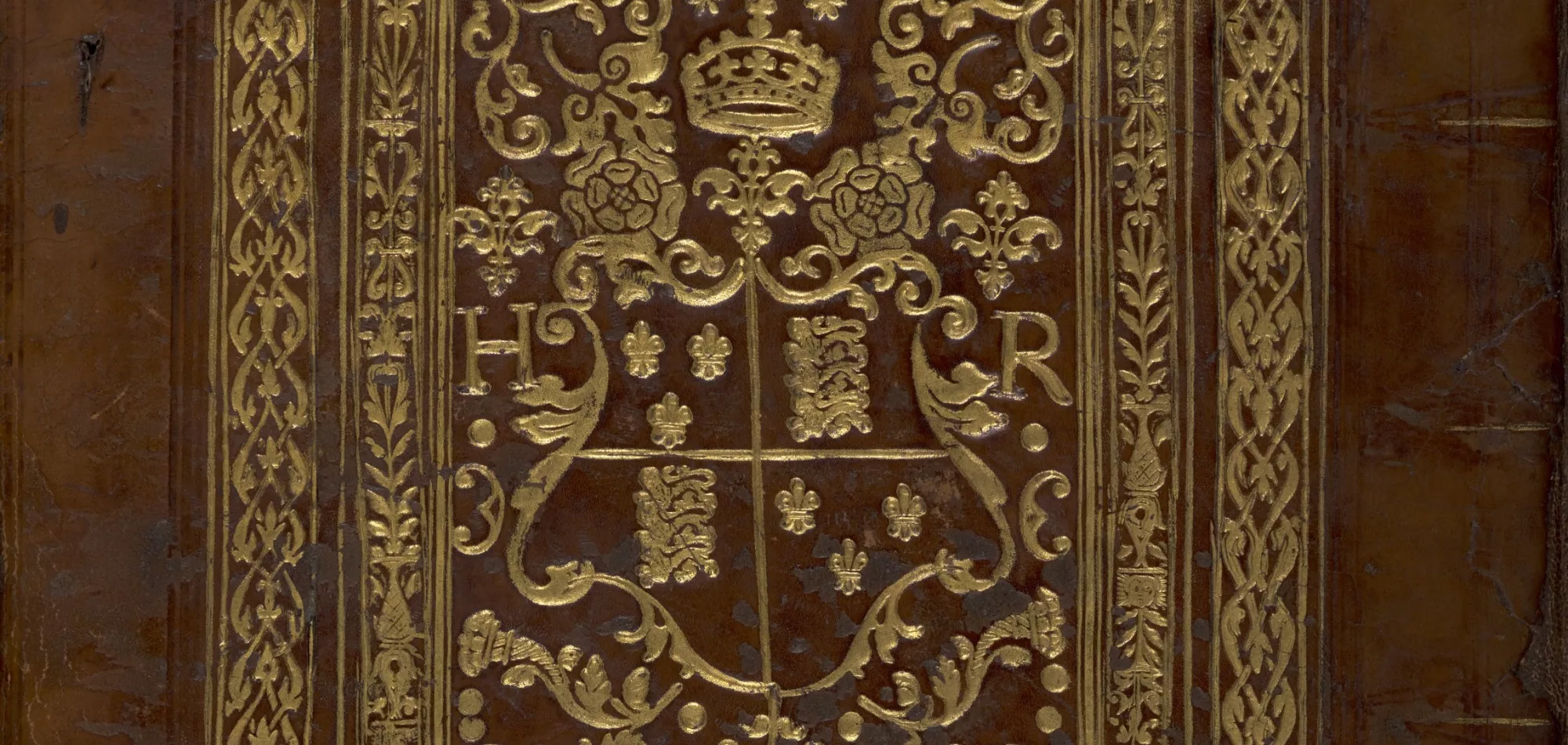
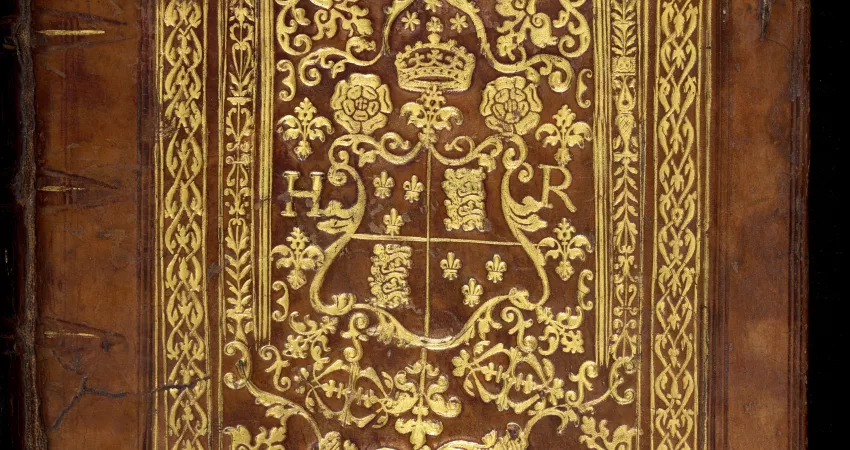
A highly decorated manuscript binding.

The English Reformation


The English Reformation began with King Henry VIII’s break from Rome. Consumed by his desire for a legitimate male heir, he sought an annulment of his marriage to his wife—Catherine of Aragon—in order to marry Anne Boleyn. When his request was denied by the pope, the king and his advisors split the English church away from Rome causing a schism. This process was completed in 1534, and King Henry had himself declared the ‘Supreme Head’ of the Church in England, and he quickly set about increasing royal revenue through the despoilation of monasteries. 

Henry VIII’s reformation was largely political. The religious changes he introduced were ambiguous and partial. The responses of New College’s fellowship were similarly mixed, malleable, and met with varied success. During Henry VIII’s reign, it seems that Catholic fellows at New College felt that they could reconcile their religious beliefs with their obedience to the king. On the surface, the college accepted the reforming policies of the crown but most of its membership remained religiously conservative and hostile to Protestantism. 

New College, Oxford, MS 136 is an extraordinary piece of Reformation history from this time. Made for King Henry VIII himself, the circumstances of its arrival at New College remain a mystery. It may have belonged to, or been taken by, Cardinal Reginald Pole (1500–1558), the last Catholic Archbishop of Canterbury during the reign of Queen Mary I—Henry’s daughter. Other manuscripts owned by Pole were given to New College in the sixteenth century (see more below). 

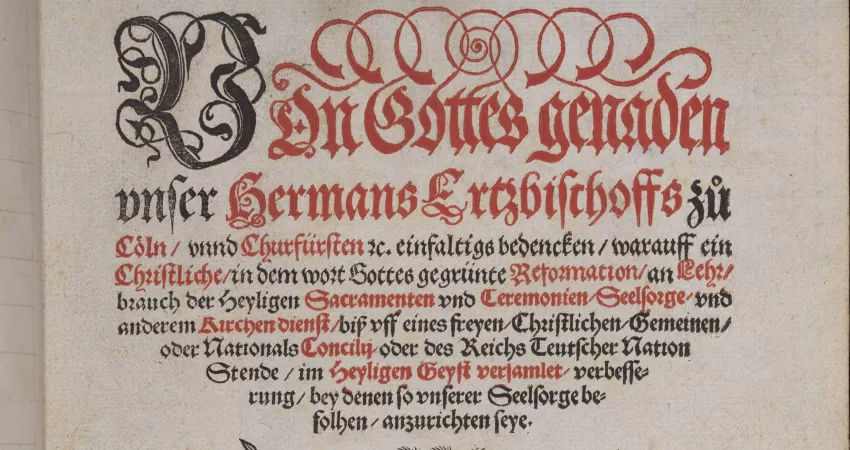
MS 136 is actually a hybrid volume. It is part manuscript (handwritten) and part printed book. The printed text was published in Bonn in 1543 and authored by the religious reformer Hermann von Wied, archbishop of Cologne. It outlines how the diocese of Cologne could be reformed in line with the Protestant principles laid down by Martin Luther. Printed texts like this one were central to the Reformation battle of ideas. The printing press made it possible rapidly and comparatively cheaply to mass produce pamphlets and polemics. This allowed proponents of both sides of the religious conflict to widely disseminate their ideas across borders and class divides. 

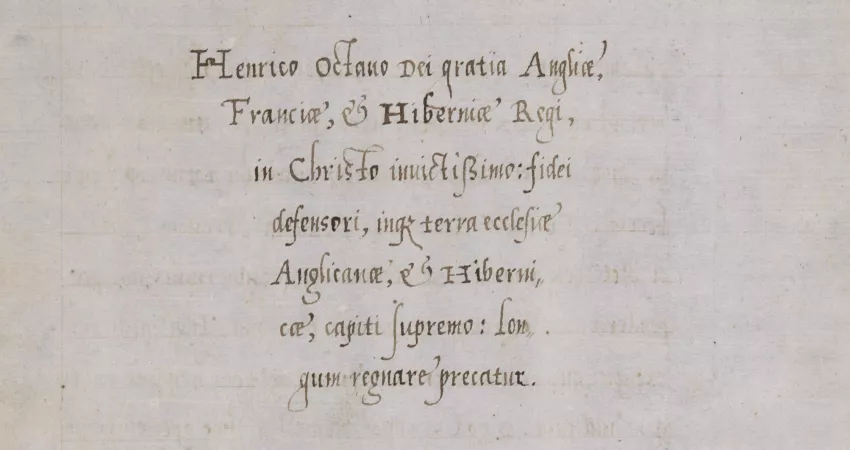
The handwritten part of the volume is a partial translation of this German text into Latin which was made by King Henry VIII’s librarian, the Dutch theologian Wouter Deleen (c. 1500–1563). Deleen’s translation of this text would have made it accessible to the king, who could not read German. However, this attempt at translation was apparently quickly abandoned—perhaps because Henry showed no interest. 

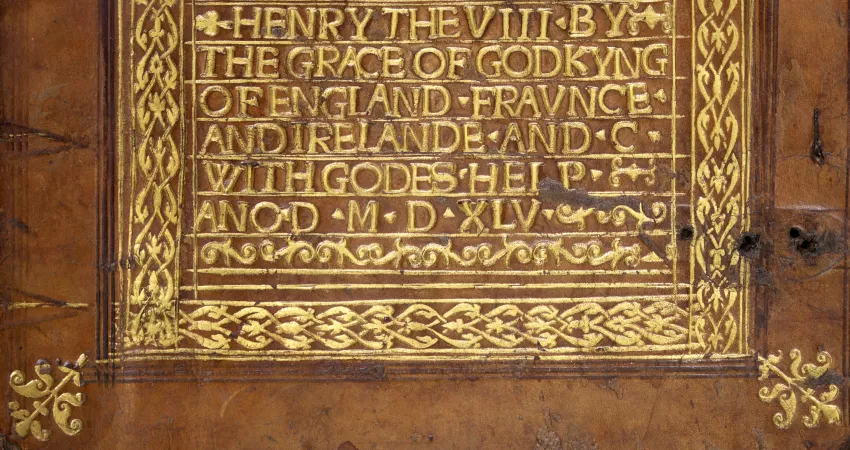
In addition to its text, MS 136 is also very special on account of its beautiful binding. It is a stunning example of English gold-tooled binding and is the work of the so-called “Flamboyant Binder”, known for his elaborate and exuberant style. It bears the king’s coat of arms crowned and flanked by H and R (for Henricus Rex; King Henry), with Tudor roses and cornucopias among the scrollwork. Beneath this is an inscription in English dated to 1545 which reads, ‘Henry the VIII, by the grace of God Kyng of England, Fraunce, and Irelande, and C, with Godes Help’. 

A handwritten charter

The Counter-Reformation


After the death of King Henry VIII on 28 January 1547, he was succeeded by his only legitimate son—King Edward VI (d. 1553). Edward was only 9 when he came to the throne, so a Regency Council composed of the leading peers of the realm ruled the country on his behalf. This group of nobles more stringently enforced Protestant beliefs and practices on the English Church. At New College, the fellows continued to appear outwardly compliant whilst maintaining their conservative religious beliefs, mounting a carefully considered resistance to the changes imposed.

Upon King Edward’s death at the age of only 15, Mary I (d. 1558)—his elder half-sister—became queen of England. Unlike her father and siblings, Mary was a loyal, devout Catholic. She speedily set to work undoing the Protestant reforms introduced during the reigns of King Henry VIII and King Edward VI. Queen Mary’s short reign was particularly turbulent. 

At New College, Protestant fellows were purged from its membership and its warden, John Skinner, resigned. Fifteen new Catholic fellows were admitted. Key figures at New College during this time included alumni John and Nicholas Harpsfield, and Nicholas Sander (see more below). A haven for Catholic apologists, teachers, and theologians, New College was a thriving centre of Catholicism in Oxford during Queen Mary’s reign.  

Several items preserved in its spectacular archives and special collections offer fascinating insights into this period at New College.

  • A Grant to New College

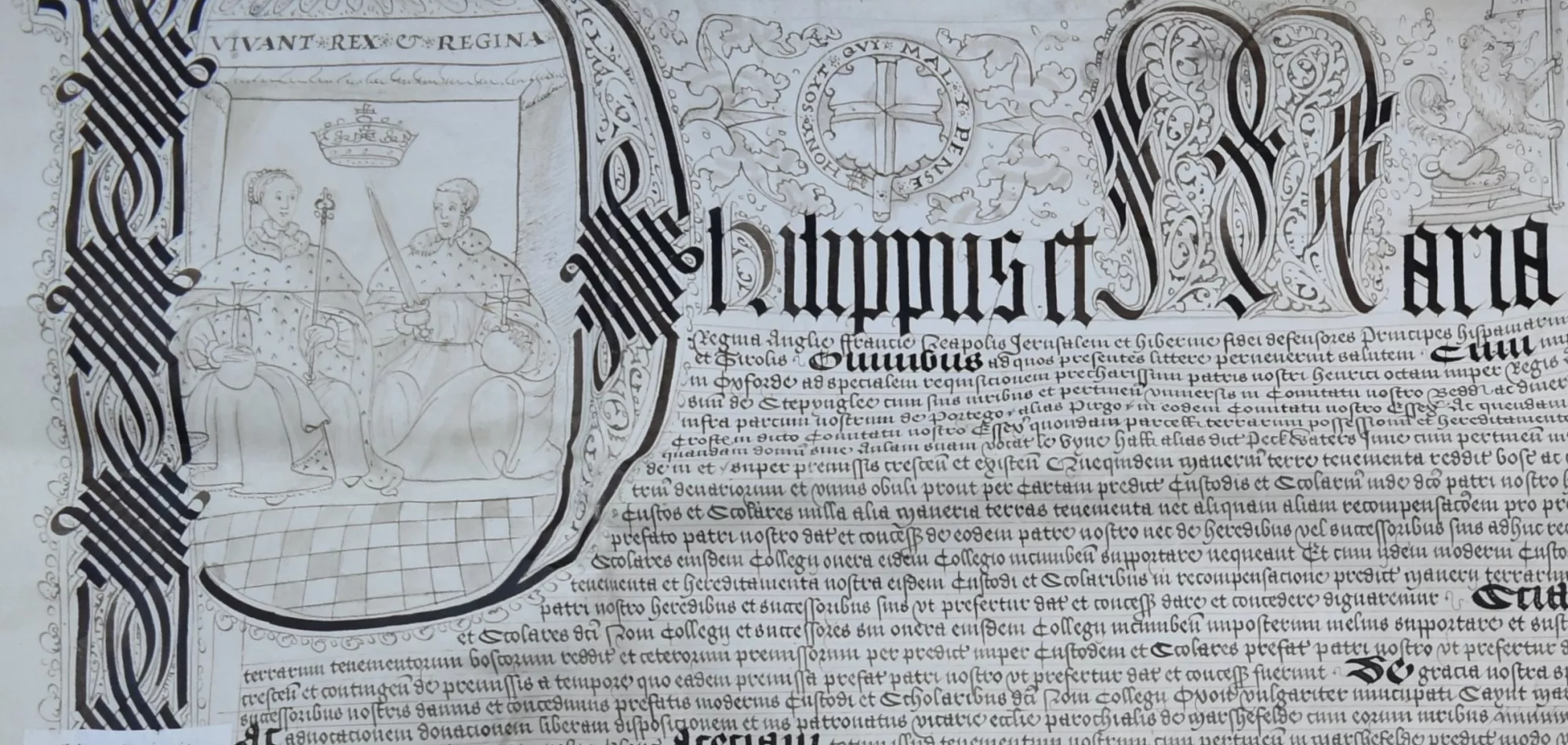
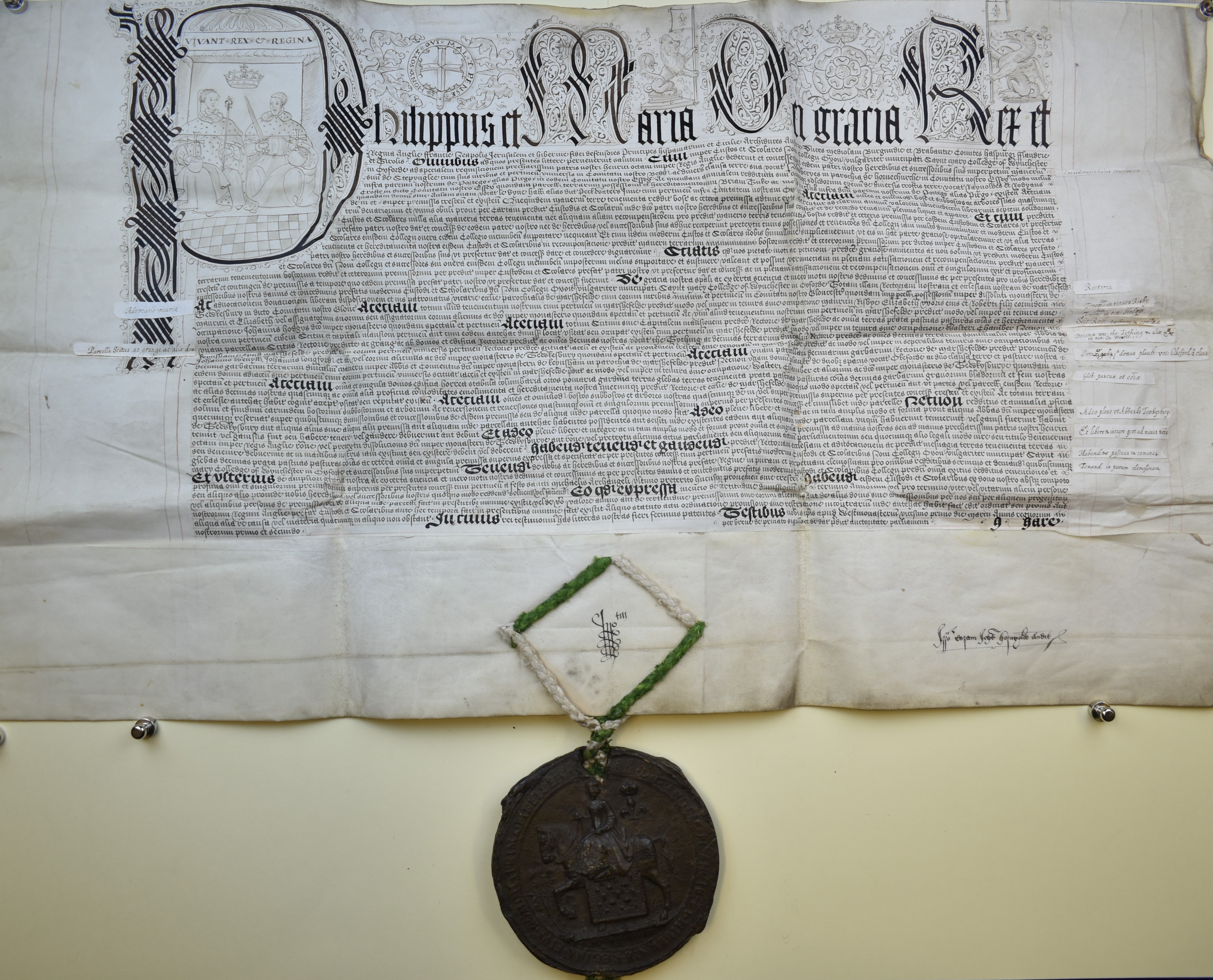
    This wonderful contemporary document records a grant made by Queen Mary I and her husband, King Philip II of Spain, to the warden and scholars of New College on 21 March 1555 (New College, Oxford, NCA 4618/8). 

    During his reign, King Henry VIII had seized land owned by New College in the parish of Hornchurch (Essex) to build Pirgo Palace. After she ascended the throne, the New College leadership appealed to Queen Mary I for compensation for the loss of property and revenue. It seems that they considered this the optimal time to make such a request and ensure a satisfactory resolution to this matter, given that the college’s religious stance was now aligned with the monarch’s beliefs. King Philip and Queen Mary gifted land at Marshfield in South Gloucestershire to New College to replace that lost in Hornchurch. This land had formerly belonged to Tewkesbury Abbey, but was confiscated by the crown during the dissolution of the monasteries. 

    A handwritten charter of Queen Mary I and King Philip of Spain with Mary’s great seal attached.

    The document opens with a beautiful and elaborately decorated first line. It names the grantors, ‘Phillip and Mary rulers by the grace of God’ (Philippus et Maria Dei Gracia Rex). Above the line are pen and ink drawings of a lion and dragon bearing standards, and badges—including the Tudor rose—surrounded by foliage. The bow of the enlarged initial P at the beginning of the text contains a wonderful depiction of the king and queen. They sit enthroned in their finery in a room with a decorated domed ceiling and a tiled floor. Mary holds the orb and sceptre, and Philip a sword and orb. A crown hovers above their heads. 

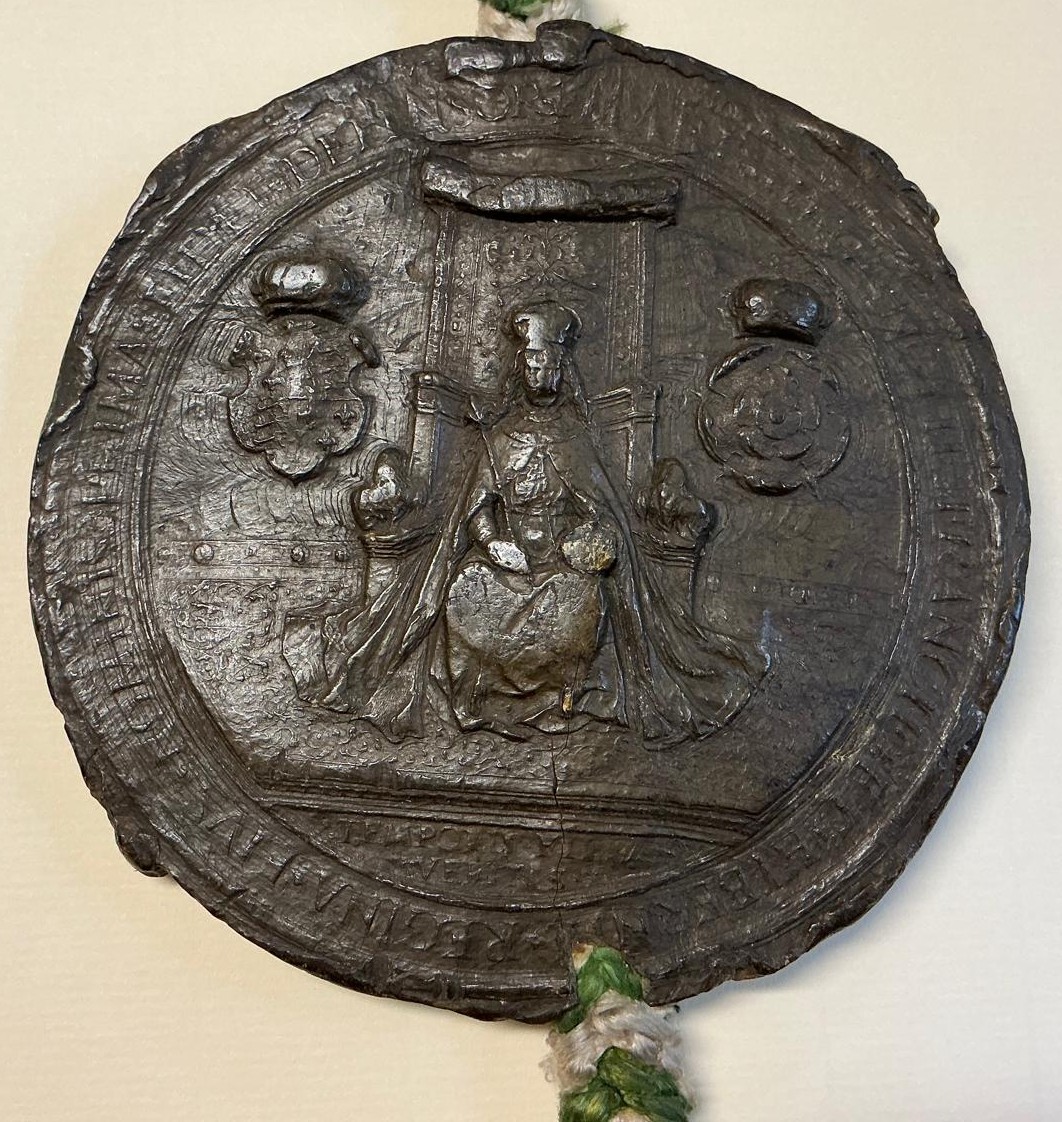
    At the bottom of the document, is a very large, round seal. This is the great seal of Queen Mary I. It has survived in good condition, attached to the parchment with plaited green and white silk cords. The reverse is shown in the image above and the obverse below. This seal imbued the document with authority and authenticity. 

    The great seal of Queen Mary I. A very large, round seal.

  • A Binding for Queen Mary I

    Amazingly, a printed book which was bound for Queen Mary I (BT3.145.20) is now housed in the collections at New College. 

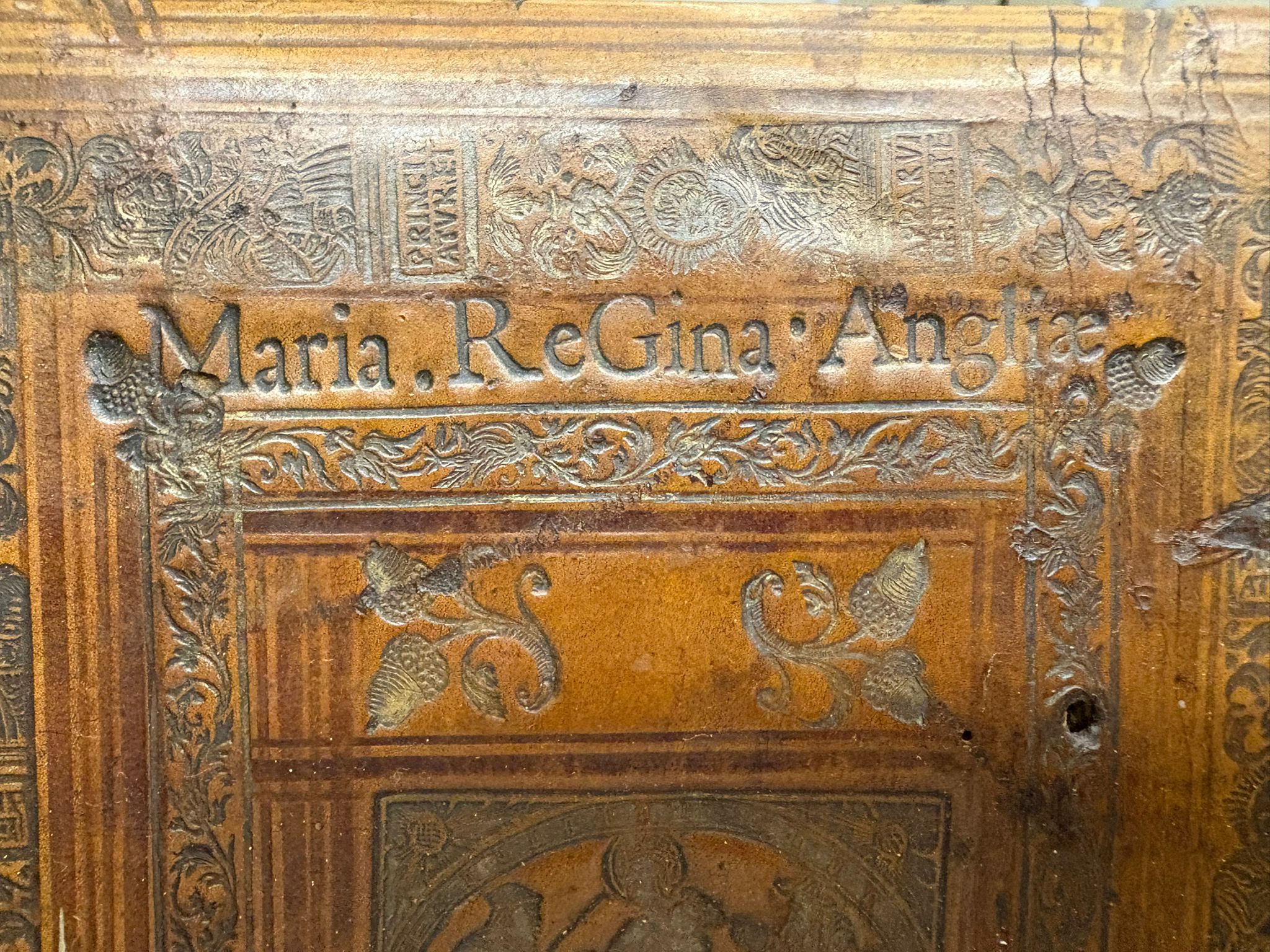
    Queen Mary’s book contains—like the volume bound for her father, King Henry VIII (see above)—a religious polemic published as a direct result of the Reformation. Unsurprisingly, however, Mary’s book contains not a pro-Protestant text but a pro-Catholic one. Authored by the Dutch Catholic apologist and papal inquisitor, Joannes Slotanus (d. 1560), it was printed in Cologne in 1555. Slotanus dedicated the work to Mary and her husband, King Philip of Spain, apparently in honour and celebration of their having restored Catholicism to England. Its elaborately decorated binding indicates that this was a presentation copy intended as a gift for Queen Mary I. Her name is prominently displayed on the front, stamped on the upper board ‘Maria. ReGina. Angliæ’ (‘Mary Queen of England’). 

    Detail of the binding of BT3.

    It has been suggested that this special copy was made to mark the announcement, in November 1554, that Mary was expecting a child. There is no evidence, however, of the book having ever been in her possession. It may have been determined that the gift was no longer appropriate when, by July 1555, it had become clear that the queen had actually experienced a phantom pregnancy. It is a bit of a mystery as to how this book found its way to New College. Like the volume bound for King Henry VIII, it may have been gifted to the college as part of the estate of Mary’s archbishop, Cardinal Reginald Pole, who donated many of his own volumes to the college (see below).

  • Cardinal Pole’s Manuscripts at New College

    After Queen Mary I ascended the English throne in 1553, she saw to the arrest, trial, and eventual execution of Archbishop Cranmer of Canterbury for his Protestant beliefs. In his place, she appointed Cardinal Reginald Pole, her distant cousin. Pole, who spent much of his adult life in Italy, had been a close supporter of Henry VIII until his divorce from Catherine of Aragon and break from Rome. Thereafter, a price was put upon his head and members of his family persecuted and even executed for failing to support the regime. 

    Queen Mary and Archbishop Pole worked closely together to restore Catholic beliefs and practices to England—to re-establish monastic communities, reform the clergy, revive Catholic learning in universities, and rebuild a relationship with Rome. They died within hours of each other on 17 November 1558. Pole was the last Catholic archbishop of Canterbury, and Mary the last Catholic queen regnant of England. 

    Most of the Greek manuscripts which form part of the spectacular collections at New College Library today were owned by Pole and presented to the college, both by Pole himself and by his close friend and beneficiary of his will, Alvise Priuli. Pole was an alumnus of Magdalen College, Oxford but perhaps chose to bequeath some of his manuscripts to New College because of its ongoing allegiance with and commitment to Catholicism. 

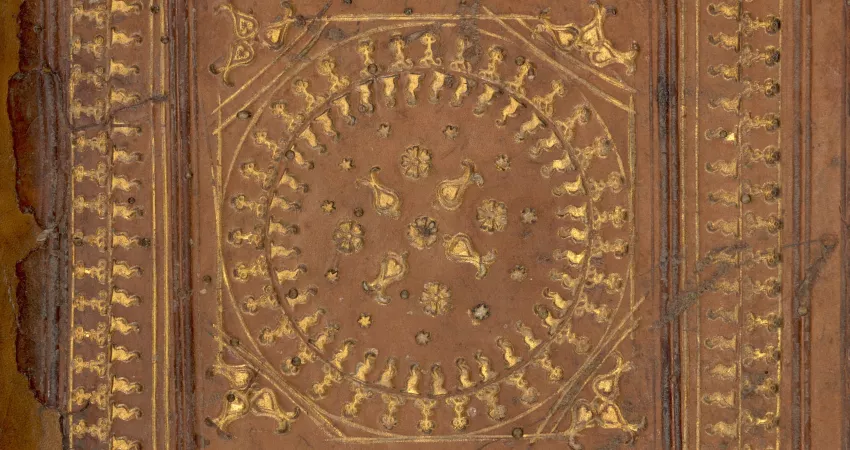
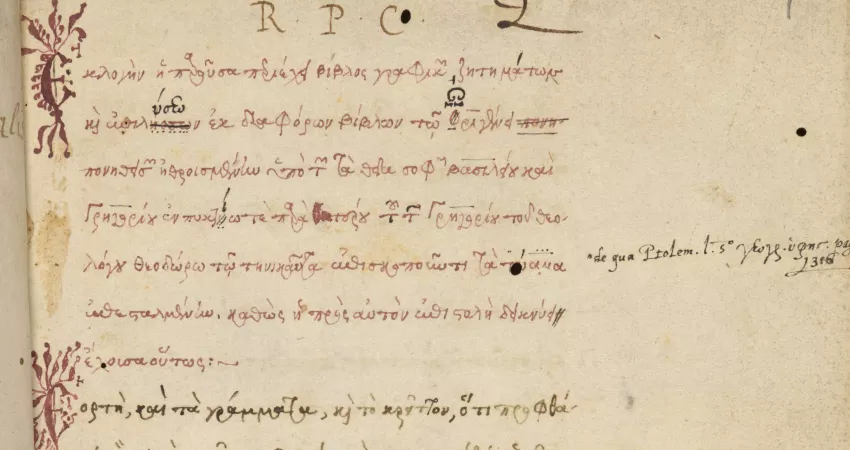
    One such manuscript is New College, Oxford, MS 147. This is a copy of the Philokalia, an anthology of works authored by the early Greek Church Father, Origen. It was made for Pole by Bernardino Sandro, a scribe whom he had retained in his own household since 1521. The manuscript was beautifully bound, with a gold-tooled design on the front cover and gilded edges, by a binder who worked for King Henry VIII (see image below). Pole had other volumes bound by this anonymous artisan apparently during his brief return to England from Padua between 1526 and 1532. 

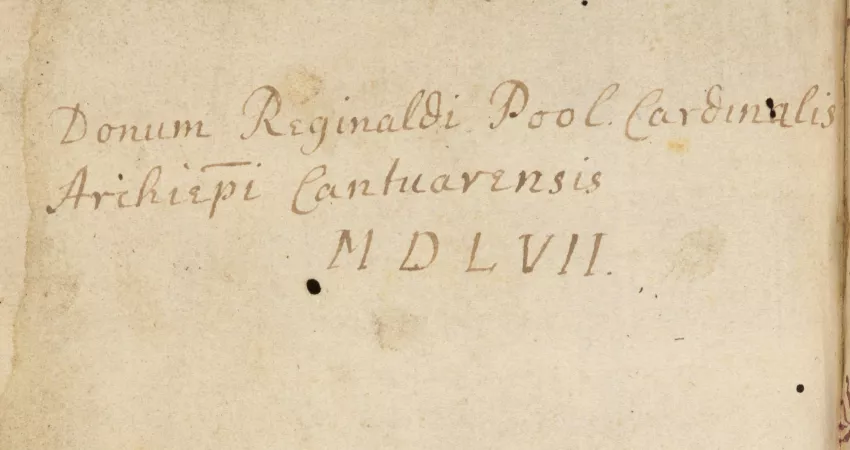
    MS 147 is inscribed with the initials ‘R.P.C.’ on the first folio and the note ‘Donum Reginaldi Pole Cardinalis Archiepiscopi Cantuariensis MDLVII’ on the front flyleaf (see images below); this records that Pole gave this book to New College in 1557, the year before his death.

Test Your Knowledge: Where did Mary I and Philip II of Spain grant land to New College in 1555?

Image of a village

Click on the place names below to find out if you are right!

Marshfield, Gloucestershire

Yes - correct!

Moreton-in-Marsh, Gloucestershire

Nope, try again . . .

Burgh le Marsh, Lincolnshire

Nope, try again . . .

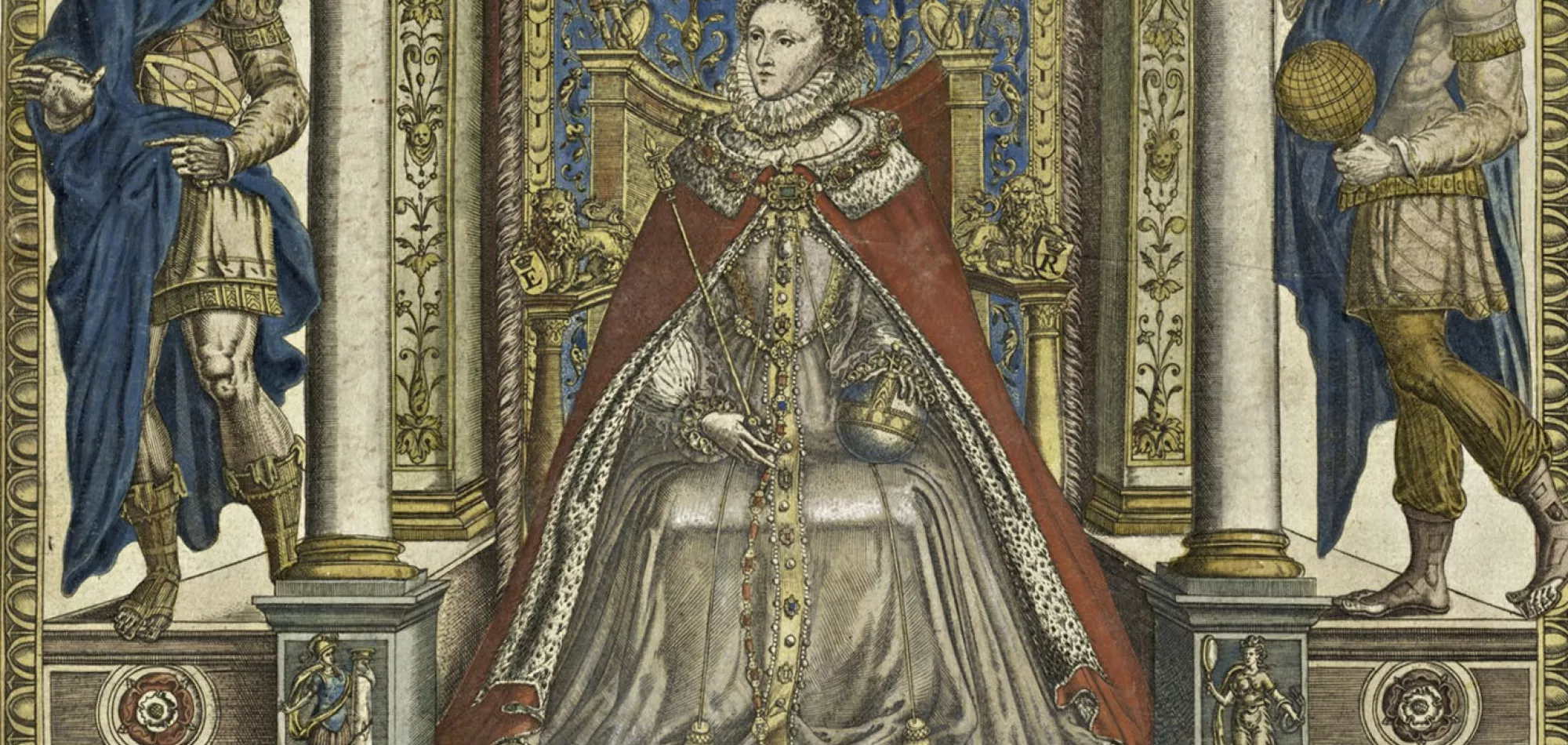
An image of Queen Elizabeth I from Christopher Saxton’s Atlas of England and Wales (BT1.47.9); it shows the queen crowned and enthroned.

The Elizabethan Settlement


When Queen Elizabeth I came to the throne following her sister’s death in November 1558, she swiftly and vigorously repudiated Mary’s restoration of Catholicism to England. With the dawn of this new Protestant regime, New College’s clearly pro-Catholic theological stance began to attract hostile attention. 

Some of those most closely associated with the Marian regime, like Nicholas Sander, quickly fled to the Continent. Others, like Warden Thomas Whyte, chose to wait to see what would happen.


  • An Elizabethan Visitation

    From 1561, the Crown instituted an extensive series of visitations designed to root out Catholics and enforce conformity with the Elizabethan settlement. Regular visitations by the Bishop of Winchester to assess the general academic and disciplinary state of the college were mandated by its statutes and had been conducted since its foundation. However, the Elizabethan visitations were primarily concerned to ensure that New College, which was viewed as a hotbed for Catholicism, toed the line. 

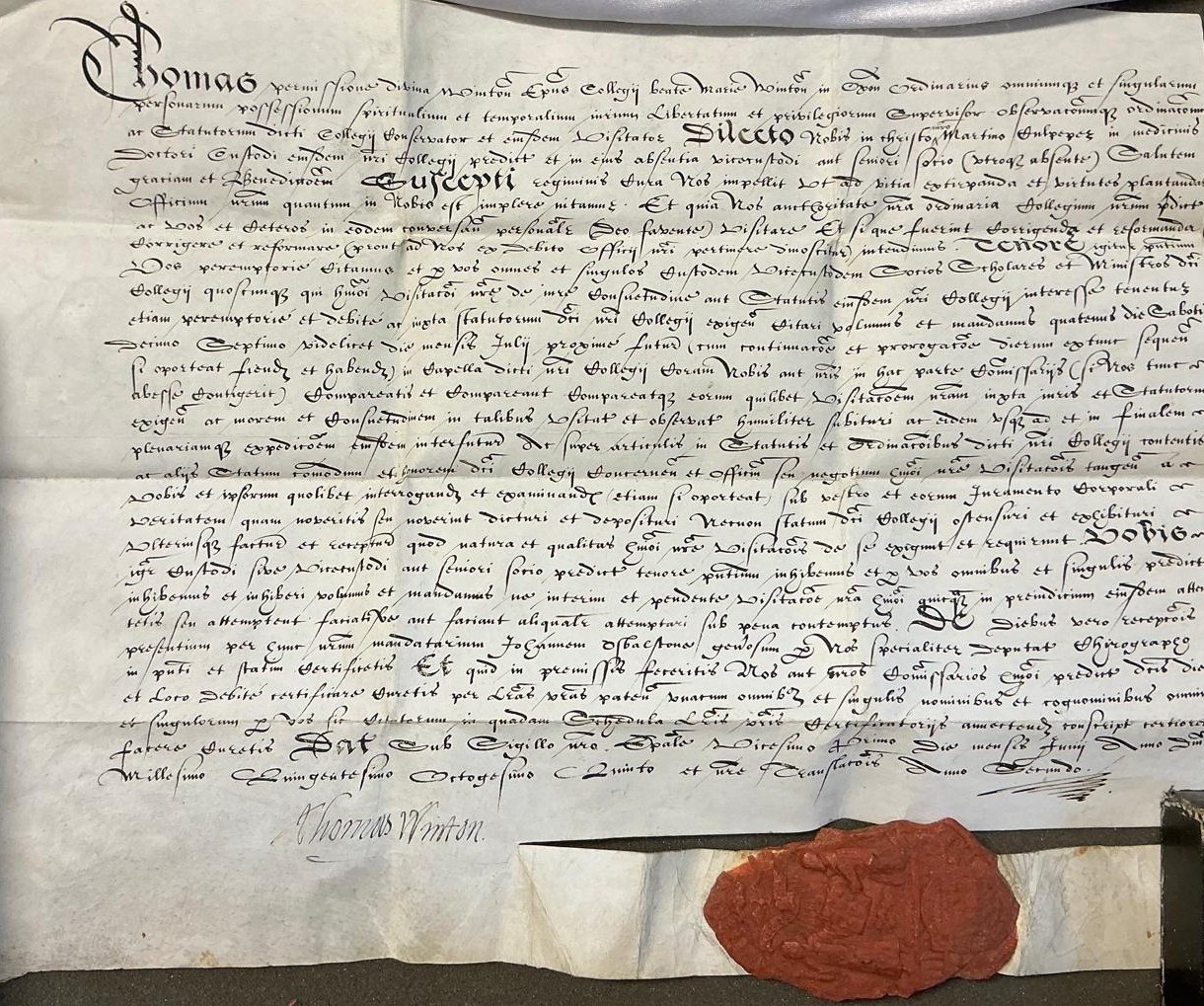
    Many of the original documents relating to the visitations conducted during the reign of Queen Elizabeth have been lost from the New College Archives. However, there does survive a citation, under the seal of Thomas Cooper, Bishop of Winchester, for a visitation of New College (NCA 12461) which is pictured below.

    A handwritten document in black ink with a red wax seal at the bottom.

    Dated 21 June 1585, it notifies the Warden and other members of the college leadership, including the Senior Tutor, that they would need to be present to answer questions and produce documentation regarding the college’s operation and the behaviour of its members. The schedule that was attached to the citation has since been lost. This would have contained some of the specific questions that the bishop required the representatives of the college to answer during his visitation. 

    Earlier visitations, including those conducted by Bishop Cooper’s predecessor—Bishop Horne—found that New College remained staunchly Catholic. Only the warden and nine fellows took the required oaths in 1561; two fellows protested that only the mass was allowed by college’s statutes. In 1566, 23 fellows refused to subscribe to the Articles of Religion (a list of 39 of the English Church’s core doctrines and beliefs). 

    As a direct consequence of these visitations, over half of the fellows were expelled from New College during the first decade of Elizabeth’s reign. Between these expulsions and the flight of many of its Catholic scholars to the Continent, New College lost many of its key intellectual figures and, consequently, its academic direction and unique institutional identity greatly suffered. 

    Many of its former members, however, continued to publish texts defending Catholicism and attacking Queen Elizabeth I from their exile on the Continent. Click on the links below to learn more. 

  • Sander’s ‘De Visibili Monarchia Ecclesiae’

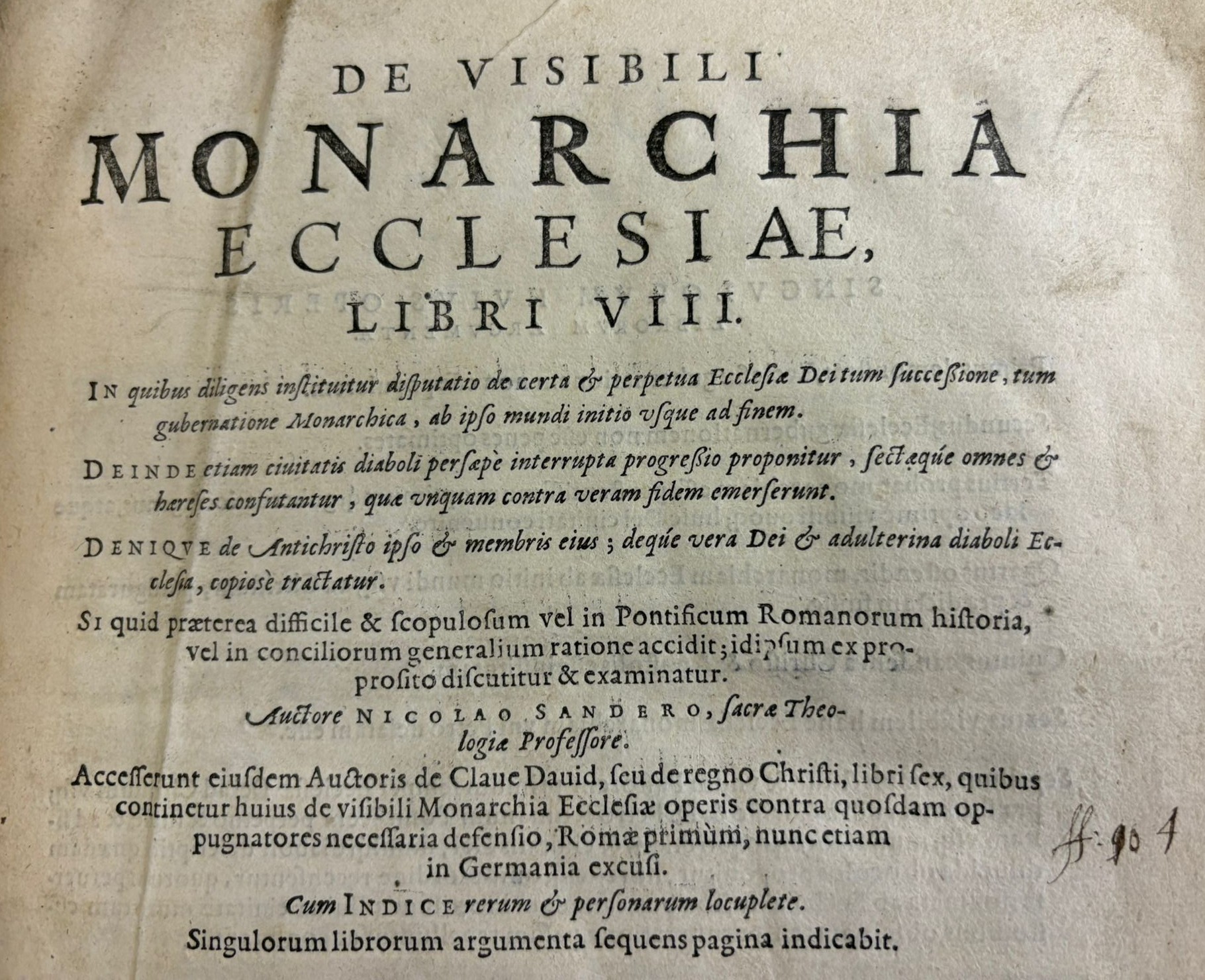
    Nicholas Sander (d. 1581) was a Wykehamist, educated at Winchester College and New College, who was made a fellow in 1548. He resigned his fellowship following Queen Elizabeth I’s ascension to the throne. He left England for Rome by 1560 and, after a few years there, travelled to Leuven (in modern-day Belgium). It was in Leuven that he published, in 1571, De Visibili Monarchia Ecclesiae—a defence of Catholicism and the Pope against the English Reformation. Our copy of this, Sander’s major work, is a re-print of the text dating to 1592 (BT3.158.3). In it, he argued that the papal monarchy had been instituted by God and that all rulers should submit to the Pope’s supreme authority. As part of this work, Sanders printed the papal bull issued by Pope Pius V (Regnans in Excelsis) which excommunicated Queen Elizabeth I and declared her a heretic. He also included a martyrology of Catholics who had been killed for their faith. 

    The printed title page of Nicholas Sanders’s ‘De Visibili Monachia Ecclesiae’

  • Harpsfield’s ‘Dialogi sex contra summi pontificatus’

    Nicholas Harpsfield (d. 1575) was a devoutly Catholic religious controversialist and historian. Like Sander, he had been educated at both Winchester College and New College. Harpsfield left Oxford during the reign of King Edward VI, fleeing the implementation of Protestant religious policies. He returned to England during the reign of Queen Mary I, where he worked with Cardinal Pole to reinstitute Catholicism. Harpsfield was openly and vocally hostile to the Protestant regime of Mary’s sister and successor, Queen Elizabeth I. Consequently, he was stripped of all his religious offices and incomes, and subsequently incarcerated in Fleet Prison. 

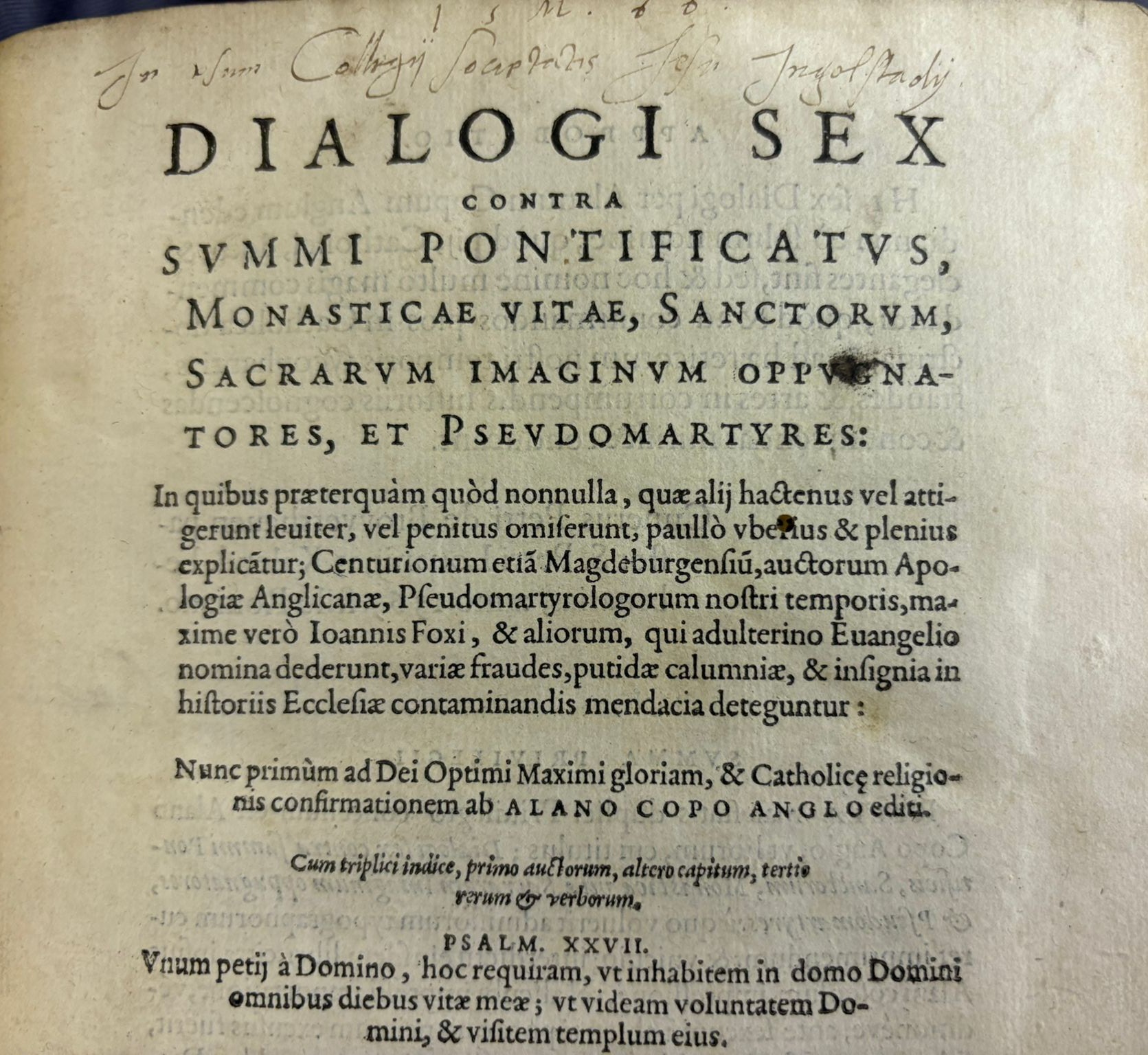
    The title page of Nicholas Harpsfield’s Dialogi Sex.

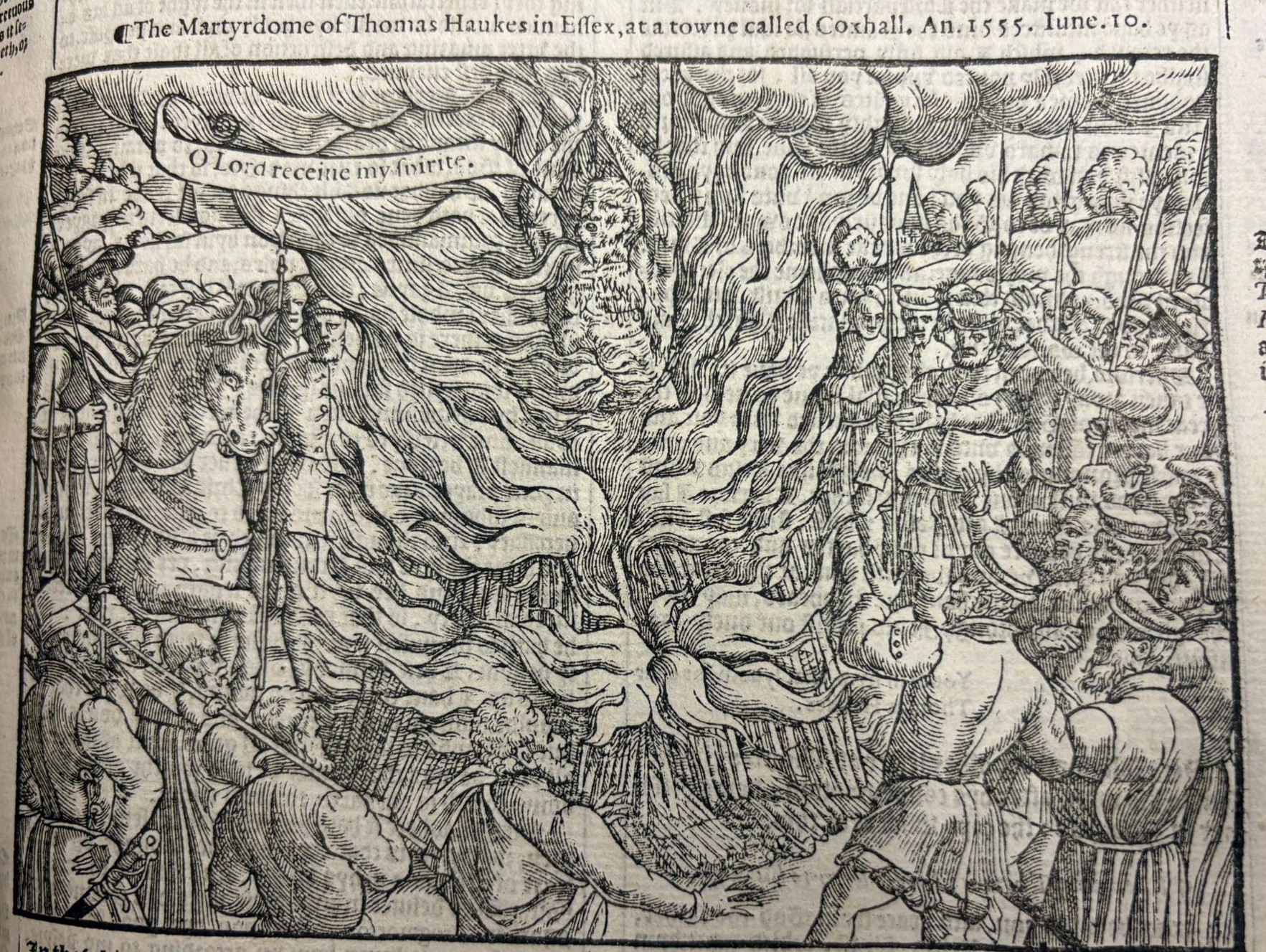
    Whilst imprisoned, Harpsfield published several substantial works in defence of the Catholic faith. The longest of these was published in Antwerp in 1566 under the pseudonym Alan Cope. It is entitled Dialogi sex contra summi pontificatus, monasticae vitae, sanctorum, sacrarum imaginum oppugnatores, et pseudomartyres (BT3.15.14). The title page from New College’s copy of this text is pictured above. It was written in response to and refutation of John Foxe’s Actes and monuments of matters most speciall and memorable, happening in the Church, with an universall historie of the same, arguably one of the greatest Protestant historical works of the Reformation. More commonly known as Foxe’s Book of Maryrs, it is a polemical account of the sufferings and death of Protestants under the Catholic Church, particularly in England and Scotland. Harpsfield mounted a sustained and systematic critique of Foxe’s martyrologies. In response, Foxe updated and enlarged the Book of Martyrs, taking into account Harpsfield’s criticisms to improve his narrative. We have a copy of this second edition of Foxe’s work at New College Library (BT1.48.7). 

    A woodcut print of a man being burnt at the stake.

    A depiction of Thomas Hawkes being burnt at the stake for his protestant beliefs in Coggeshall, Essex on 10 June 1555 from Foxe’s Book of Martyrs (New College, Oxford, BT1.48.7). 


The Reformation was certainty a turbulent time for New College and its members, which forever changed the religious character of the college. Having escaped mostly unscathed during the reigns of King Henry VIII and King Edward VI, its Catholic fellows enjoyed a resurgence during the reign of Queen Mary I. Though the reform policies imposed during the reign of Queen Elizabeth I permanently altered daily life at the college, it was long regarded, right into the seventeenth century, as a Catholic stronghold within the collegiate university. 

Click through to the next section to see how New College fared during another incredibly tumultuous time in English history—the Civil War.