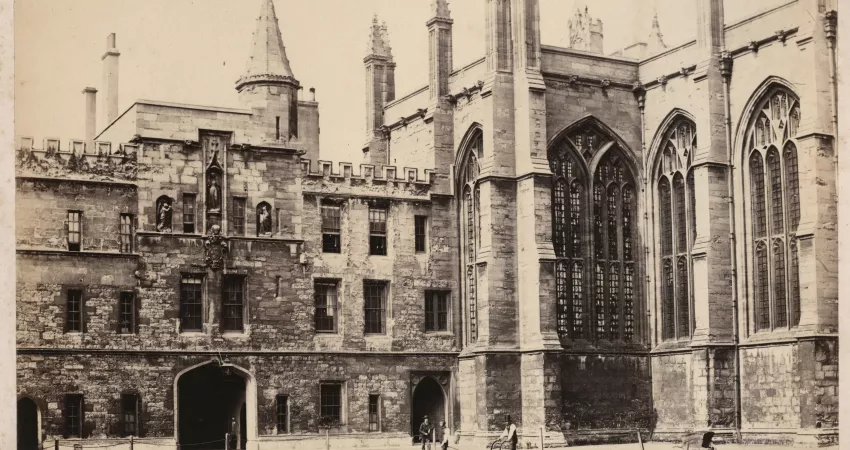
The extended period of peace after the Second World War was marked by both expansion and liberation in New College. In part, the college was following a much wider trend across society, as governments across Europe began to increase funding allocated to higher education and increasing numbers of students studied at degree level for the first time. In total, the number of universities across Europe increased from 204 to 504 between 1949 and 1984. At New College, though, expansion was not only in terms of numbers (although numbers did increase following the construction of the Sacher building in 1961). More significantly, the gender of the college diversified through the 1970s.
As greater numbers of women studied for degrees, the question of both female junior and senior members at New College had been much discussed. The University as a whole had started to provide lectures for women as far back as 1873 and had awarded degrees to women from the 1920s, so women’s education in the wider university had a long history by the 1970s.
Not surprisingly, therefore, there were numerous attempts to open up the fellowship and the student body to women. One such attempt was made in the 1960s—an attempt that would most likely have been successful without the resistance of the existing women’s colleges. Although surprising from a modern standpoint, many of the women’s colleges in Oxford were apprehensive about co-education in the oldest colleges in the university, believing that co-education in these colleges would negatively affect their own recruitment.
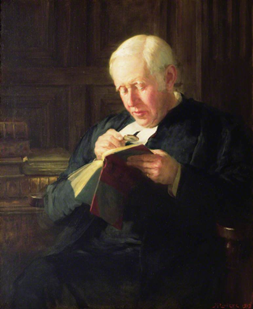
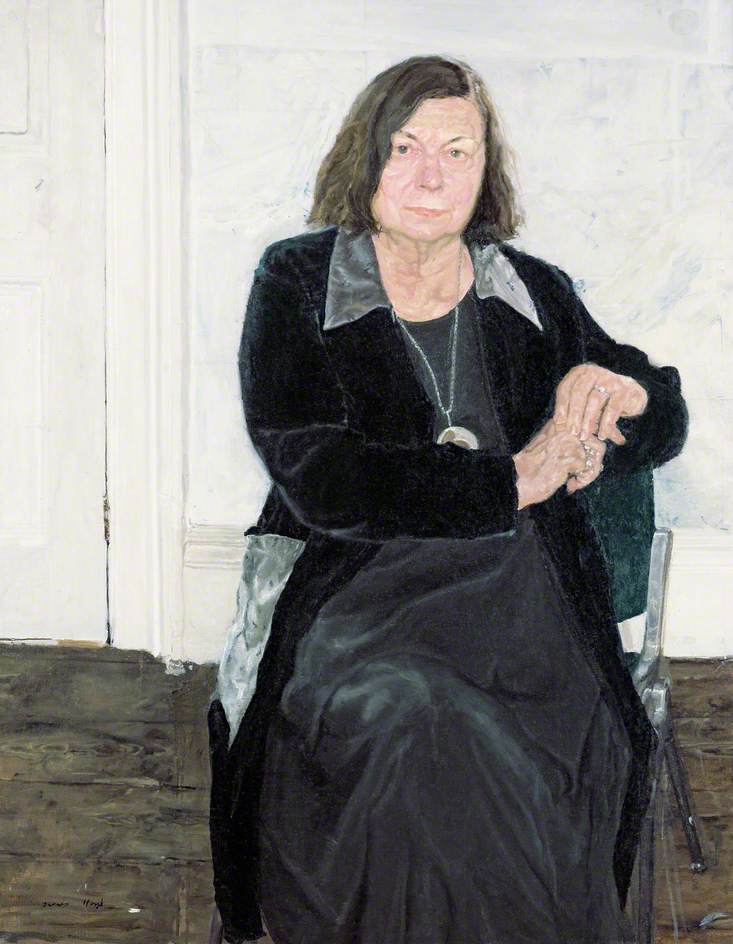 By the subsequent decade, though, the direction of travel across the university and in wider society was clear. It was not a question of if New College would admit women, but rather when. The wait for this to happen was, in the end, not a long one in the 1970s. In 1974, New College admitted Anne Barton (1933–2013) as the first female fellow of the college. Pictured here in a portrait that hangs in the New College Dining Hall, Anne Barton was a renowned Shakespeare scholar—later Professor of English at Cambridge—and paved the way for the subsequent decision to admit women students in 1979, alongside Balliol College and Magdalen College.
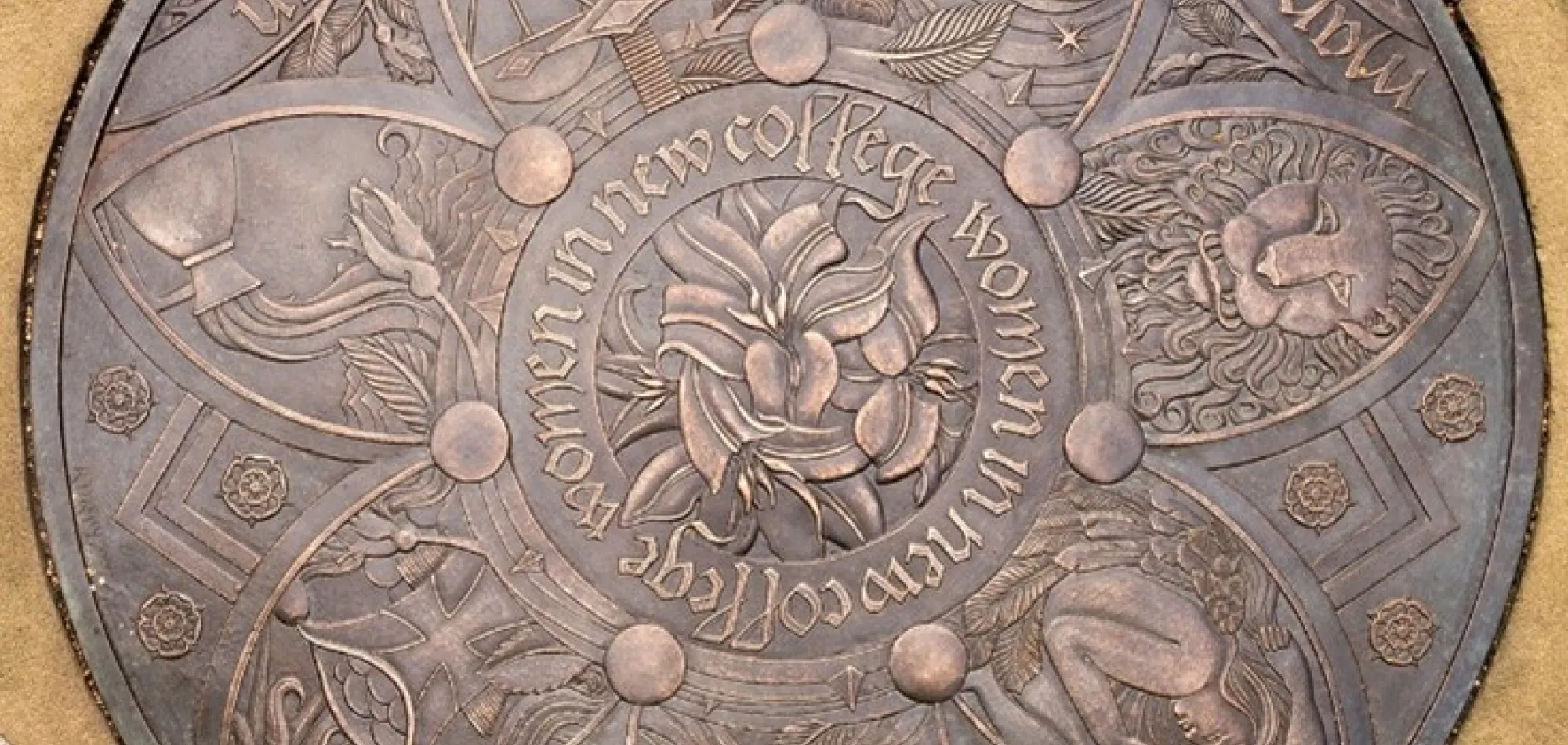
In Michaelmas Term 1979, the first cohort of women matriculated as students at New College—twenty-five in total. Since then the number of female students has grown considerably, with the gender split in each year of 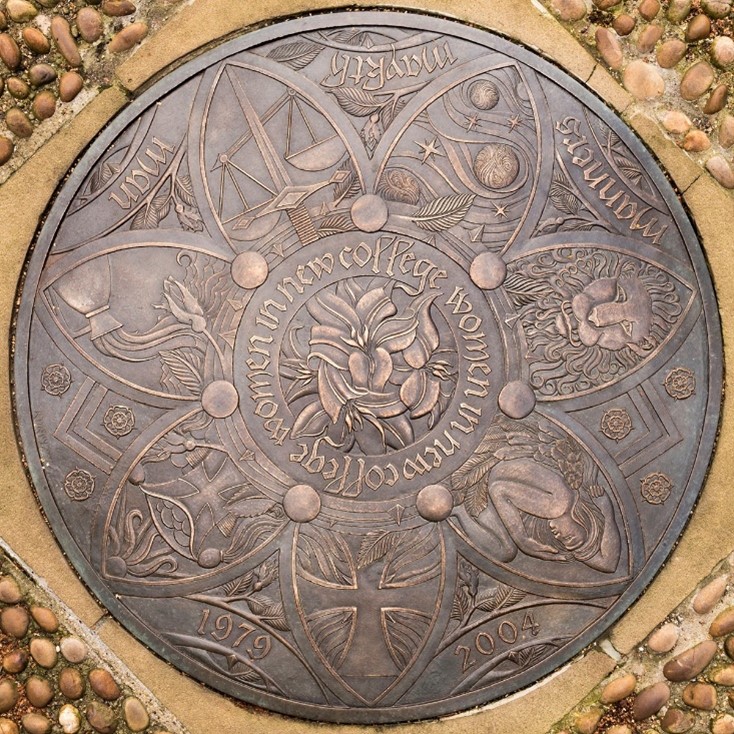 admission today being roughly equal. Although they have only been students at New College for a fraction of its long history, female alumni have had a marked impact across several fields after graduation. From literature (Kate Mosse, Rachel Cusk) to history (Lucy Worsley), acting (Sally Phillips), to politics (Susan Rice, Rachel Reeves), women have made a lasting contribution to life at New College and beyond. In 2004, the college recognised their contributions and this important change to its education with a plaque in front of the entrance to the Library. Pictured here, it commemorates the twenty-fifth anniversary of women studying alongside men.
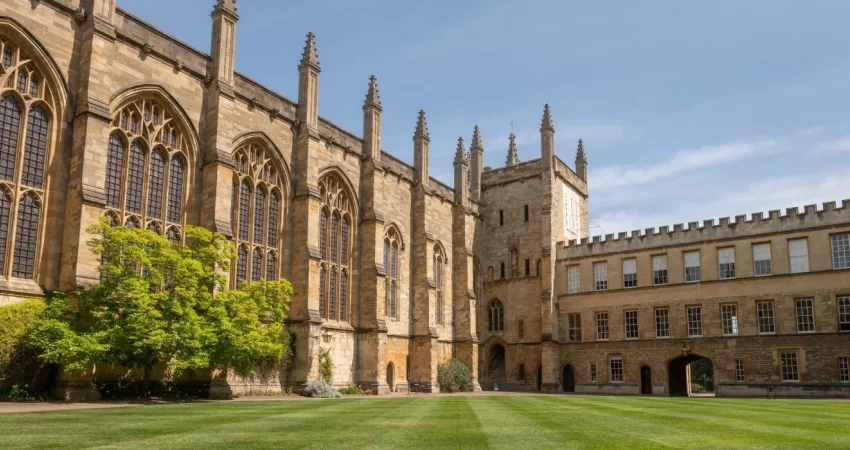
New College has now entered the eighth century of its history as an institution. These first few decades of the twenty-first century have seen many positive developments across college. Firstly, New College is committed to widening access to Higher Education. New College’s Step-Up Programme currently works with 43 state-schools from across England and Wales. New College is also part of the ‘Oxford for Wales’ consortium, working alongside Jesus College and St. Catherine’s College to support Welsh state-schools. The college is also committed to supporting local school children and formed a partnership with Wood Farm Primary (an Oxford primary school) which has been facilitated by the charity, The Oxford Hub.
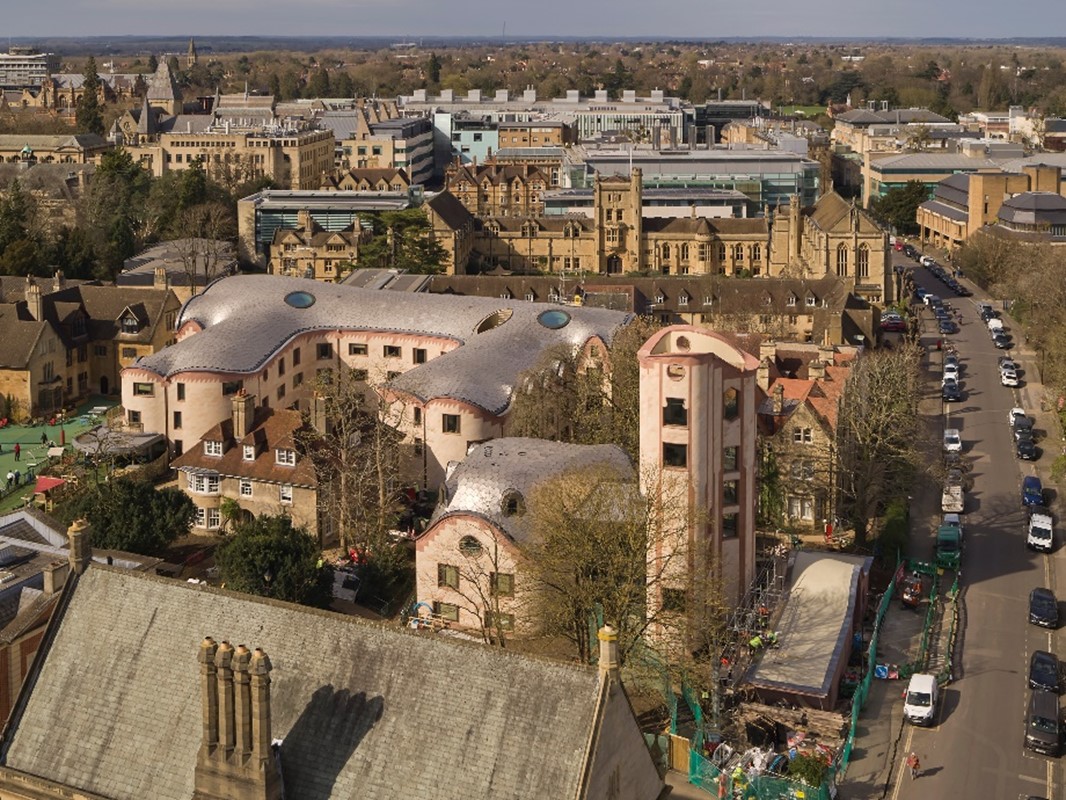
At the same time, the college buildings have been transformed once again with the construction of the new Gradel Quadrangles, thanks to the generosity of New College alumnus Chris Gradel. Pictured above, these impressive buildings form the first ‘curved quadrangles’ in Oxford—housing much need student accommodation as well as purpose-designed student study space and a recital hall for concerts and events. The buildings are also at the cutting edge of academic research, hosting the Gradel Institute of Charity—the world’s first research centre for charity that examines how money raised from philanthropy can be best spent for the maximum benefit.
We have now come to the end of our epic journey through the history of New College.
From William of Wykeham’s original foundation in 1379 to the construction of the Gradel Quadrangles in 2024, we have seen that New College has been a place of both continuity and change—a place that Wykeham would still recognise but also a place that has continuously adapted to events both locally, nationally, and internationally. Indeed, one key thread through the college’s long history has been this continued need to adapt a medieval institution and Wykeham’s founding principles to the pressing needs of each subsequent generation. As we have seen, this adaptation has been mostly successful throughout the centuries, with New College entering the twenty-first century in a strong position. No doubt Wykeham’s institution will continue to build on this success as it approaches its seven hundredth anniversary—and long into the future.

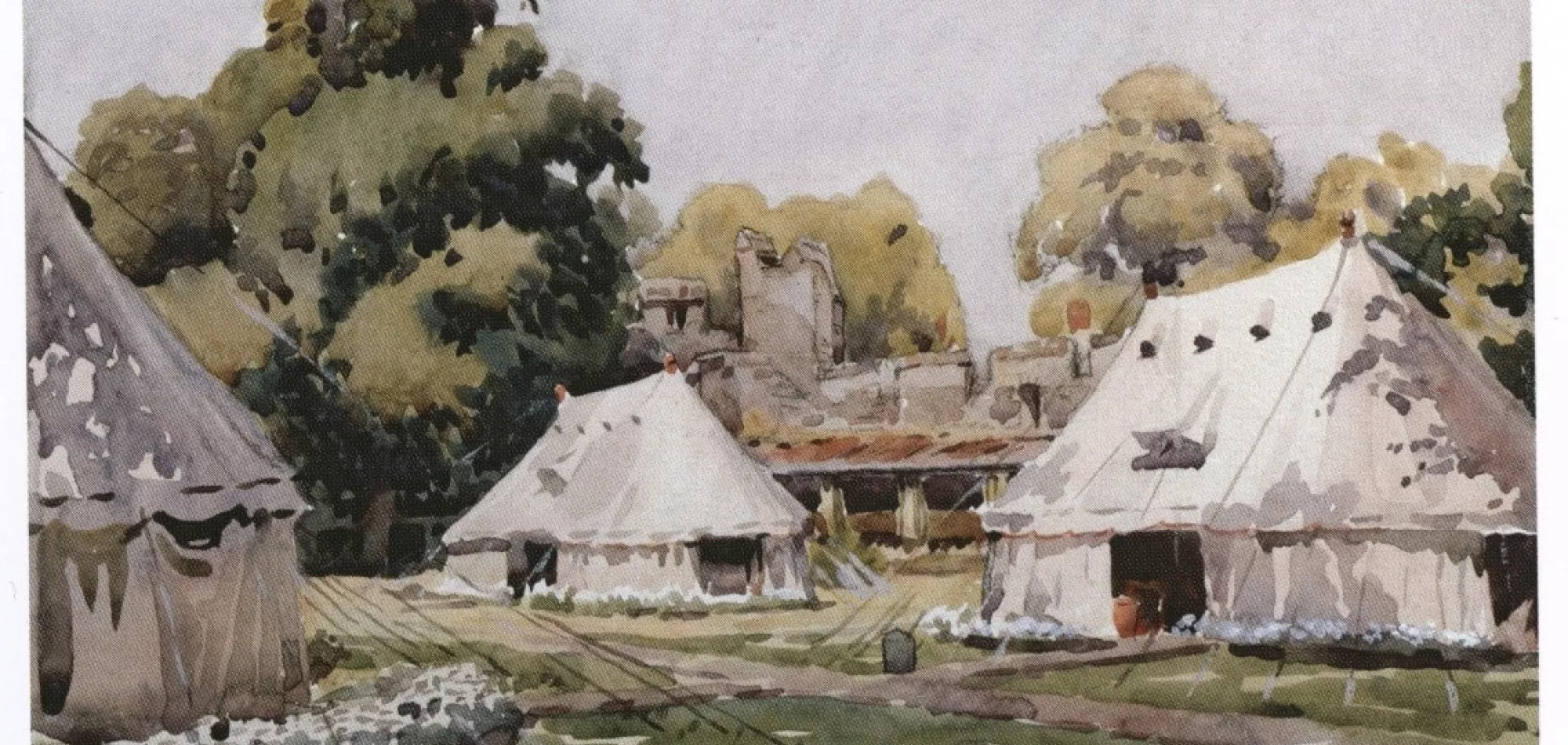
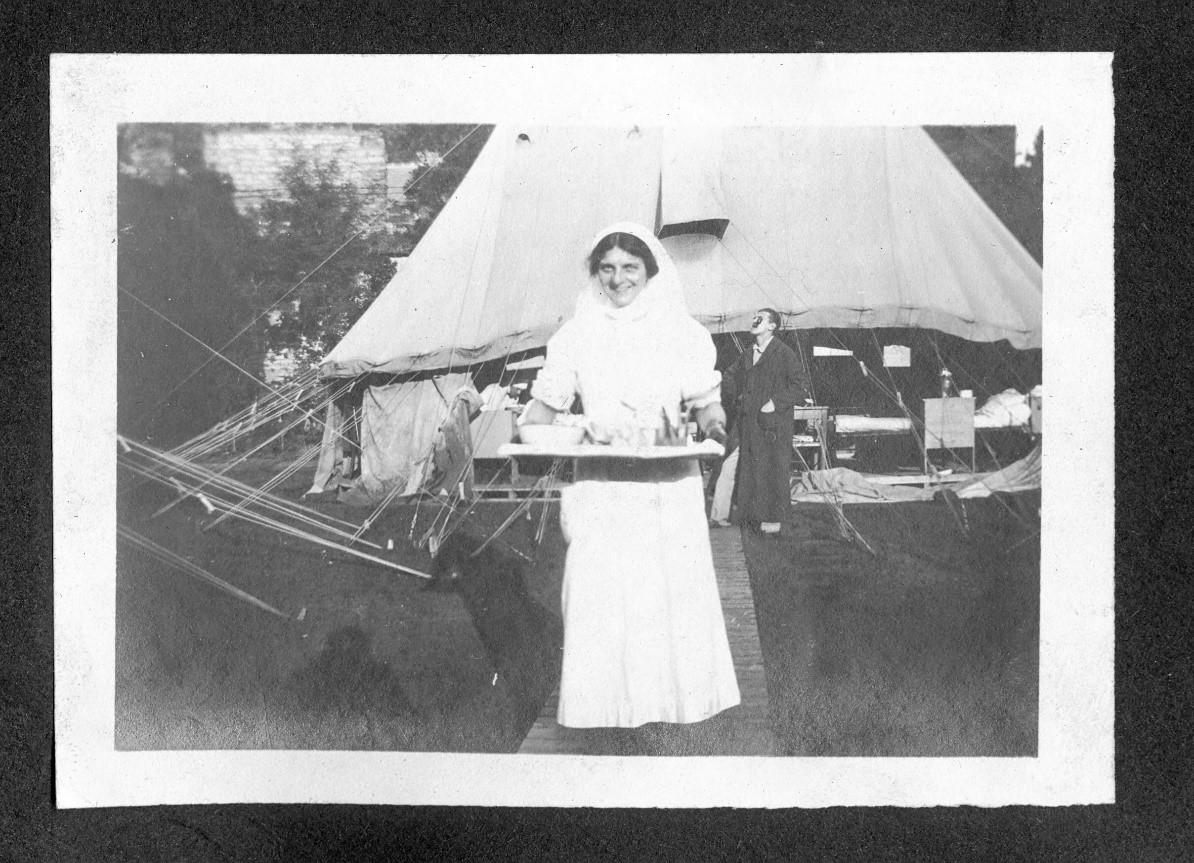
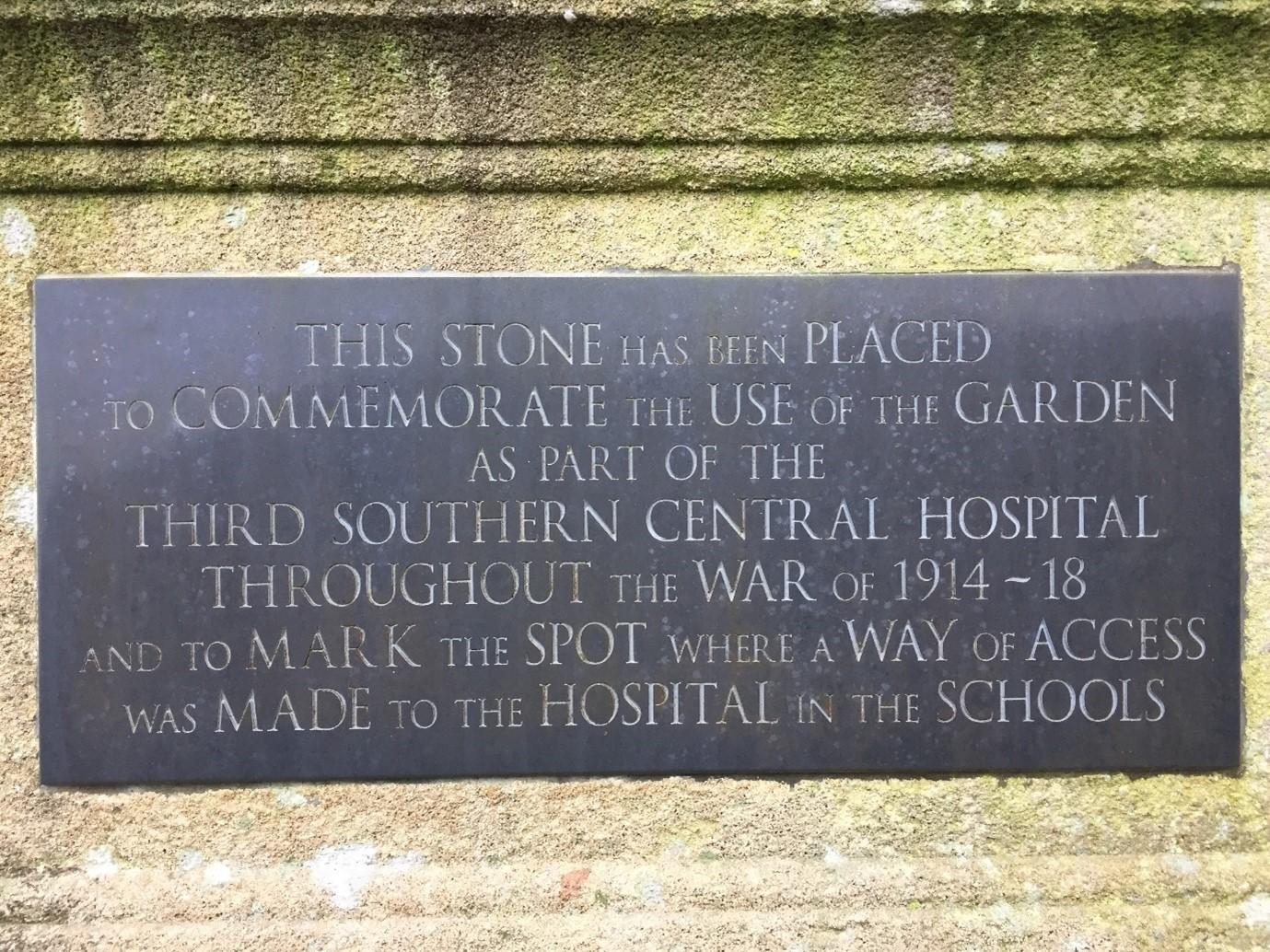
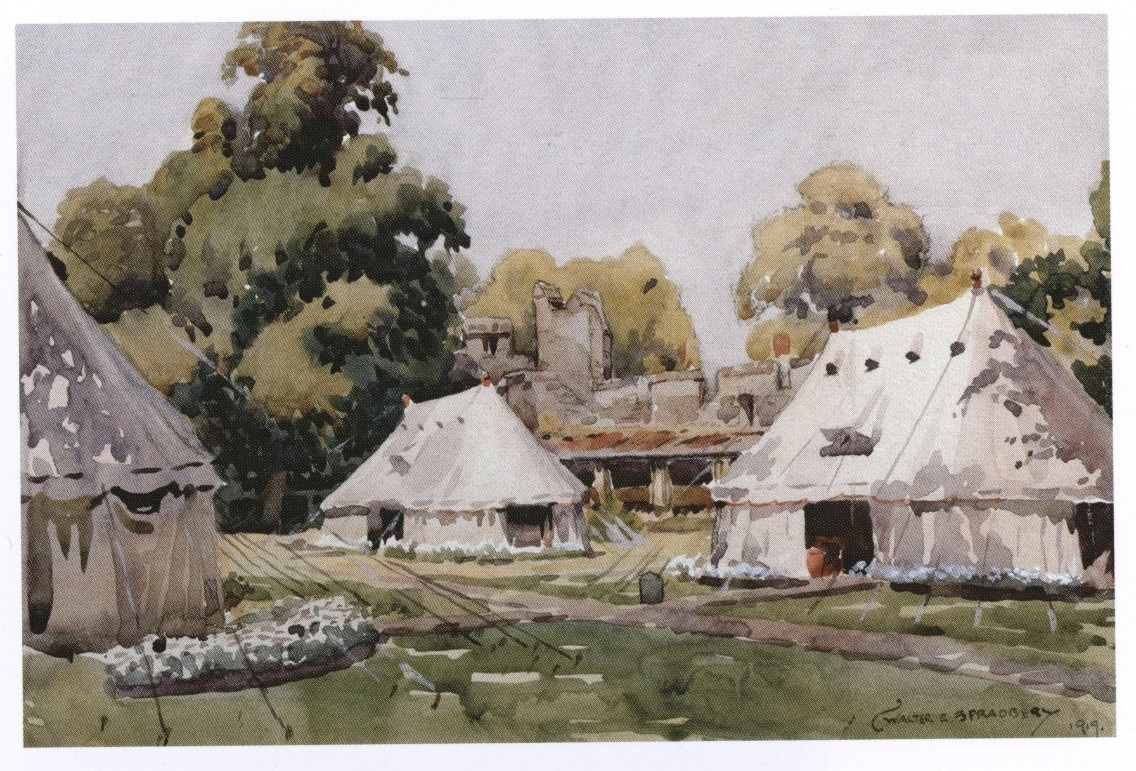 In total, five sites across the city were used to support the work of the hospital. As can be seen in the painting, at New College this support consisted of the provision of accommodation in tents in the college grounds. A contemporary painting by the artist Walter Spradberry, it dates from 1919 and shows the hospital at the end of the conflict.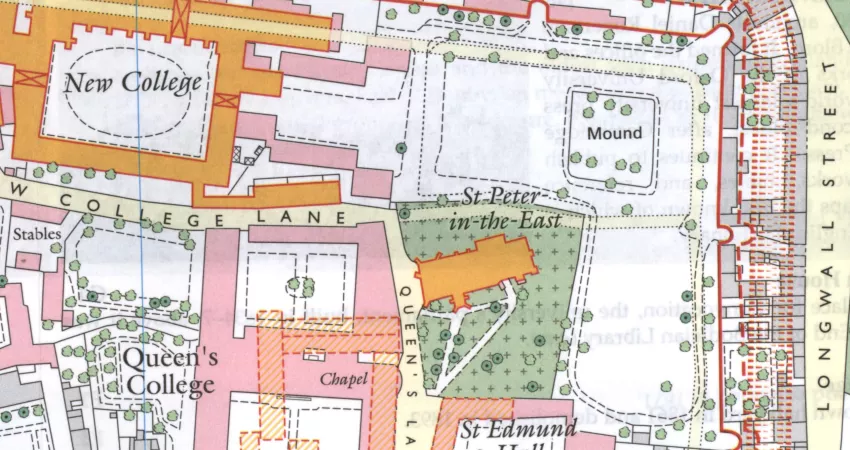
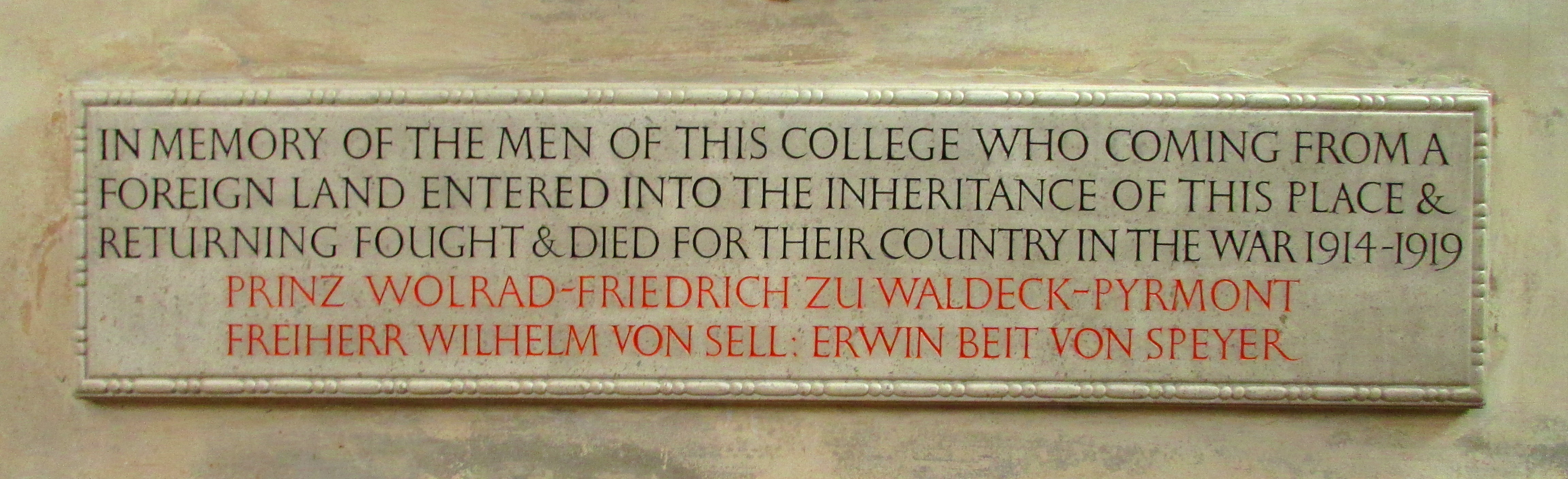
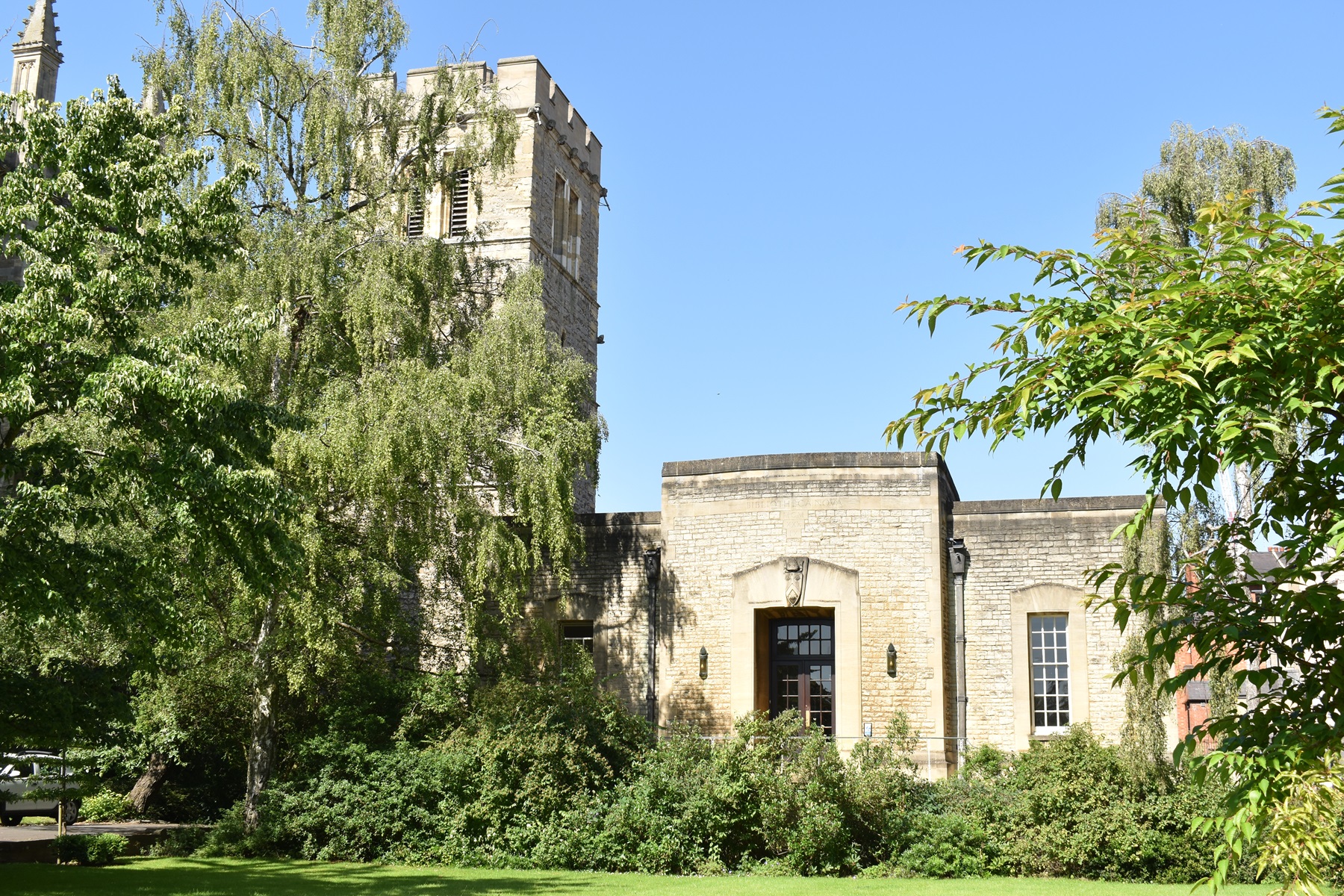
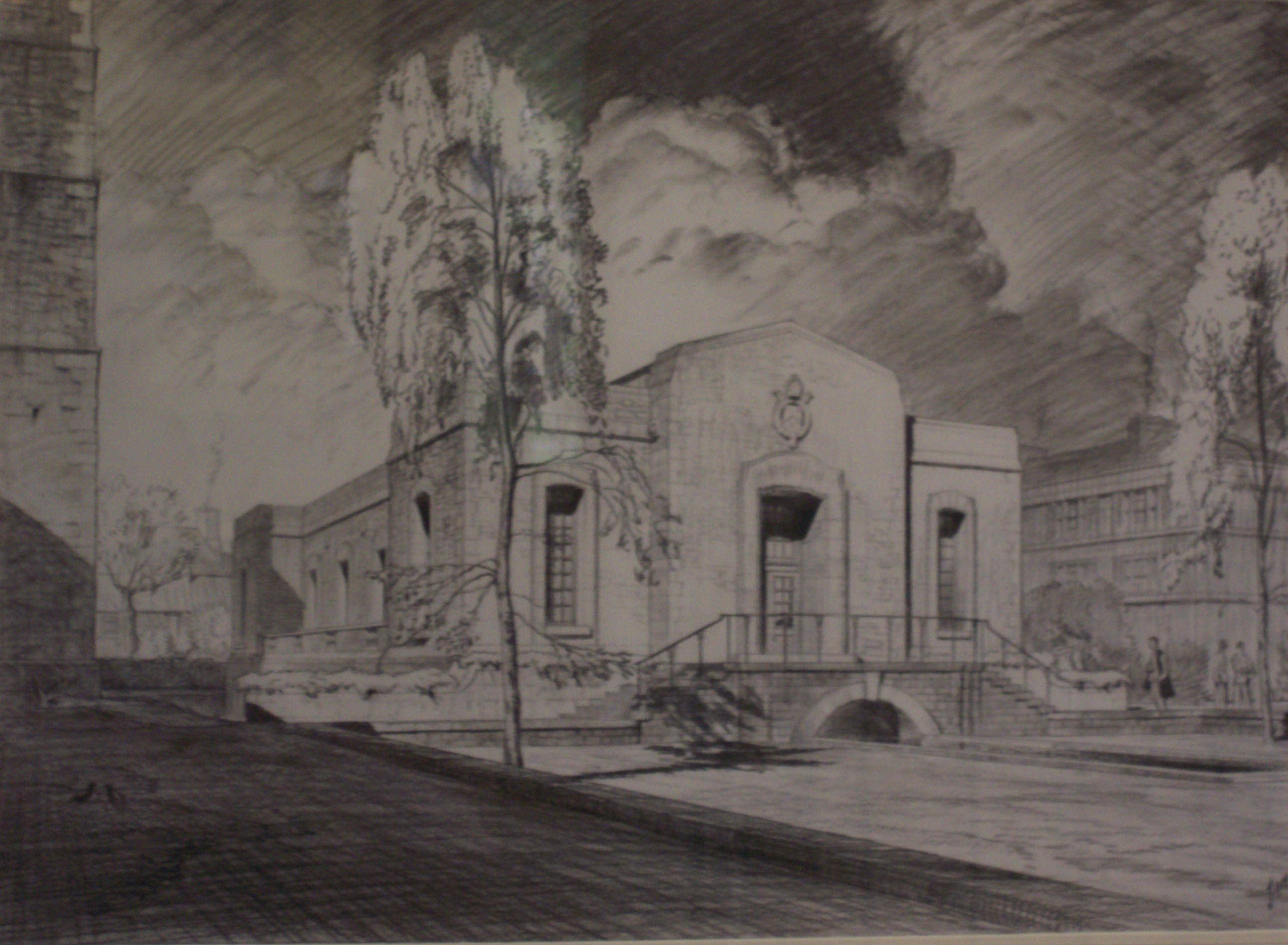 A controversial decision at the time, in 1930 New College again recognised these three undergraduates, creating the above memorial plaque in the Chapel in the same design as the existing 1921 New College roll of honour on the south wall of the Chapel. Intended to be an act of reconciliation after a bitter and acrimonious conflict, this 1930 memorial was well received in Germany. It was just one way that the First World War was marked in college—the other substantial work being the creation of a new memorial library. Pictured here in its original plan, this new library was designed by Sir Hubert Worthington (1886–1963) and completed in 1939.