The seventeenth century brought turmoil to all parts of Britain and Ireland.


At the heart of this turmoil lay a fundamental dispute between an often stubborn and recalcitrant monarch who wanted to rule without consulting Parliament, and MPs who wanted the right to vote on any increase in taxation. This division, combined with the religious differences between a Catholic-leaning monarch and an increasingly Puritan parliament, ultimately proved disastrous for the general population: decades of civil war, revolution, and republican experiment that affected the lives of almost everyone living not only in England, but also in Scotland, Ireland, and Wales. 

In this tab of our exhibition, we explore how New College reacted to this unprecedented political and religious turmoil—turmoil that lasted long after the physical fighting itself had come to an end. What is clear is that Oxford, and the fellows of New College, were no bystanders in this conflict, but were at the very centre of events shaping the entire country.

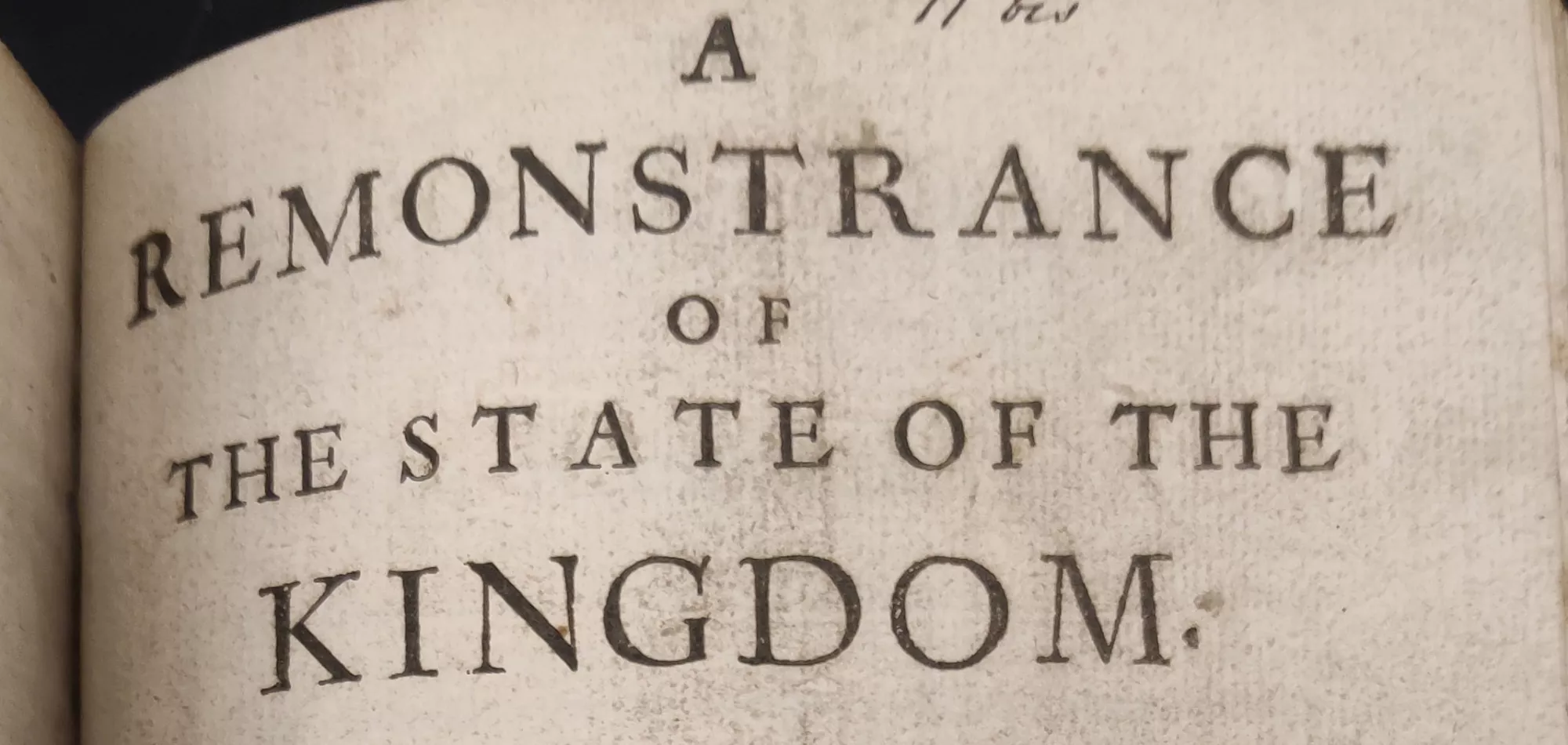
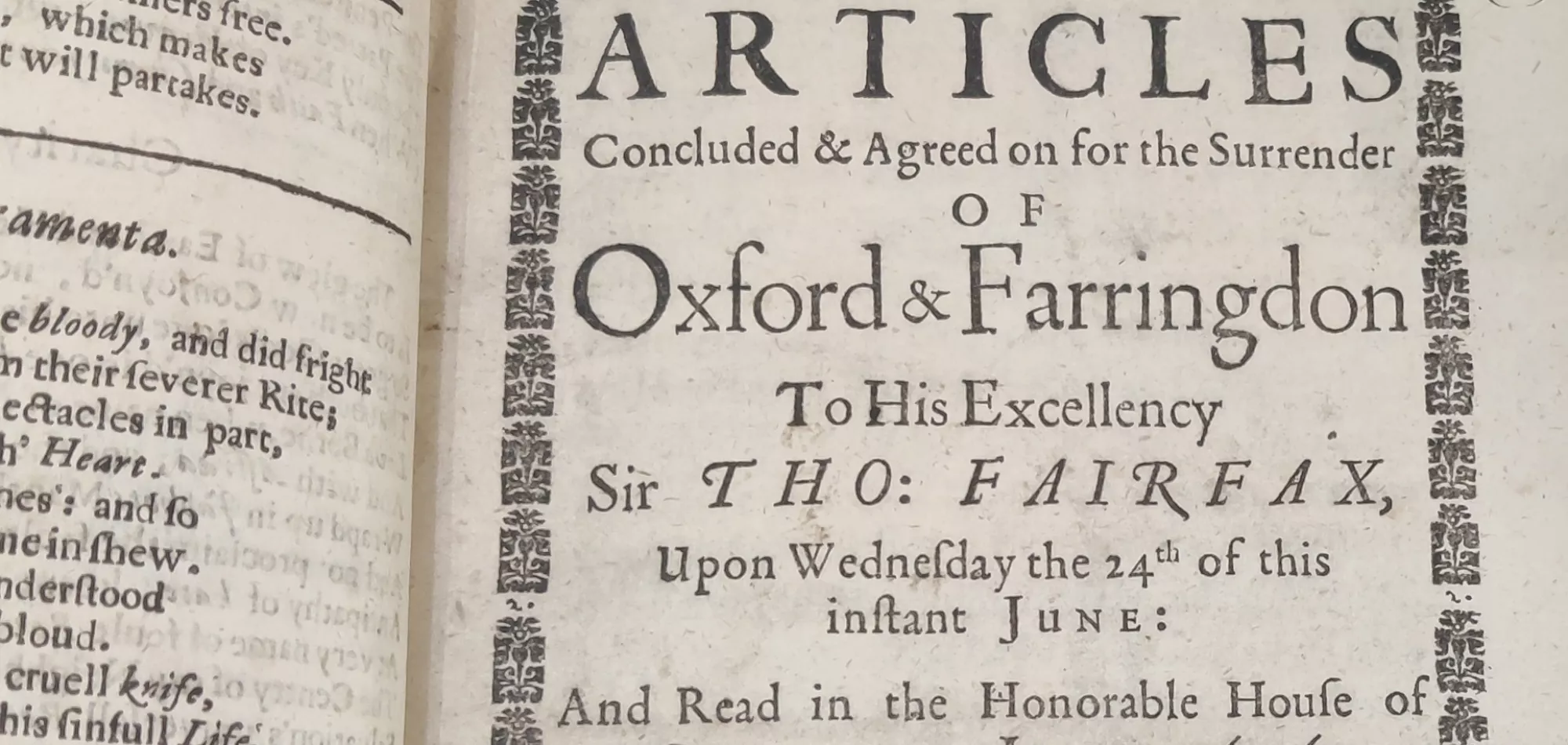
Close image of title of BT3.63.8(11bis), a Civil War pamphlet in New College Library's collections.

A Country and City Divided


A civil war, by its very nature, is caused by division. It is not a conflict fought between different countries, but rather a bitter struggle between citizens within a country, fighting against each other. Although a complex conflict, involving all parts of modern Britain and Ireland, the English Civil War was, at its core, no different—the result of deep division across politics and religion. 

This division was expressed not only at a national level, with some areas more royalist and others more parliamentarian, but also within individual cities. Oxford, for example, was a divided city in the years leading up to the outbreak of fighting. Both New College and the wider University—with its Laudian and Catholic leanings—were predominately royalist, whilst the citizenry of Oxford—who were much more puritan—were more in support of Parliament.

This febrile atmosphere in England both shortly before and during the Civil War can be seen in the collection of contemporary pamphlets held in New College Library’s special collections. In the seventeenth century, print and its ability to produce political material quickly and cheaply revolutionised conflict. Both sides used the new technology effectively as a form of propaganda, with this propaganda quickly acquired by the Fellows of New College for their Library.

  • The Pamphlet that Sparked the Civil War

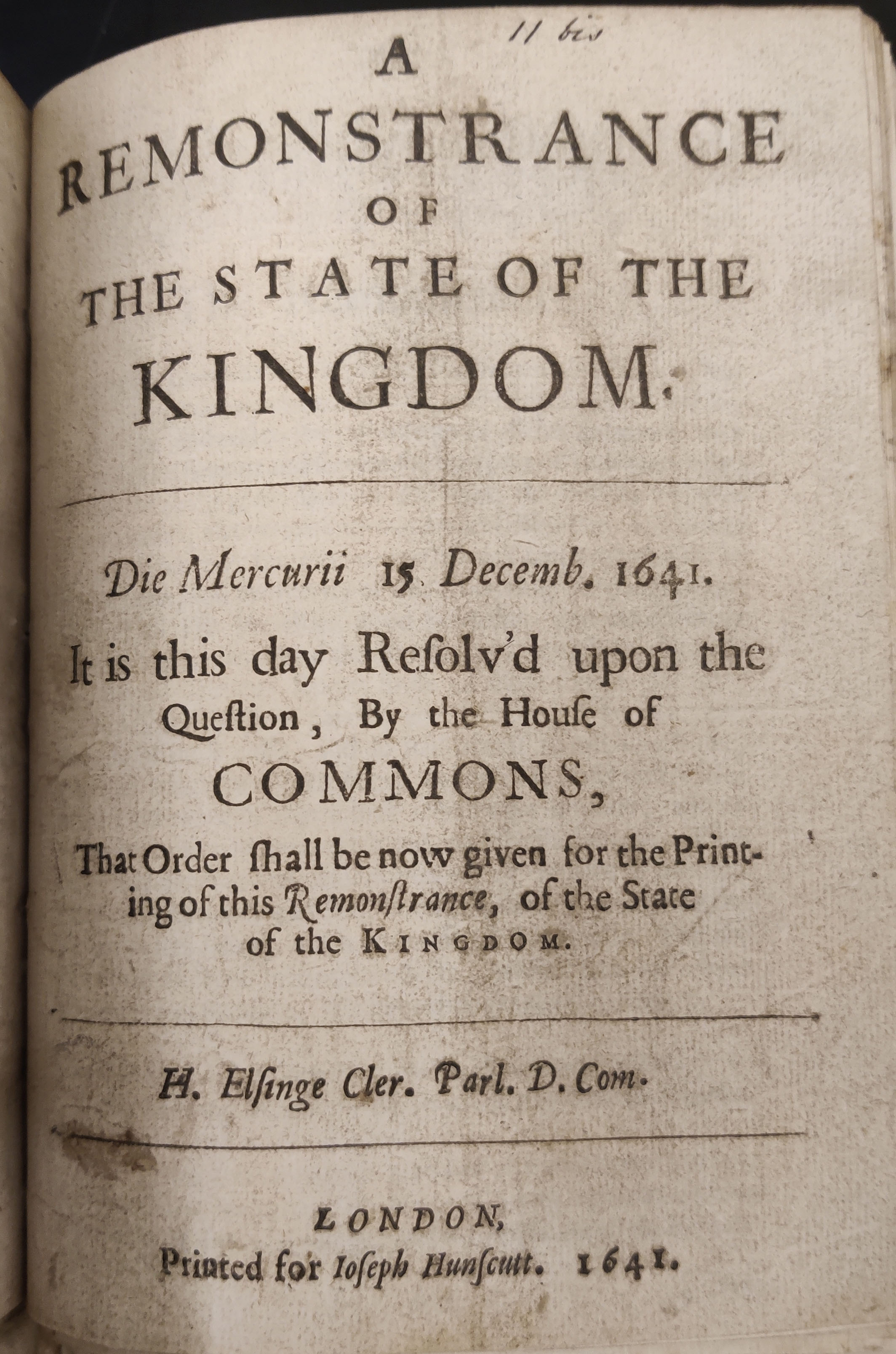
    Title page of the pamphlet.

    Here, you can see the title-page of one of the most important pamphlets in New College’s collection—A Remonstrance of the State of the Kingdom. Essentially a list of grievances presented to Charles I in December 1641, it highlighted Parliament’s displeasure with the King’s conduct. 

    There is a particular focus on Charles’s alleged involvement in a Catholic conspiracy to dilute the English Reformation with the aid of Laudian bishops in the Church of England, his decision to continuously dissolve Parliament and govern without it, and his intervention in costly wars without seeking parliamentary approval. In total, over two hundred points of objection are raised in this pamphlet.

    The remonstrance passed with a narrow majority in the House of Commons—159 votes to 148—but it came to signify Parliament’s main position in its relationship with Charles. Originally, it was given to the King in private in early December 1641. His delay in responding to it, though, forced Parliament to act—with radical parliamentarians deciding to simply print their demands and circulate them around the country in an attempt to force the King’s hand. As such, this pamphlet has been considered to be the one document that irreversibly damaged the relationship between Parliament and monarch—a breakdown in a relationship that would have severe consequences for New College and the entire country when fighting broke out the following year.

  • The King’s Response

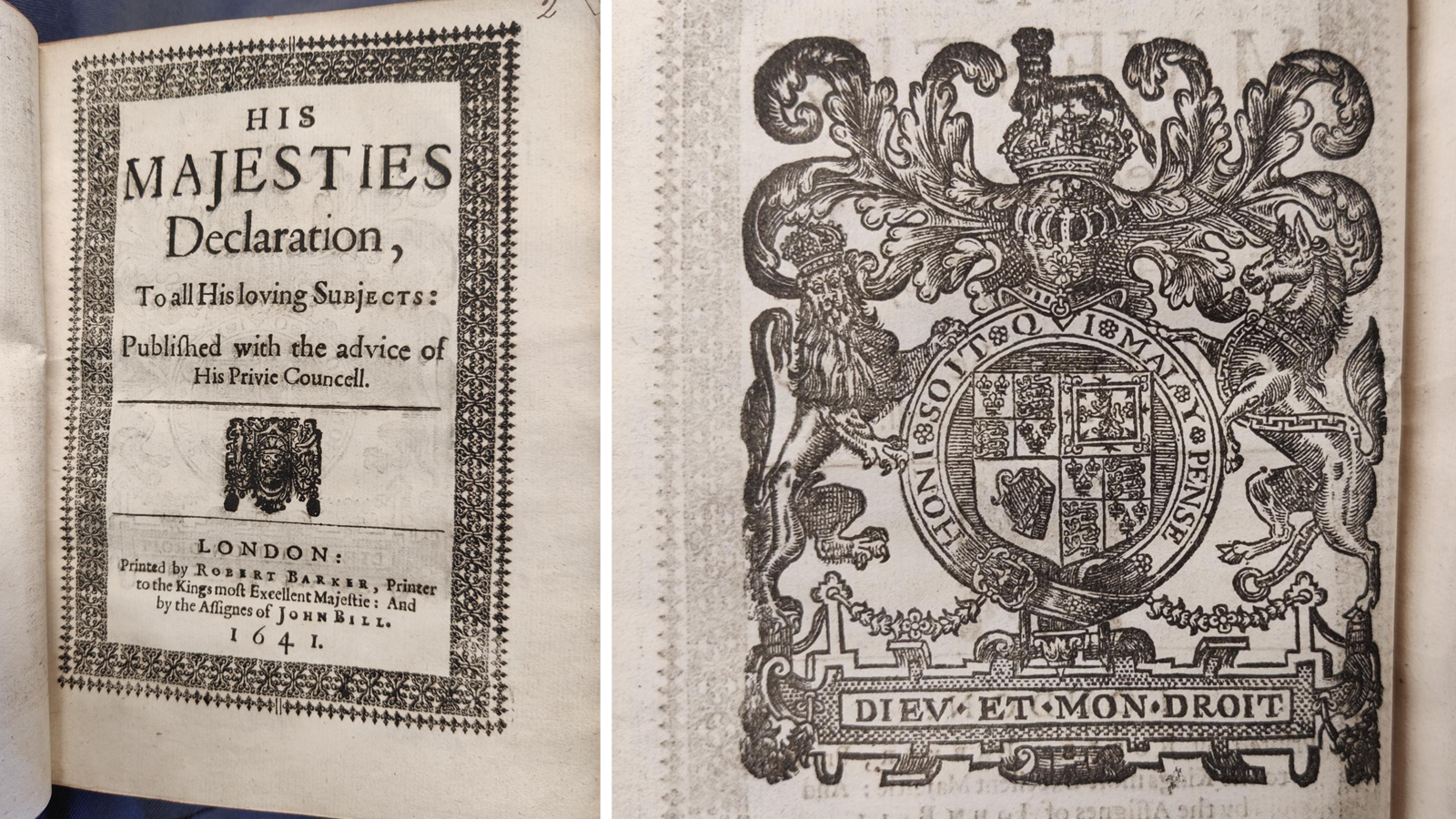
    Below, you can see the King’s response to Parliament’s demands. Entitled His Majesties declaration, to all his loving subjects: published with the advice of his Privie Councell, this document was an attempt by Charles I to gain control of an escalating situation—an attempt to placate Parliament but not to cede any power from the crown. 

    This importance placed on the crown is, unsurprisingly, visible as soon as the pamphlet is opened. On the title-page verso, the royal coat of arms of Charles I dominates the page, together with the mottos ‘Honi soit qui mal y pense’ and ‘Dieu et mon droit’. As can be seen below, this coat of arms is printed so dominantly that the reverse can be seen on the title-page itself—a literal stamping of royal authority on its contents.

    Within the pamphlet, Charles downplays fears of a Catholic revival in England, assuring his subjects that Christian worship in the country would remain ‘different from that of Rome’ and extolling Protestant worship as ‘the most pure and agreeable to the sacred word of God of any religion now practised in the Christian world’. 

    Despite this, he is not completely conciliatory. Towards the end of the pamphlet, he warns of the dangers of a future conflict. If the King’s ‘lawful power and authority’ with subjects is weakened, he argues, then the bonds of government will loosen and the peace and happiness of the country will be sacrificed. Such words foreshadow Charles’s refusal to negotiate with Parliament in the following years and the outbreak of open warfare between the two sides in August 1642.

  • Propaganda Unleashed

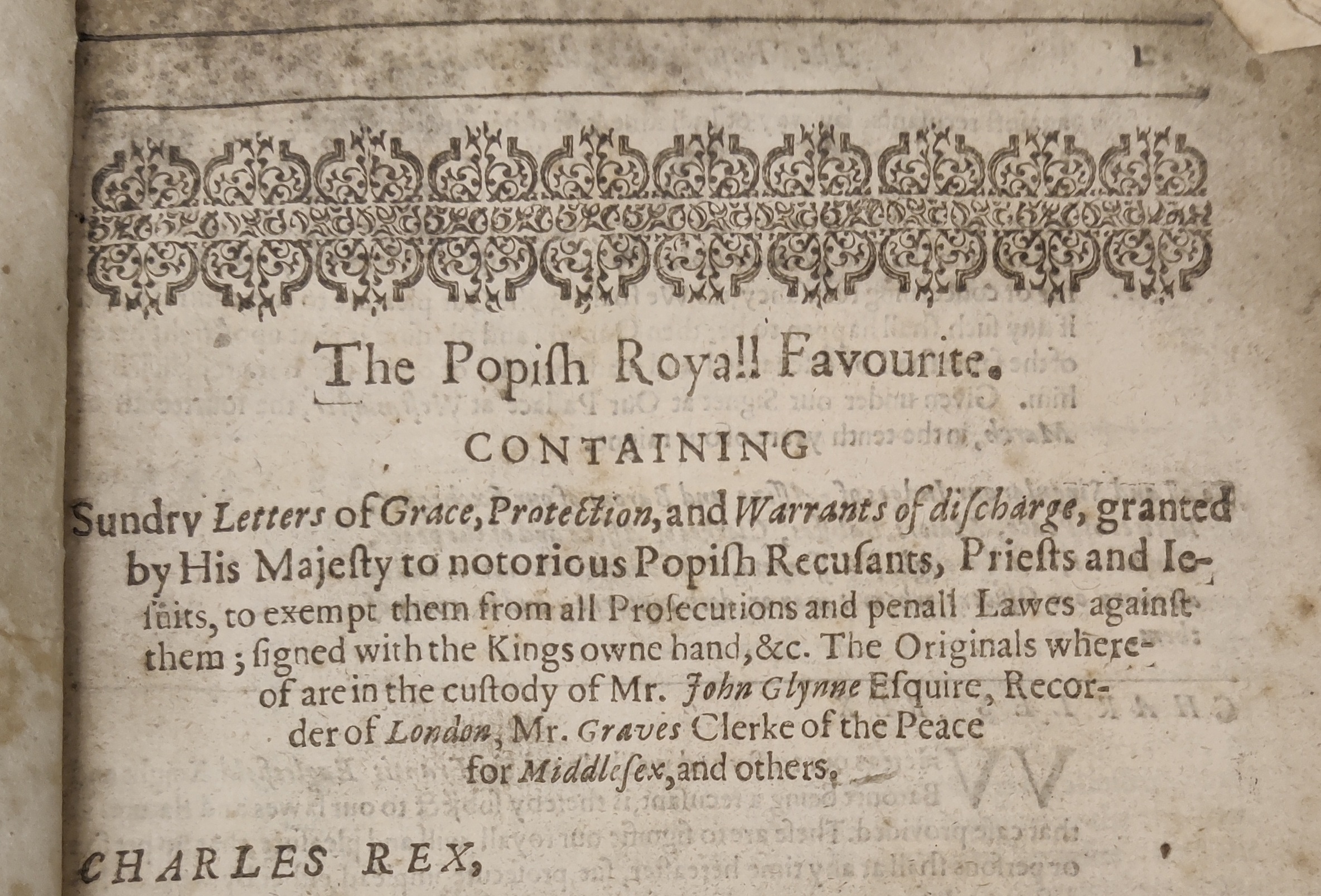
    The opening text of BT1.75.11

    Once fighting broke out, the propaganda role of pamphlets only grew. Parliament started to print thousands of pamphlets against the King and distributed them around the country to their soldiers. Here, you can see the opening text of one example of these pamphlets in New College’s collections. 

    The Popish Royall Favourite lists a number of letters signed by the King to protect his Catholic supporters—some of the letters are warrants of discharge—and were issued to several notable recusants, priests, and Jesuits, to exempt them from any future prosecution because of their faith. 

    The pamphlet argues that Charles is especially lenient towards Catholic priests, with an explanatory note added on page 25 stating that Charles gave Catholic priests free rein to travel to and from England and the continent, even when supposedly under arrest, with Charles's intended aim being that they could then ‘seduce the people’ more easily. It even includes a reproduction of a letter from the Pope to Charles whilst he was Prince of Wales. 

    This pamphlet, therefore, is deliberate propaganda designed to appeal to parliamentary troops anxious about a return of England to Catholicism upon a royalist victory. Together, the collection of pamphlets in New College Library represents not only the bitter dividing lines between the two camps, but also the development and escalation of an information war, with propaganda designed to appeal to the growing proportion of the population who could read.


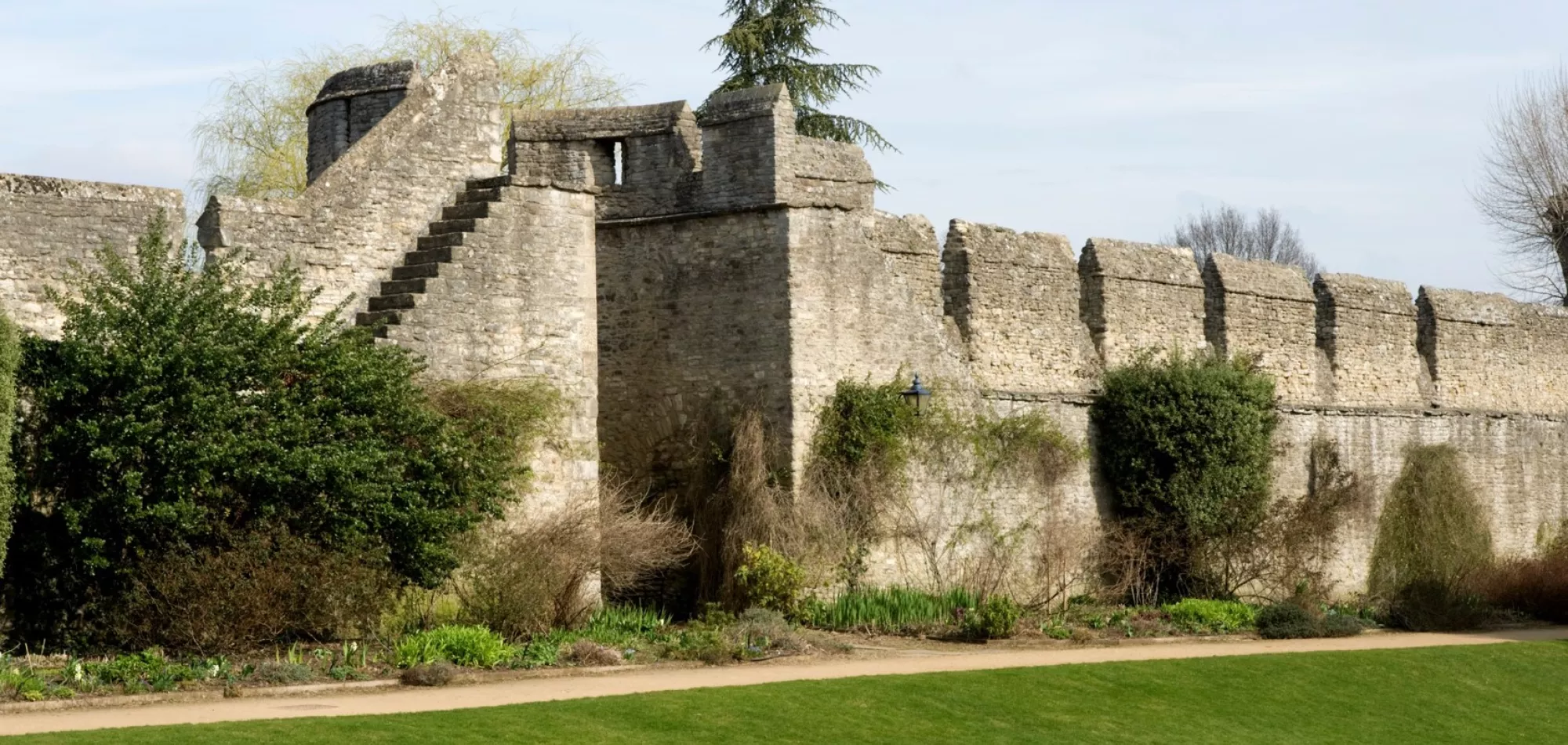
Image of the New College city walls

New College at War


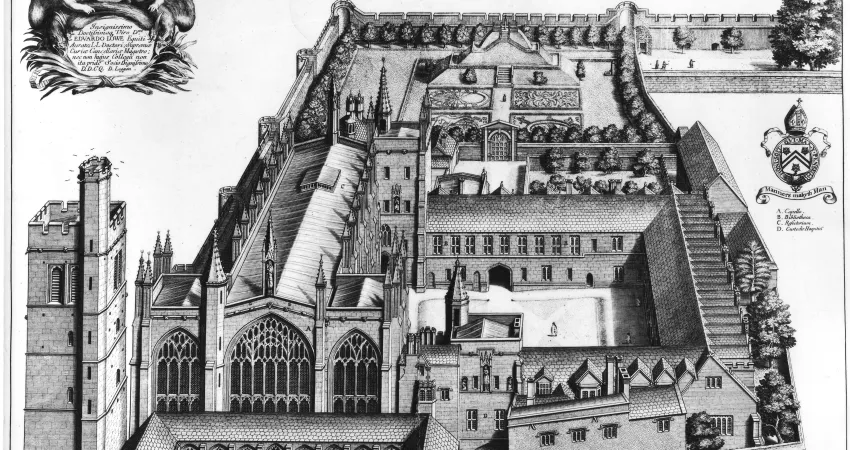
The pamphlets above showcase the politics of the English Civil War and the propaganda efforts of both sides, but New College was also very much physically affected by the outbreak of hostilities. Oxford, located in the heart of the Thames Valley, saw some of the most bitter fighting of the conflict as it occupied a strategic position between Parliamentarian London and the Royalist west of the country.
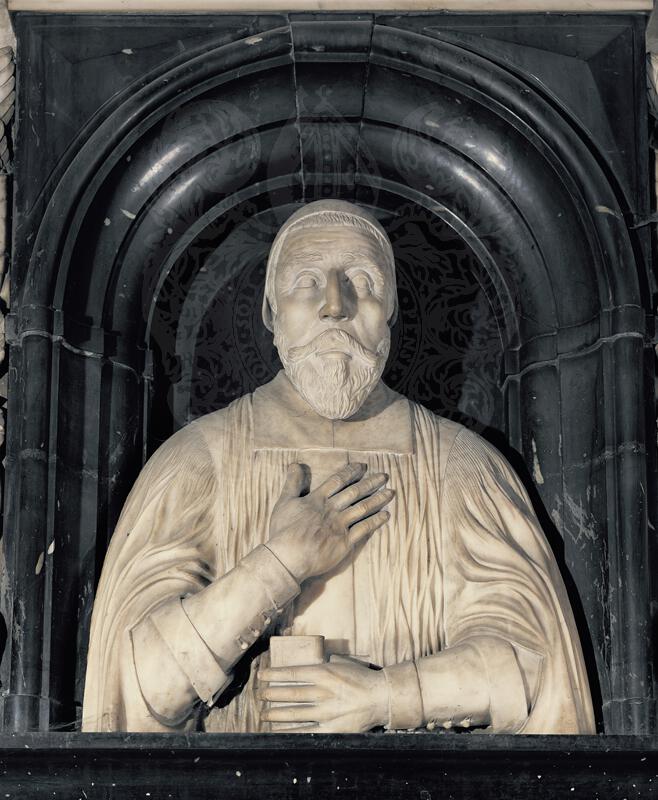
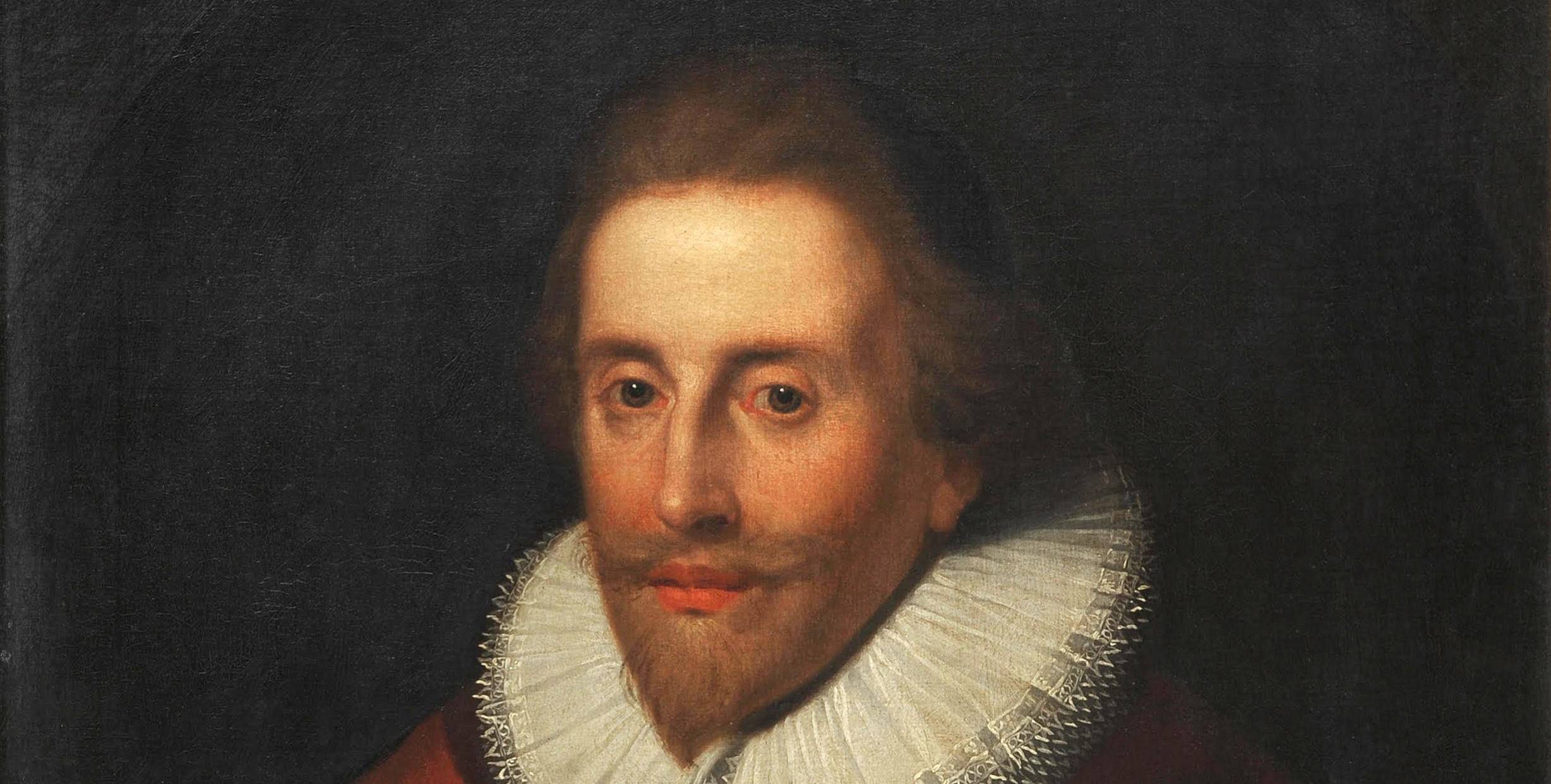
Robert Pincke in New College Chapel

Indeed, conflict reached the city straight away. In September 1642—just one month after the outbreak of  hostilities—it fell to New College’s Warden, Robert Pincke (1573–1647), pictured here, to organise the defence of the entire university after the vice-chancellor, the Bishop of Worcester, had abandoned Oxford. New College’s tranquil front quad was transformed from a site of academia to a warzone—with soldiers practising their drills on the hallowed grass. 

These efforts were far from successful. Parliamentarian Lord Saye and Sele (1582–1662) ransacked the Warden’s study during this chaotic period and arrested him en route to the battle of Edgehill. Saye and Sele was in fact a New College alumnus and even related to William of Wykeham, so his actions truly highlight the divisions caused by this conflict not only at a national level, but even amongst the membership of the college itself.

After the inconclusive battle of Edgehill, Oxford essentially became the King’s administrative and military capital for the rest of the conflict. Convocation House in the centre of the city housed King Charles I’s parliament whilst the King was resident in Oxford during the war. The city, and New College itself, therefore understandably became a military target for the first time in its history.

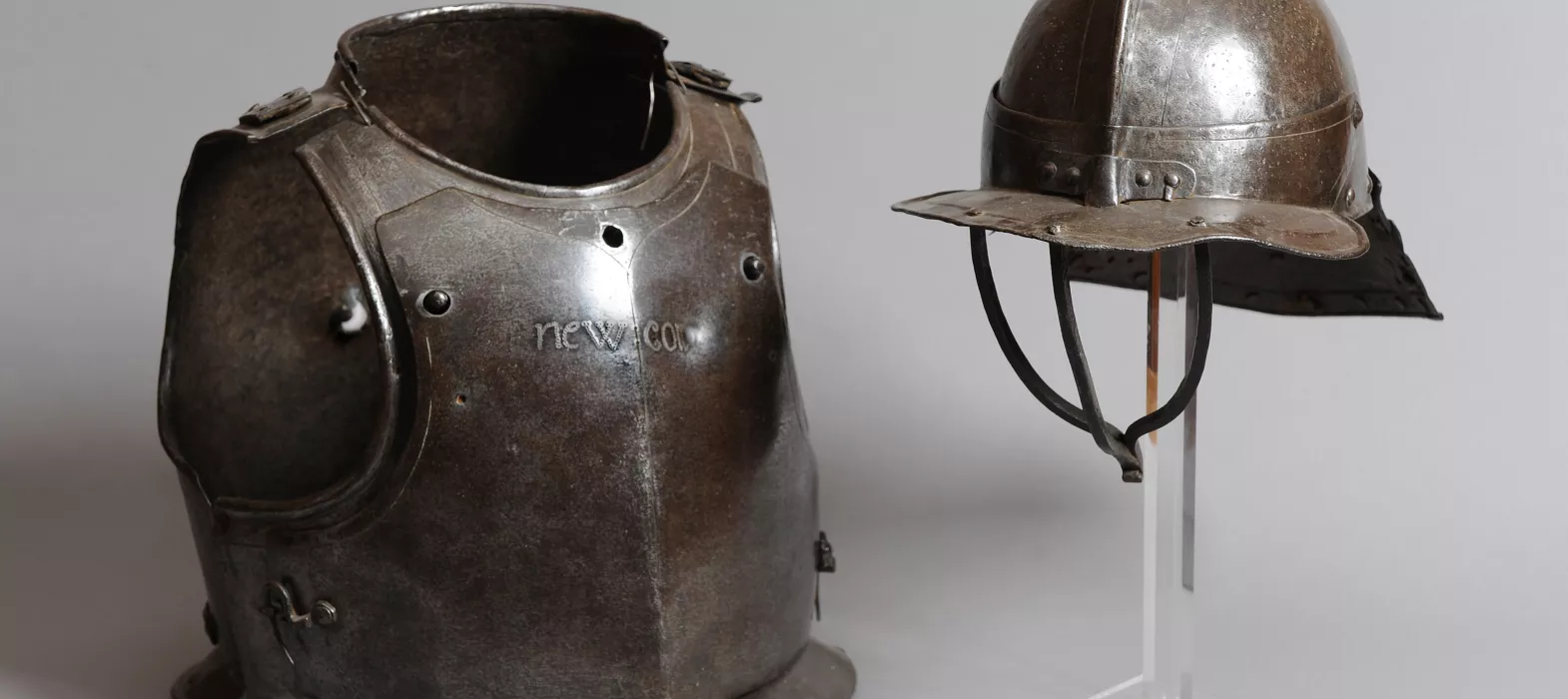
New College reacted to this threat by preparing to defend itself more effectively against attack. The item pictured below encapsulates these preparations. Now held in New College’s chattels, it is one of the remaining sets of armour ordered for the Fellows by Robert Pincke. Note how the words ‘New Col’ have been engraved into the breast plate to mark the college’s ownership.
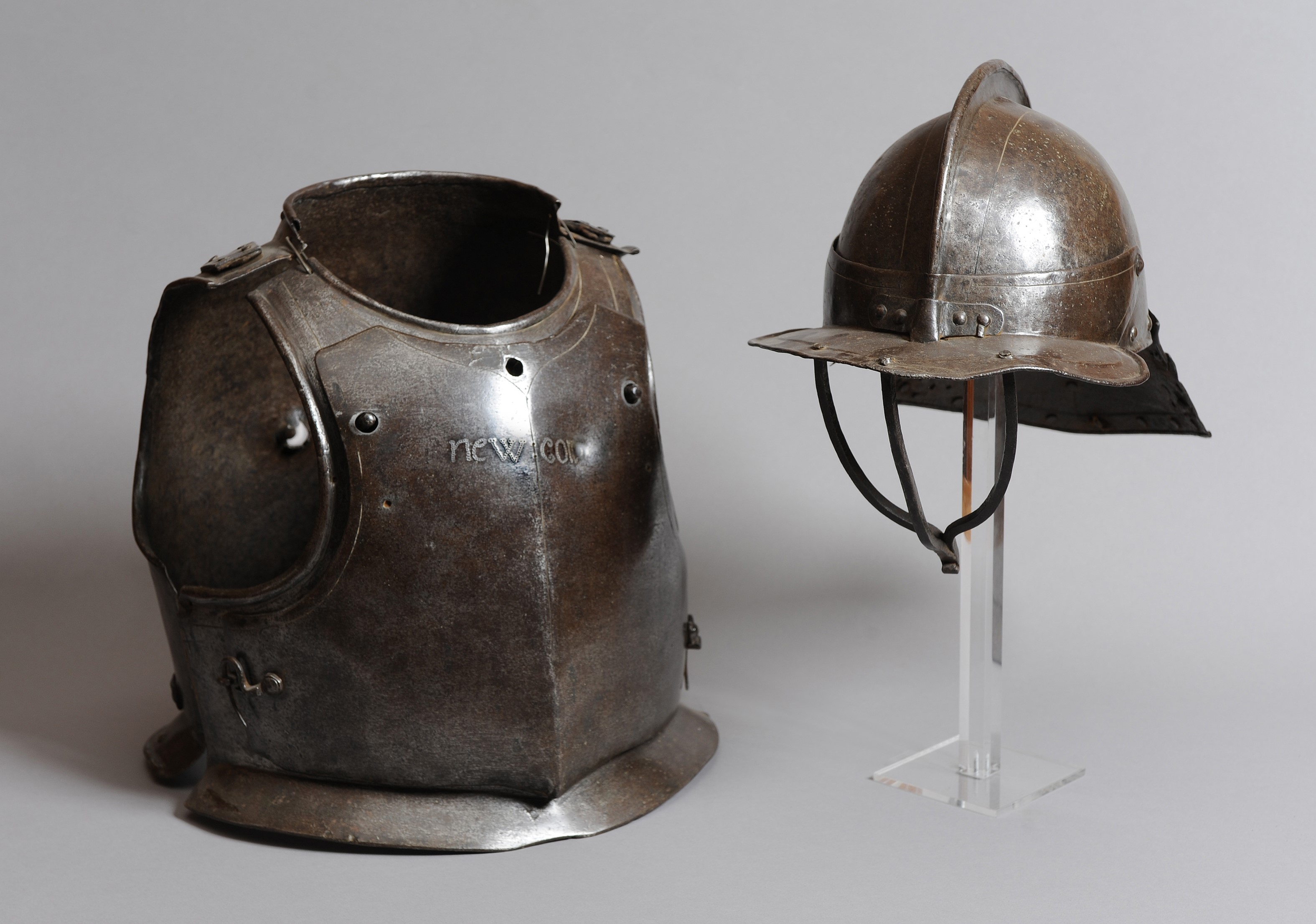
Civil war armour owned by New College with the college's name enrgaved into the breast plate.

The purchase of suits of armour was by no means the only change experienced by the college during this time. In fact, the entire college was transformed. New College contributed to the King’s war effort by converting the cloisters and Bell Tower into a major royalist arsenal. The cloisters quadrangle was apt for this purpose, as it was a natural fortress, protected from the weather and from unauthorised entry. To enable easier loading and unloading of ammunition, a hole was knocked through the west wall of the cloisters—as this could be easily guarded, the New College ammunition store was deemed to be more secure than the castle itself.

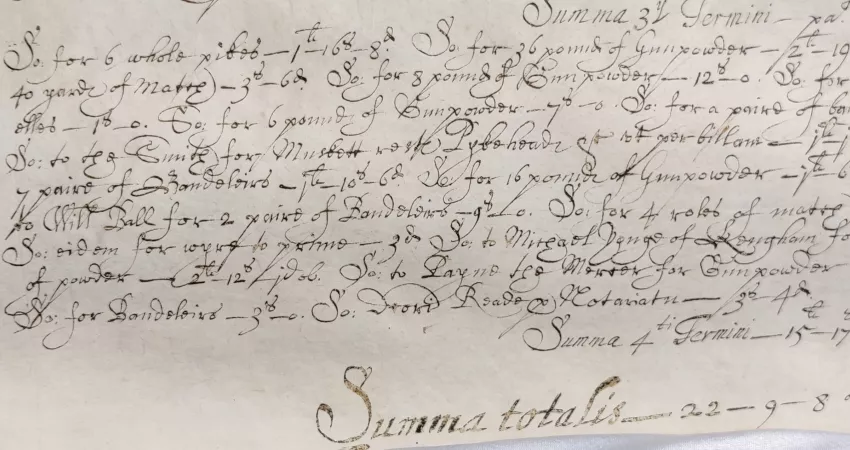
A fascinating document in our Archives records this period in New College’s history. Below, you can see an entry in the Bursar’s Account Roll for 1641/2 (NCA 7665). Essentially a list of all college expenditure, there is a total expenditure of 22 pounds, 9 shillings and 8 pence on a wide range of items used for military purposes—a not inconsiderable amount of money at this time. Click on the dots to discover more.

NCA 7665
Image

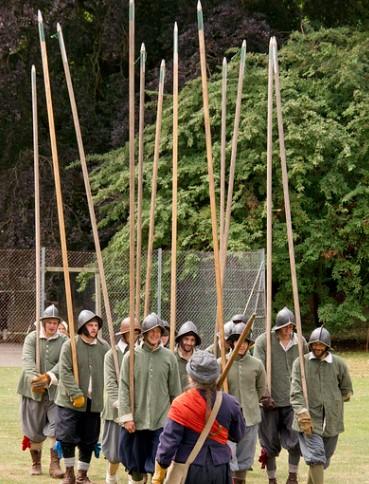
The first expenditure listed is for 6 whole pikes - used to defend against cavalry charges.

Image

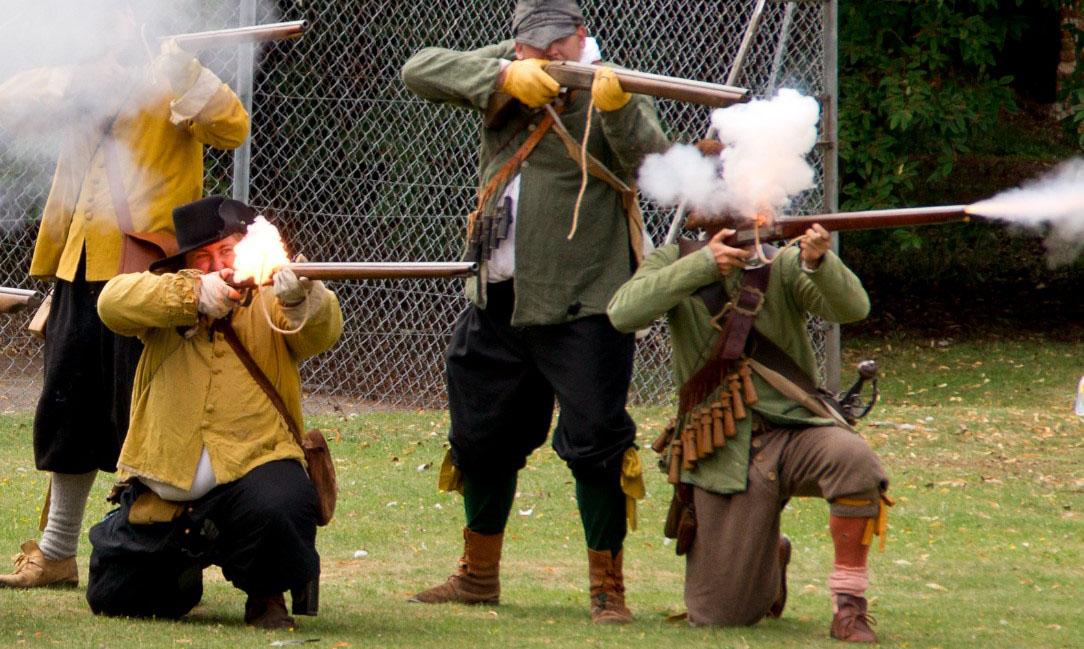
Next, the purchase of gunpowder and match is listed. Both were essential for musketeers to fire their rounds effectively during battle.

Image

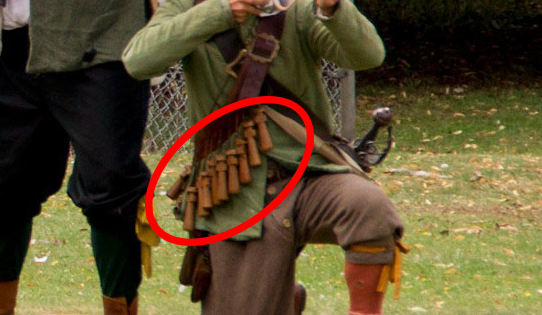
During this time, New College also purchased bandoliers. Used for storing gunpowder and worn around the chest, this was again an essential purchase for the Royalist army. A modern recreation of a civil war era bandolier is highlighted in the image above.

×

Test Your Knowledge: Which New College Warden organised the defence of the university at the outbreak of the English Civil War?

Portrait

Click on the name below to find out if you are right!

Robert Pincke

Correct!

William of Wykeham

Nope, try again . . .

Thomas Chaundler

Nope, try again . . .

Civil War Ramparts

Defending the City


As the King was now based in Oxford, urgent upgrades also had to be made across the city—the only existing defences were the medieval city walls (that still survive around New College today). These walls, although capable of providing some security and a means to control access to the city, nevertheless remained hopelessly ineffective as a defence against seventeenth-century cannon. 


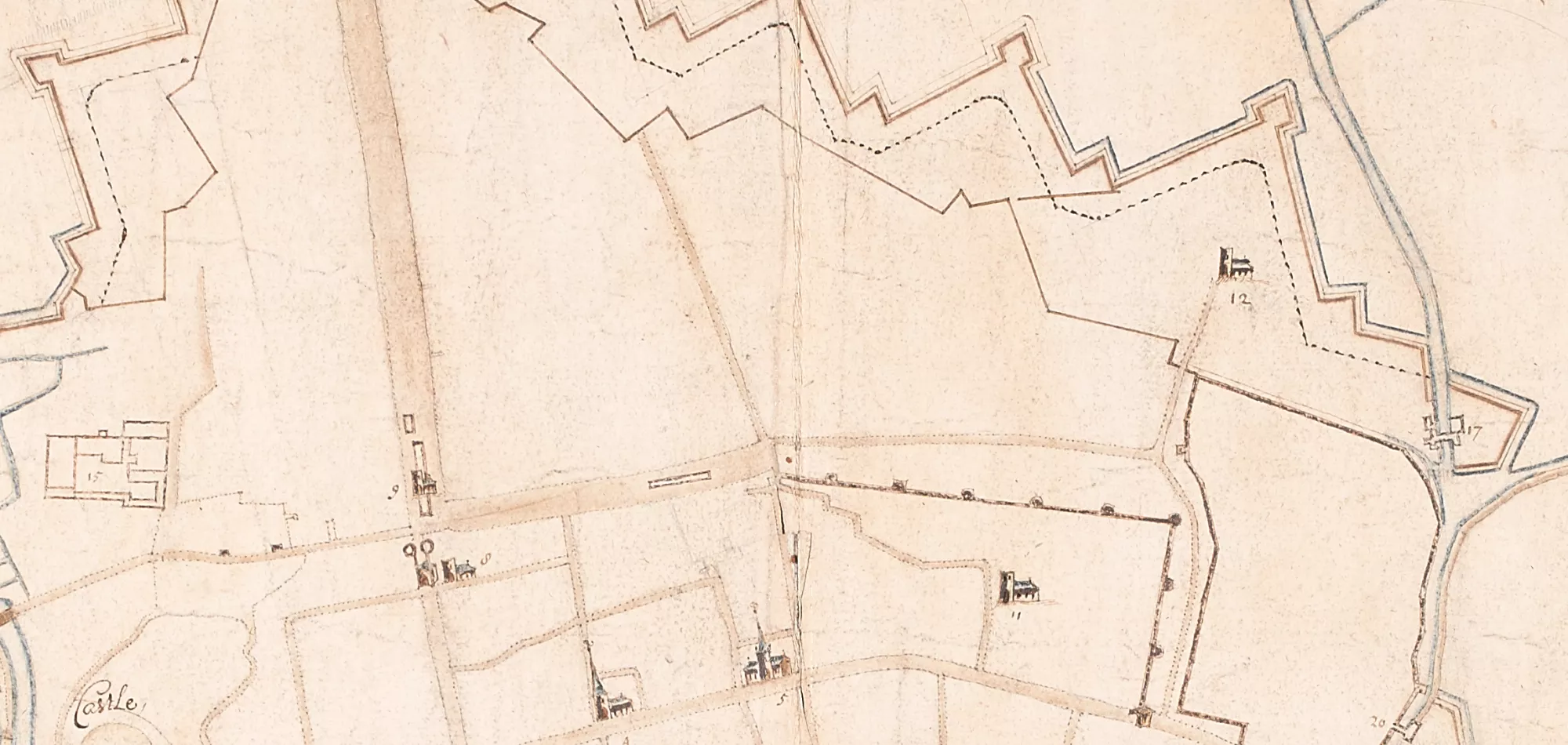
Map of the Civil War defences of Oxford

Bodleian Library MS. Top. Oxon b. 167 (1644), image produced with the permission of the Bodleian Libraries.


Two phases of earth ramparts were therefore built to shore up the defences. Such ramparts were deemed to be essential to protect against artillery fire, as the earth could withstand the impact of cannon balls. 

New College was closely involved in their construction. The mound in the college gardens was raised by nearly 50 percent to provide an observation platform to defend the city and, in 1644, New College gave over a large proportion of the College silver to the King—in part to pay for these new defences.

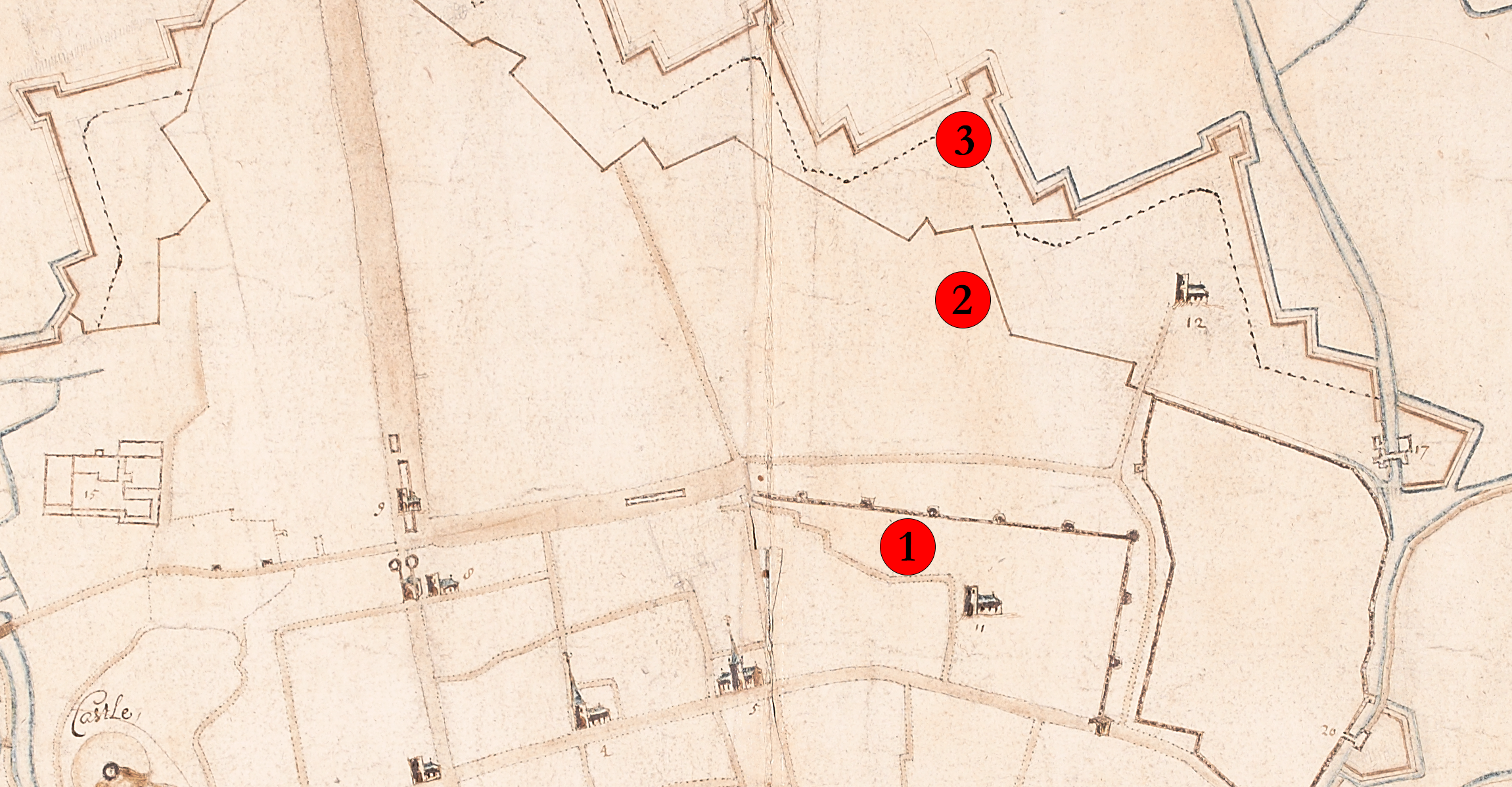
Thankfully, a plan of these defences survives today and is depicted above. The image shows the north east section of the defences with the surviving medieval wall of New College (number 1 on the map). On this map, drawn by the military engineer Bernard de Gomme (1620–1685), you can see both the earlier line of defence (number 2 on the map) and the more elaborate defences built at a later date (number 3 on the map), which included a modern ‘saw-tooth’ design. 

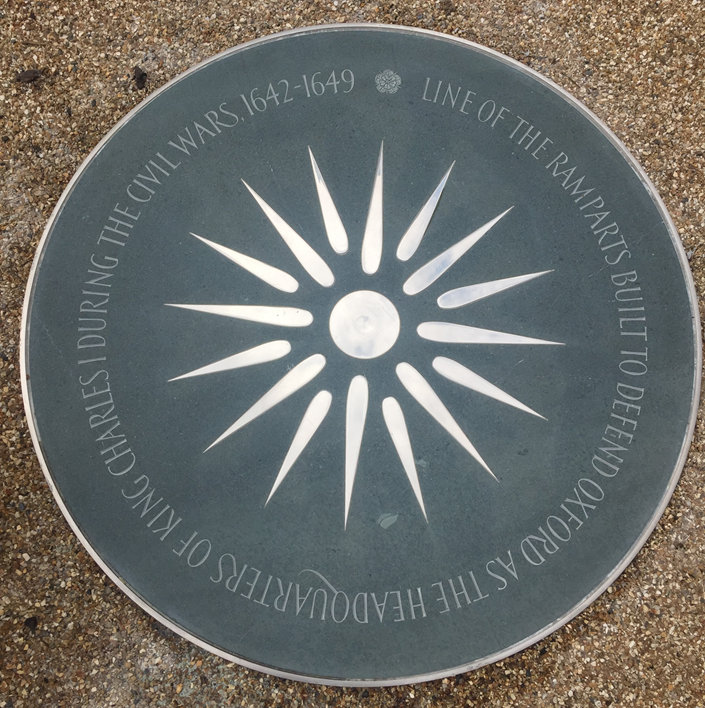
In 2019, New College commemorated these defences with the installation of a plaque outside the Clore Music studios (pictured above). Click on the plaque to discover more about their history in Prof. David Parrott’s New College Note.

Once complete, these defences were definitely needed: Oxford was subjected to two military blockades, which brought parliamentary forces within cannon shot in both 1644 and 1645. 

Surrender of Oxford

New College Occupied


In 1646, the military situation became yet more desperate. Despite the improved defences, the city faced the prospect of a full-scale military assault. New College’s Chapel, Hall, and cloisters created by William of Wykeham three hundred years before were at real risk from artillery bombardment, followed by occupation, and inevitable looting by the besieging troops.

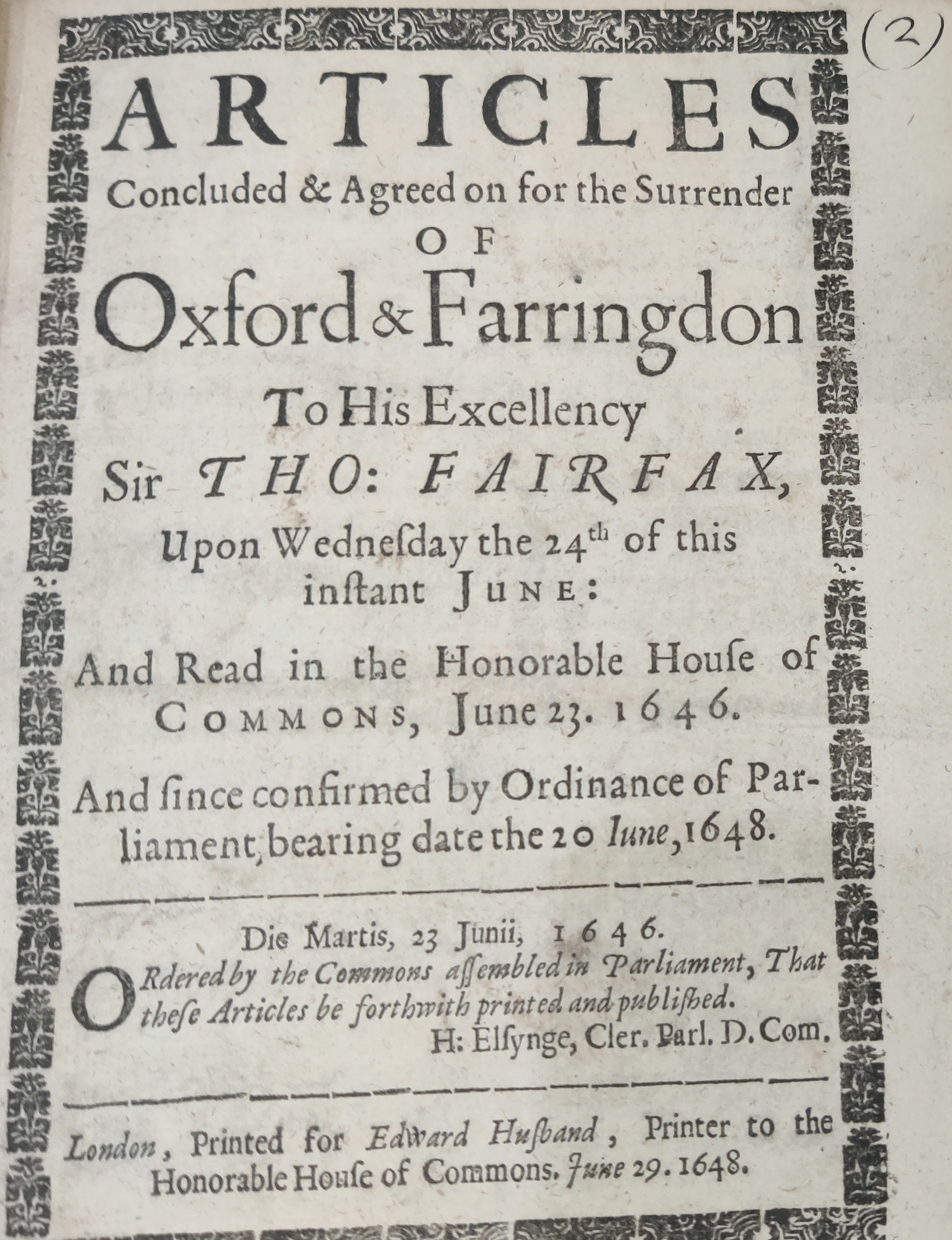
Title page of BT1.134.19(2)To avoid this fate, the city decided to surrender in June 1646—a momentous event commemorated in the collections of New College Library. Here, you can see the title-page of a contemporary tract detailing the conditions of surrender imposed by Lord Fairfax (1612–1671), commander of the New Model Army.
After Parliament’s victory in Oxford, New College faced a protracted period of instability and forced change. In May 1647, Parliament established a board of 25 Visitors to Oxford University, to ensure that it remained loyal to the new regime. On the death of Warden Pincke in November 1647, the fellows of New College dared to disobey these visitors and elected Henry Stringer as the new warden. Stringer’s wardenship, though, was short-lived. The visitors removed him from his position and, in May 1648, asked the fellows of New College to submit to their orders. 

Only one fellow submitted, revealing the strength of feeling amongst the fellowship against this blatant political interference in the governance of their college. Consequently, there were expulsions. At least 50 fellows, four chaplains, 12 choristers, and 13 servants were removed by the visitors—with 55 new fellows, loyal to the regime, appointed.

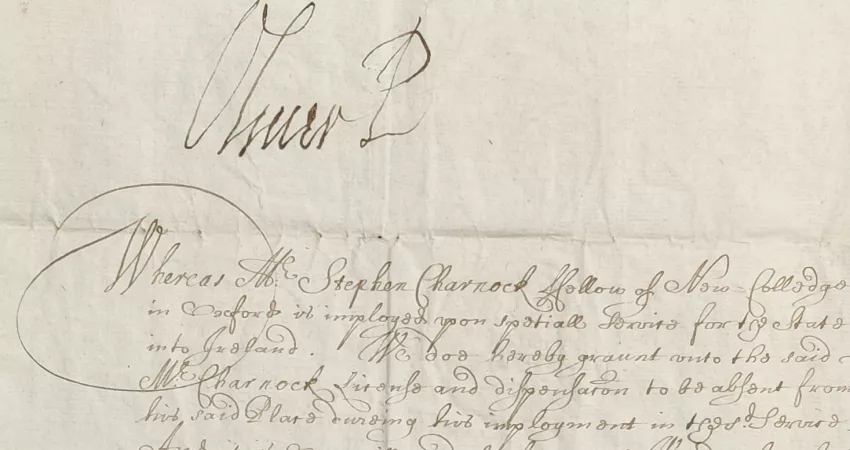
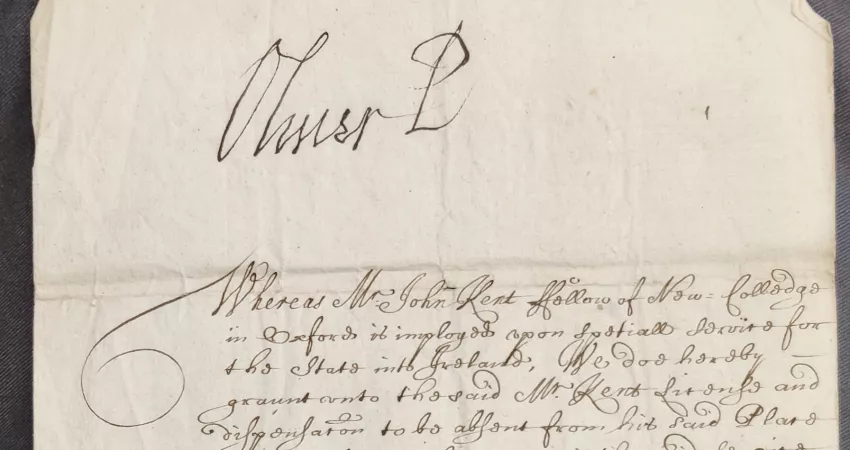
The following year, 1649, marked the apogee of Parliament’s power in both the country—with the execution of Charles I—and in New College. In this year, Parliament appointed George Marshall as warden. Marshall was a Cromwellian loyalist, who had studied at St John’s College, Cambridge. The extent of Cromwell’s political influence in the college’s business can be seen in surviving documents in the New College Archive. Learn more about them in the gallery below.

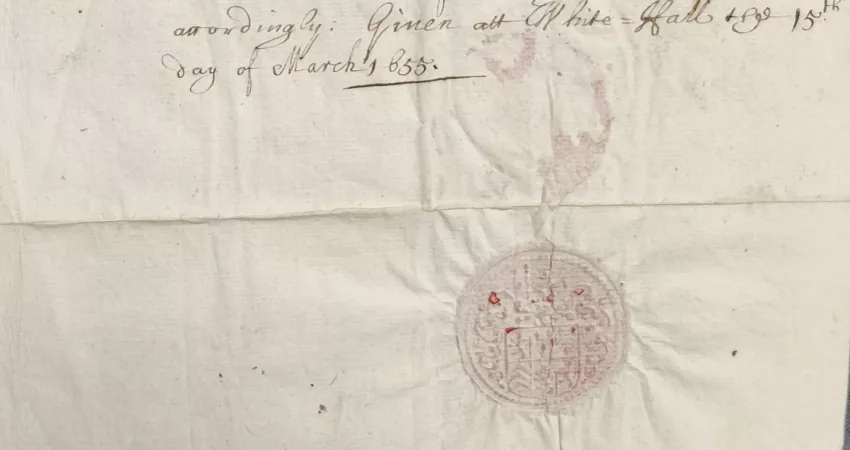
The leave passes depicted in the gallery above date from 1655/6 and give permission from the highest levels of government for fellows to leave for Ireland. Granted for an indeterminate period, they reveal that these fellows were in the country ‘upon special service for the State’.

We do not know the details of this service to the state, but it is clear that Ireland was in a fractious situation during this period. Irish Catholic resistance to English Protestant rule was met with severe repression by Cromwell’s government—resulting in infamous massacres at Drogheda and Wexford in 1649. Consequently, Catholic landowners had been forced to forfeit their lands—with Protestant victory resulting in the disenfranchisement, transplantation, and transportation of the defeated Catholic population. Although understandably focusing on the Civil War and its aftermath in Oxford, the New College Archives also reveal how this ongoing period of turmoil had far-reaching consequences across several different countries.

Despite ‘success’ in the Civil War, Cromwell’s rule was to prove short lived.

Thanks to his fatal disregard for civil and legal liberties across the lands he ruled, his Protectorate collapsed shortly after he signed the passes depicted above. In April 1659, shortly after Cromwell’s death, the English army intervened, reinstating the ‘Rump’ Parliament that had sanctioned the regicide of Charles I a decade earlier. The first decision of this parliament was to restore the monarchy and invite Charles II to take up the throne.

This restoration marked the end of one of the most tumultuous periods in the history of New College. Never before had the college been involved in such a protracted conflict—one that directly threatened the college itself and resulted in unprecedented levels of political interference in college life. 

Thankfully, the fortunes of the college changed in the next, much quieter, century of New College’s long history, as you will discover in the next tab of our journey through history.